The Benefits of Connecting Store Audits and Task Management
Learn the benefits of connecting retail store audits with task management, from faster issue resolution and clearer ownership to better execution visibility.

Store audits help retailers understand whether locations are meeting operational standards. But identifying an issue is only valuable if something happens next.
When store audits and task management are handled through integrated software, retailers can create a much clearer path from identifying an issue to resolving it. Audit findings can become assigned work, responsibilities can be established, deadlines can be set and leaders can track whether corrective actions have actually been completed.
Instead of the audit being the end of the process, it becomes the beginning of an execution workflow:
Audit → Identify → Assign → Execute → Validate → Improve
For retailers managing large networks of stores, connecting those steps can make audits more actionable, improve accountability and help maintain more consistent execution across locations.
Take control of your store performance
Book a demo with StoreForce today and run your retail operations better tomorrow.
Book A Demo
Why Is It Important to Connect Store Audits With Task Management?
A store audit answers an important question: Are we executing the way we expect to be?
A regional leader might visit a store and discover that a promotional display hasn't been executed correctly. Signage may be missing. A merchandising standard might not be followed. A required operational process may be incomplete.
Finding the issue is useful, but the retailer still needs to determine what happens next.
Who needs to fix it? What exactly needs to be done? When does it need to be completed? How will the regional leader know when it has been resolved?
When audits and task management are disconnected, those next steps can move into emails, spreadsheets, phone calls or separate task systems. That creates another administrative process between identifying the problem and solving it.
Integrated software helps connect the two.
What Are the Benefits of Integrated Store Audit and Task Management Software?
The biggest benefit is that audit findings can become actionable work rather than simply information in an audit report.
But connecting audits and task management can improve several parts of the store execution process.
Turn Audit Findings Into Action Faster
The less time there is between identifying a problem and assigning the appropriate corrective action, the faster stores can begin addressing it.
Consider a regional manager who discovers during a store visit that a new promotional display does not match the expected standard.
Without an integrated process, they may need to record the finding, send an email to the store manager, explain what needs to change and remember to follow up later.
A connected audit and task management process can make the required action part of the workflow.
The issue is identified, the required work is established and responsibility for completing it becomes clear.
Create Clear Ownership
One of the most important parts of task delegation is establishing who owns the work.
“Store needs to fix promotional display” is an observation.
“Correct promotional display by Tuesday” assigned to the appropriate store, role or employee is an action.
That distinction matters.
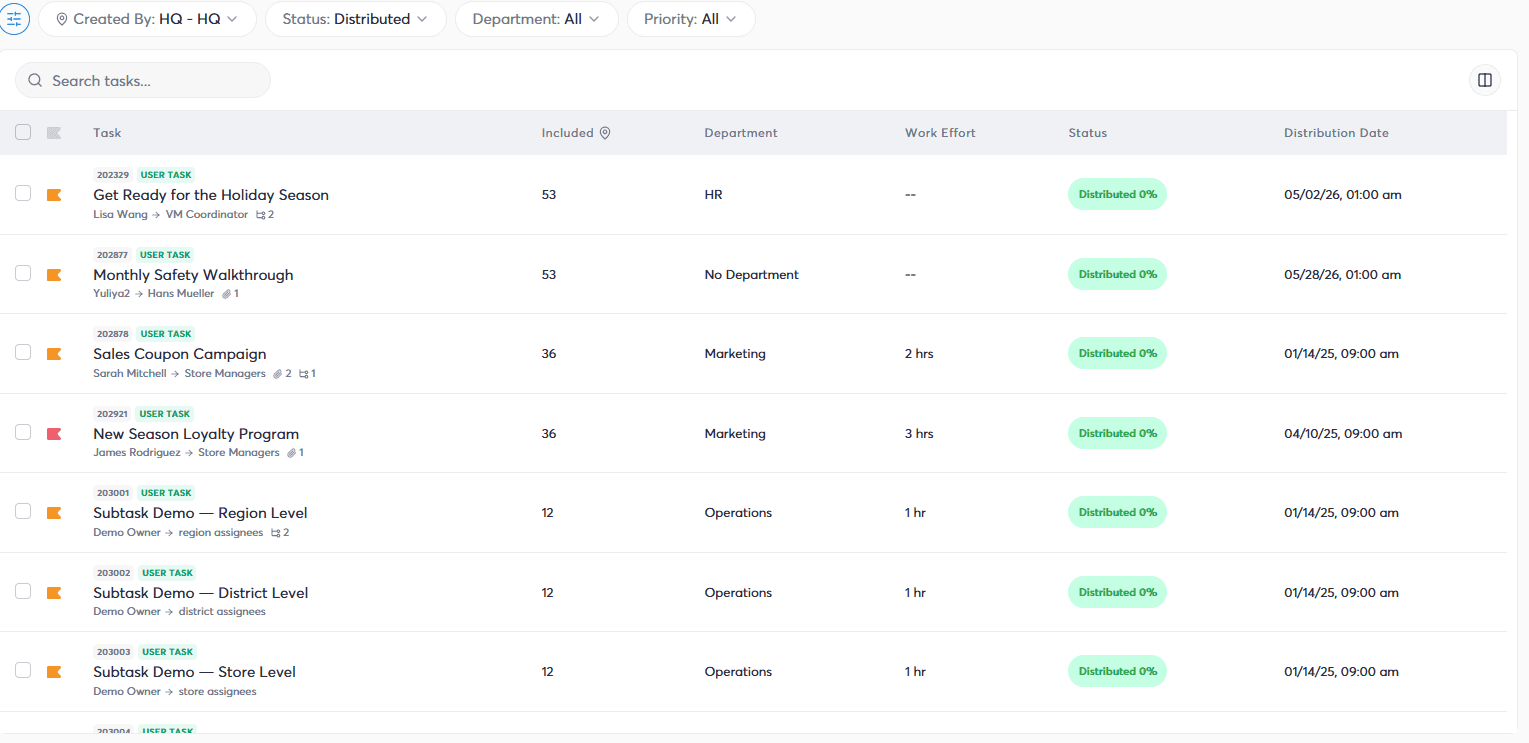
Integrated task management allows retailers to move from identifying what went wrong to establishing who is responsible for making it right. Priorities, due dates and instructions can give employees a clearer understanding of what is expected.
That reduces ambiguity and makes follow-up easier for everyone involved.
Improve Visibility Into Outstanding Work
Completing an audit does not necessarily mean the work identified during that audit has been completed.
Retail leaders need visibility into what happens afterward.
Which issues remain outstanding? Which have been addressed? Which are overdue? Are certain stores consistently resolving audit findings faster than others?
When corrective tasks can be tracked, leaders gain greater visibility into the progress being made after an audit.
Instead of contacting individual stores for updates, regional and head office teams can have a clearer picture of execution across their locations.
Validate That Work Was Completed
For some audit findings, simply marking a task complete may not provide enough information.
Retailers may need to validate that the work meets the expected standard.
That could involve following a defined workflow, completing required subtasks or providing evidence that the issue has been addressed.
This helps close the gap between “the task was checked off” and “the issue identified during the audit was actually resolved.”
For retailers trying to maintain consistent standards across a large store network, that distinction can be important.
Why Is Task Delegation Important After a Store Audit?
An audit can identify dozens of opportunities, but someone still needs to act on them.
Effective task delegation gives audit findings ownership.
The task should communicate what needs to happen, who is responsible, how important it is and when it needs to be completed. More complex corrective actions may also require multiple steps or involvement from different people.
Without that structure, audit findings can easily turn into a list of recommendations that store managers have to interpret and prioritize themselves.
That becomes particularly difficult when stores are already balancing customer service, shipments, inventory, merchandising, training and other daily responsibilities.
Structured task delegation helps turn the audit into a manageable plan of action rather than another list of things the store needs to remember.
How Can Integrated Software Reduce Administrative Follow-Up?
Store audits can create significant administrative work after the actual visit is finished.
A district or regional manager may document an issue and then send follow-up emails, message the store manager, create a spreadsheet of outstanding items and check back days later to determine what has been completed.
Multiply that process across dozens or hundreds of stores and the administrative burden can grow quickly.
Integrated software can reduce some of those manual handoffs by keeping the audit finding and subsequent work connected.
Rather than repeatedly asking stores for updates, leaders can spend more time focusing on the issues that actually require their attention.
This is an important distinction.
The goal isn't to eliminate management follow-up. Some issues absolutely require a conversation. The goal is to prevent managers from having to manually chase every routine action just to understand whether it happened.
How Do Connected Audits Help Retailers Maintain Consistency Across Stores?
Consistency becomes increasingly difficult as a retail organization grows.
One store may interpret an audit finding one way while another handles the same issue differently. Different managers may also have different approaches to assigning, prioritizing and validating corrective work.
Integrated audit and task management processes can create more structure around how common issues are handled.
Retailers can establish expectations for what needs to happen, assign work to the appropriate locations or roles and track completion across the organization.
This is especially valuable for operational standards that need to remain consistent across many stores, such as merchandising, promotional execution, visual standards or recurring operational processes.
The objective isn't to remove local decision-making. It's to give stores a clearer framework for executing the standards that should be consistent across the brand.

Can Store Audit Data Help Identify Recurring Problems?
One of the more valuable outcomes of structured store audits is the ability to look beyond a single visit.
If the same issue continues appearing across multiple audits, stores or regions, the retailer may be dealing with something larger than an isolated execution problem.
For example, repeated findings could indicate that instructions are unclear, employees require additional training, stores do not have enough time to complete the work or a particular process is unnecessarily difficult to execute.
That creates a different management question.
Instead of asking “Why didn't this store do it?”, the retailer can begin asking “Why does this keep happening?”
The more consistently audit findings and corrective actions are captured, the easier it becomes to identify those patterns and determine where broader improvements may be needed.
Why Is Closing the Loop More Important Than the Audit Score?
Audit scores are useful because they provide a simple way to understand how closely a store is meeting expected standards.
But the score isn't the end goal.
If a store receives an 82% audit score, the operational opportunity exists within the other 18%.
What wasn't executed correctly? Which issues matter most? Who is going to address them? When will they be fixed? Can leadership confirm that the work was completed?
A retailer can conduct an excellent audit and still get limited value from it if nothing changes afterward.
That's why the most important part of the process is often closing the loop between finding an issue and confirming its resolution.
An audit should create information that leads to action.
How Can Store Audits and Task Management Improve Store Execution?
Store execution is ultimately about turning plans and standards into what actually happens inside the store.
Audits provide visibility into whether that execution is happening. Task management provides a mechanism for addressing the gaps.
Together, they create a feedback loop.
Head office establishes expectations. Stores execute. Audits help identify where execution differs from those expectations. Tasks provide a structured way to address those differences. Subsequent performance and audits can then show whether improvements are being made.
That creates a more useful operating cycle:
Set standards → Execute → Audit → Correct → Validate → Improve
Instead of treating audits as periodic inspections, retailers can use them as part of an ongoing process for improving store execution.
What Should Retailers Look for in Store Audit and Task Management Software?
Retailers evaluating digital solutions for audits and task delegation should look beyond the ability to simply complete a checklist.
The platform should make it easy to capture audit findings and then turn those findings into structured action.
That can include the ability to assign work by role or location, establish priorities and due dates, create subtasks or workflows, track progress and validate completion.
Multi-store visibility also becomes increasingly important for larger retailers. Regional and head office leaders should be able to understand what is happening across locations without manually collecting updates from every store.
Most importantly, retailers should consider how well the different capabilities work together.
A strong audit tool can identify issues. A strong task management tool can organize work. The real operational benefit comes from reducing the distance between those two processes.
How Does StoreForce Connect Store Audits and Task Management?
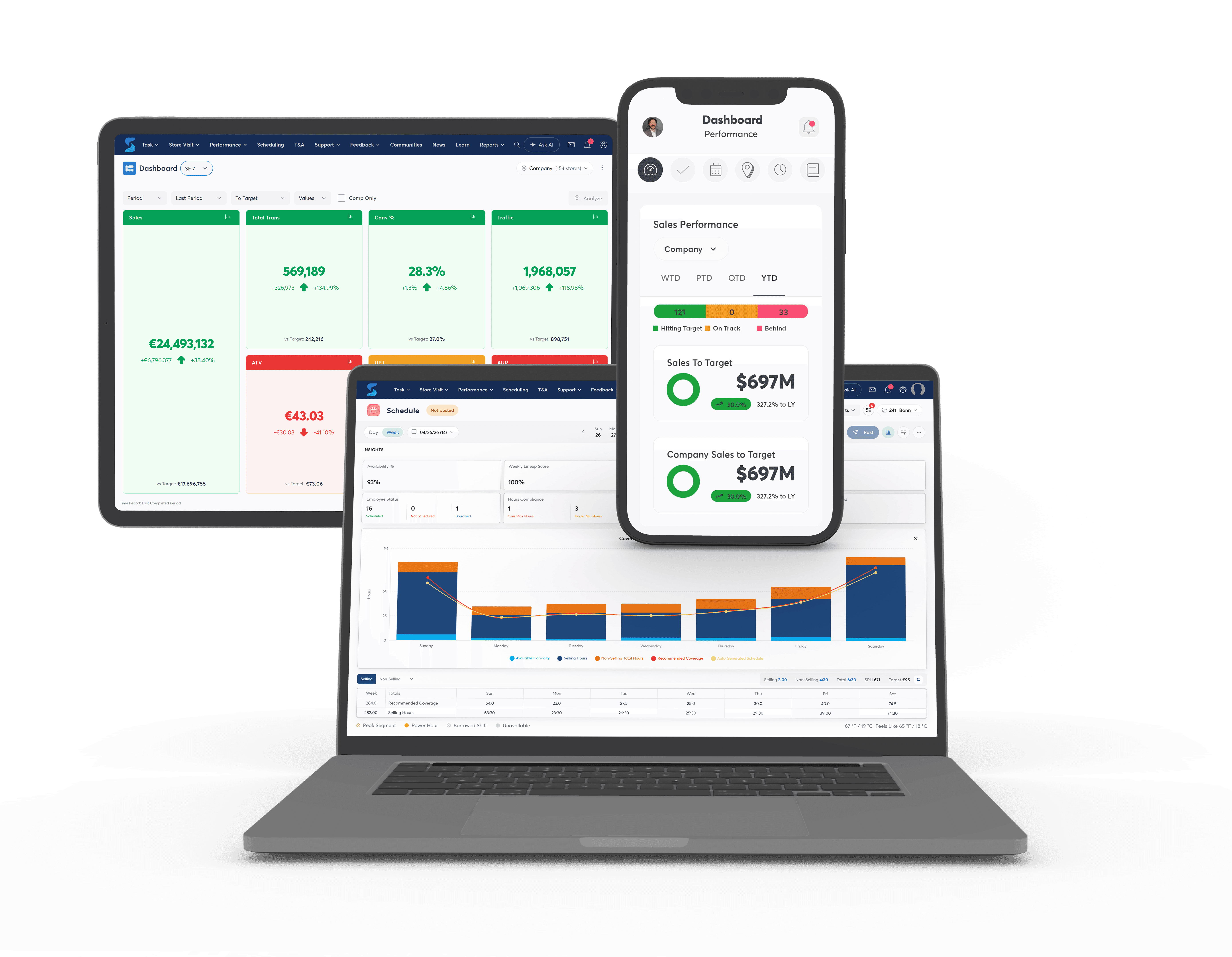
StoreForce brings Store Visits & Audits together with Task Management as part of a broader retail workforce management platform.
StoreForce Task Management helps retailers plan, assign and track store work while giving teams clear priorities and expectations. Work can be targeted based on role or location, organized with due dates and priorities, and supported by workflows, subtasks and completion validation.
Combined with Store Visits & Audits, that creates an opportunity to connect what retail leaders observe in stores with the work required to improve execution.
The same platform also connects these processes with other areas of retail operations, including Intelligent Scheduling, Labor Optimization, Time and Attendance, Team Communications and Store Performance Monitoring.
That broader context matters because completing corrective work is still dependent on the people and labor available inside the store.
Ultimately, the benefit of integrated audit and task management software isn't simply digitizing an audit or putting a task list on a screen.
It's creating a clearer path between seeing what needs to improve and making sure something is done about it.
When retailers can identify an issue, delegate the required work, monitor progress and validate the result within a connected process, store audits become more than a measurement of execution.
They become a tool for improving it.

See How StoreForce Can Work for Your Stores
See how StoreForce brings employee scheduling, labor optimization, task management, and store execution together in one retail workforce management platform. Book a demo today to see what StoreForce can do for your teams.
Speak To A Retail Expert

