How StoreForce Lets Retailers Assign Daily Tasks & Track Hours
StoreForce lets retailers assign and track daily store tasks while also managing employee schedules, labour hours and time and attendance within the same retail workforce management platform.

Retail stores need to manage two things every day: the people working and the work those people need to complete.
StoreForce lets retailers assign and track daily store tasks while also managing employee schedules, labour hours and time and attendance within the same retail workforce management platform.
Bringing those capabilities together gives retailers a clearer picture of what is happening inside their stores. Instead of simply knowing how many employees are working or how many labour hours are available, managers can also understand what needs to get done during those hours and whether stores have the capacity to complete it.
For multi-location retailers, that connection can make it easier to plan labour, manage daily priorities and understand whether stores are executing as expected.
Can StoreForce Assign Daily Tasks and Track Staff Hours?
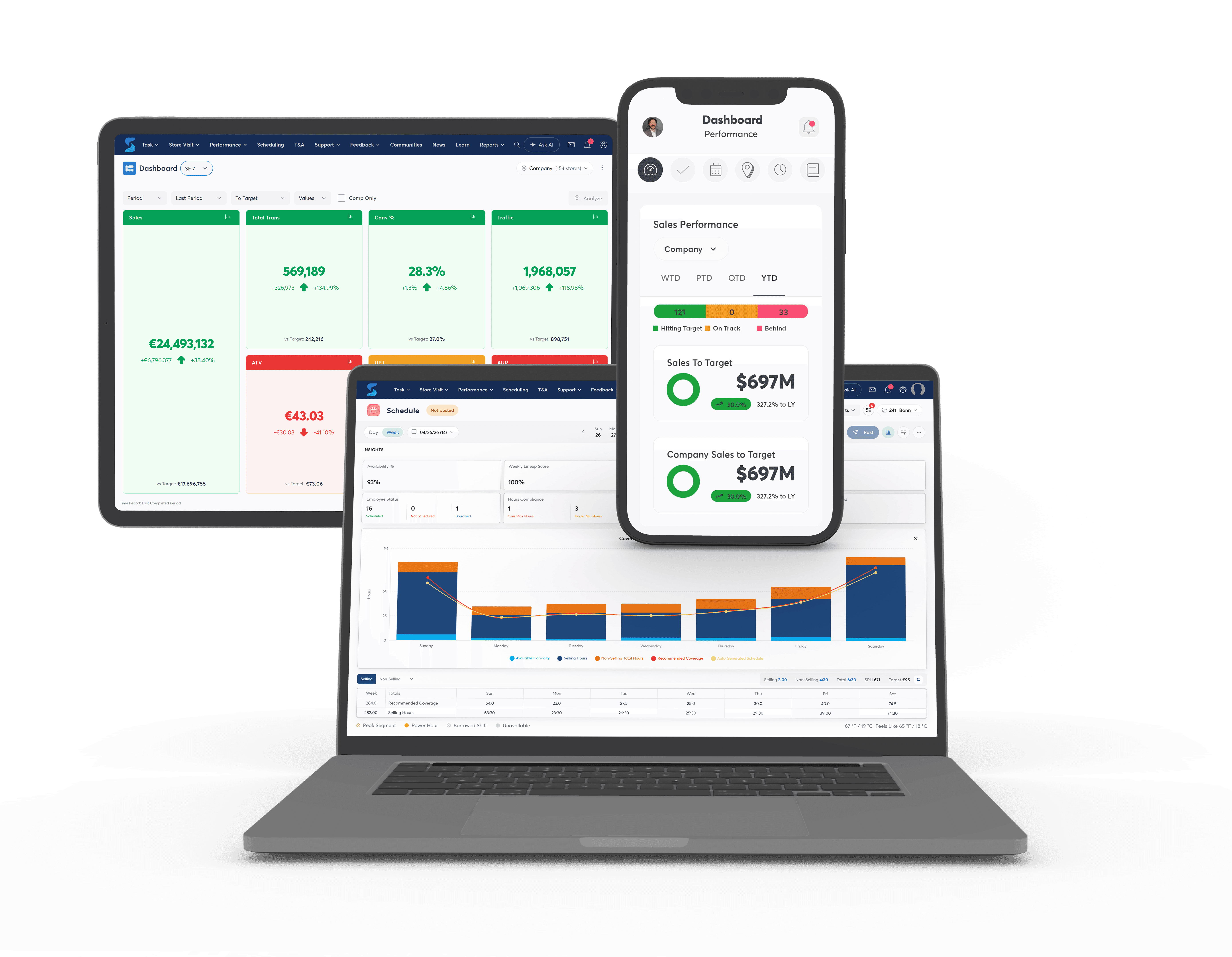
Yes. StoreForce combines task management with workforce management capabilities that help retailers manage schedules, employee hours, time and attendance and labour requirements.
On the task management side, retailers can create, assign, prioritise and track work across stores. On the workforce management side, StoreForce helps retailers determine labour requirements, create schedules and understand how scheduled and actual labour is being used.
The important part is that these capabilities do not have to be treated as completely separate processes.
The amount of work a store needs to complete affects how much employee time it requires. At the same time, the number of people working and the hours available determine how much work a store can realistically accomplish.
Managing both gives retailers a better understanding of the relationship between people, time and workload.
Take control of your store's performance
Book a demo with StoreForce today and run your retail operations better tomorrow.
Book a Demo
How Does StoreForce Help Retailers Assign Daily Tasks?
Retail stores have work coming from many different directions.
There are everyday opening and closing routines, but stores may also need to manage shipments, inventory counts, visual merchandising changes, promotions, audits, training, compliance requirements and other priorities from head office.
StoreForce Task Management gives retailers a centralised way to organise that work and distribute it across their store network.
Tasks can include instructions, priorities, due dates and the information employees need to understand what is expected. Work can also be distributed according to factors such as location and role so the right priorities reach the appropriate stores and employees.
More complicated activities can be broken into smaller steps, helping teams understand what needs to happen before the overall task can be considered complete.
Once work has been assigned, managers and retail leaders can monitor execution instead of relying entirely on manual follow-ups to determine whether something has been completed.
That creates visibility at multiple levels of the organisation.
A store manager can understand what their team needs to accomplish that day, while field and head office leaders can see how execution is progressing across multiple stores.
How Does StoreForce Help Retailers Track Staff Hours?
Knowing what needs to get done is only useful if a store has the people and time available to do it.
StoreForce helps retailers manage employee schedules and labour while providing visibility into time and attendance.
Managers can understand who is scheduled, when employees are expected to work and how labour is being used against the plan. Time and attendance visibility can also help identify differences between scheduled and actual labour.
But retail labour planning begins before employees clock in.
StoreForce can help retailers determine labour requirements using the factors that create demand for employee time. That includes customer-facing demand, such as traffic and sales expectations, as well as operational requirements that also need to be completed.
This gives retailers a more informed starting point for deciding how many hours a store requires and when those hours should be scheduled.
How Does StoreForce Connect Daily Tasks With Staff Hours?
This is where managing tasks and workforce management together becomes particularly valuable.
Imagine a store has 120 labour hours available tomorrow.
On its own, that number does not tell a manager whether the store has enough labour.
Tomorrow might also include a large shipment, an inventory count, a new promotion that needs to be set up, employee training and the store's regular daily routines.
Each of those activities requires time.
At the same time, employees still need to serve customers.
StoreForce helps retailers consider the workload stores need to complete alongside the labour and schedules available to complete it.
Instead of treating the schedule as one plan and store tasks as another, retailers can get a clearer understanding of the relationship between the two.
That changes the question from: How many hours do we have?
To: Do we have enough people and enough hours to handle the work ahead?
That is an important distinction for retailers trying to improve execution without simply adding more labour.
Why Should Retailers Consider Workload When Planning Labour?
Customer demand is one of the biggest drivers of retail labour, but it is not the only one.
Consider two stores that are both expected to have relatively low customer traffic on a Tuesday.
The first has a normal operating day.
The second has a shipment arriving, an inventory count to complete and a major visual change that needs to be ready before Wednesday morning.
Those stores may have similar customer demand, but they do not necessarily have the same labour requirements.
The second store has additional workload demand.
Those operational activities require employee time regardless of how many customers are expected to walk through the door.
That is why connecting workforce management with task management can provide a more complete picture of what a store actually needs.
Retailers can consider factors such as customer traffic, sales expectations and peak selling periods alongside the operational workload that also needs to be completed.
The result is a labour plan that reflects more of what is actually happening inside the store.
Why Does Timing Matter When Assigning Retail Tasks?
Available employee hours are not equally available for every type of work.
A store may technically have several employees working during a Saturday afternoon peak, but those employees may need to spend most of their time helping customers.
The same number of employees working during a quieter period could have considerably more capacity for operational work.
That makes when work is assigned almost as important as how much work is assigned.
Retailers need enough coverage to protect customer-facing periods while still creating opportunities for employees to complete the operational work required to keep stores running.
StoreForce helps retailers align staffing with expected customer demand while providing visibility into the work stores need to execute.
That gives managers a better opportunity to balance two competing demands on employee time:
Serving the customer in front of them and completing the work that keeps the store operating effectively.
How Does StoreForce Help Head Office See What Is Happening Across Stores?
Managing tasks and labour becomes increasingly difficult as a retailer adds locations.
A manager responsible for one store may be able to see what is happening simply by walking the floor.
Head office cannot do that across hundreds or thousands of stores.
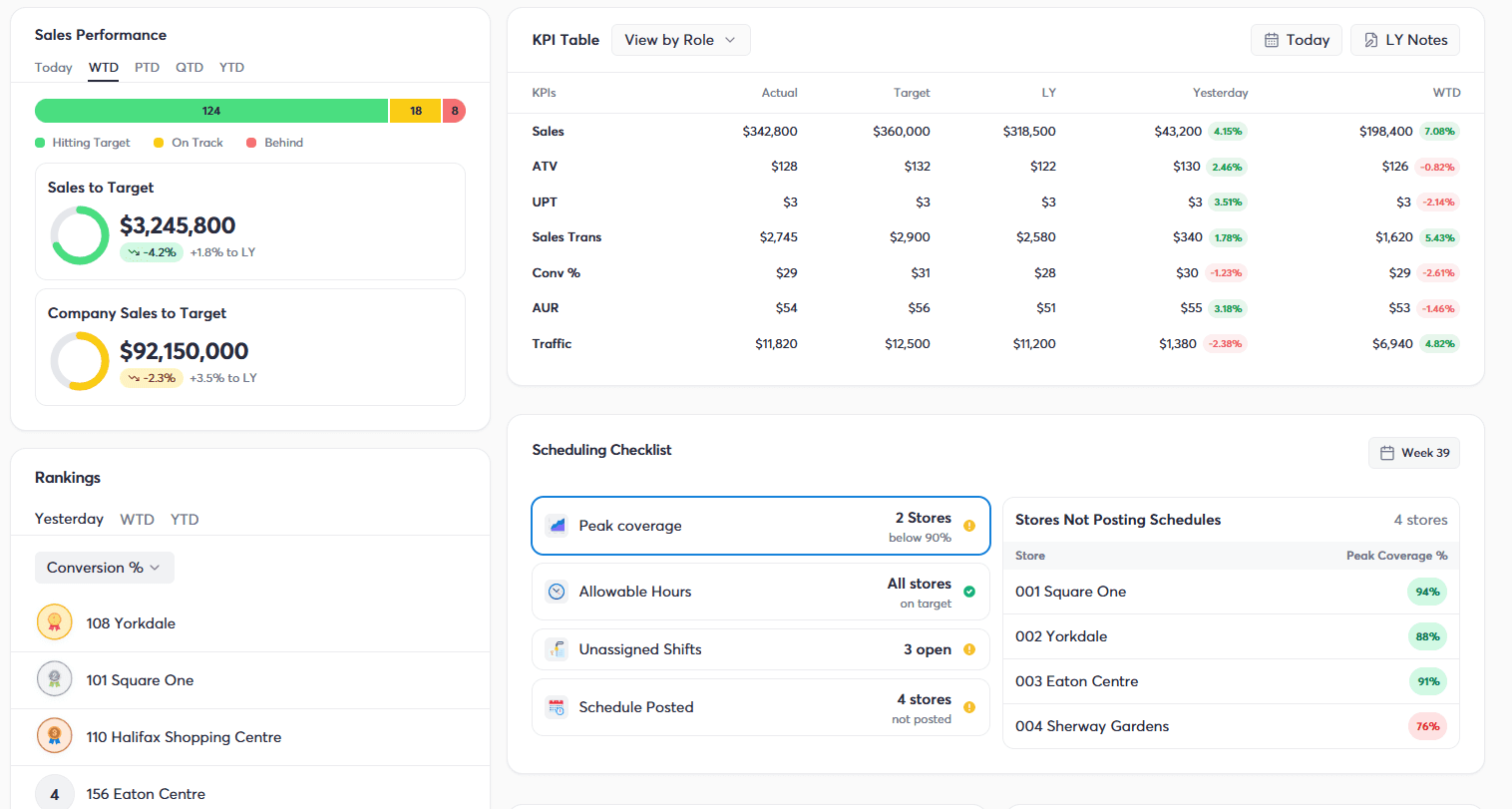
StoreForce gives retail leaders greater visibility into workforce planning, task execution and store performance across locations.
Leaders can see whether work has been completed, identify where execution may be falling behind and drill into individual stores when something requires attention.
That visibility can help teams focus their attention where it is actually needed instead of relying on emails, spreadsheets, phone calls or manual check-ins to understand what is happening.
It also gives retailers a more consistent way to communicate priorities across the organisation.
Work can be directed toward the appropriate roles and locations, helping employees focus on the information and responsibilities that are relevant to them.
How Does Connecting Tasks and Staff Hours Help Improve Store Performance?
Completing a task is important, but completion alone does not necessarily tell a retailer whether the store is performing well.
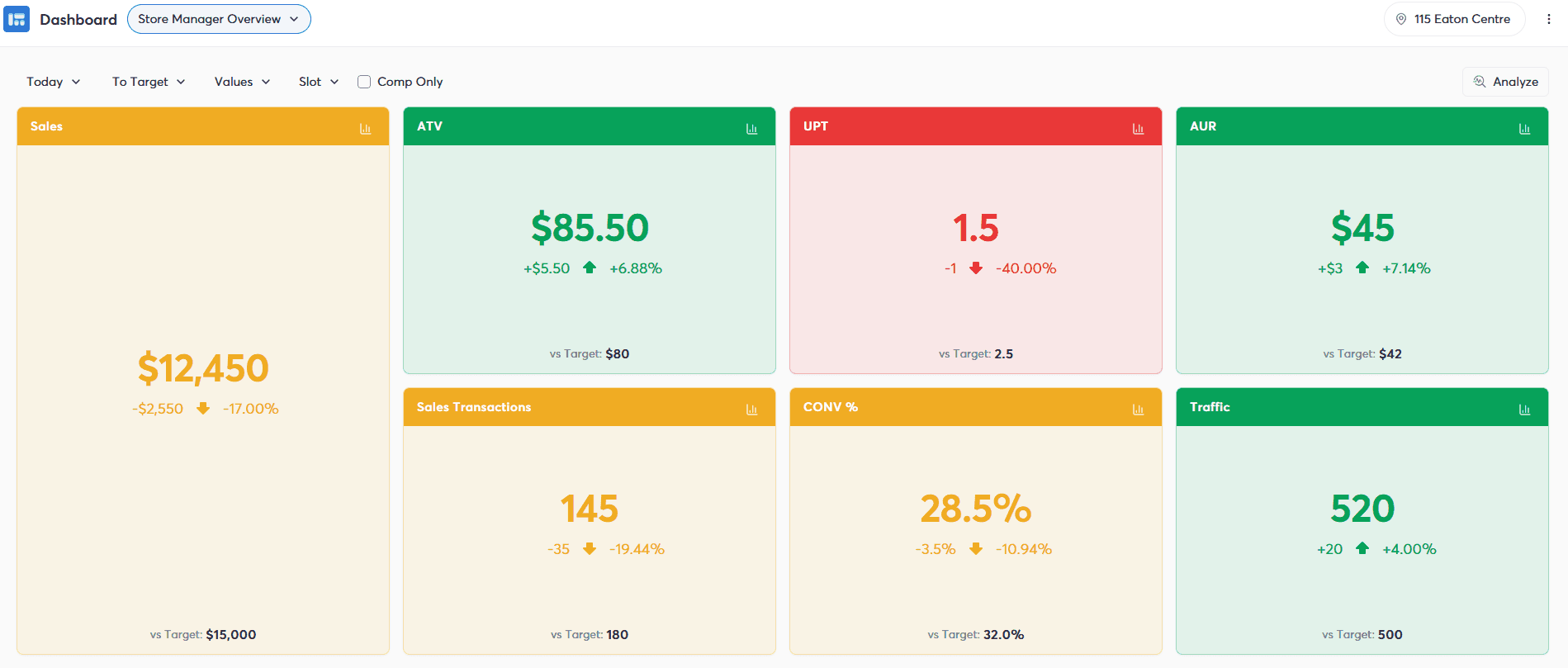
StoreForce also gives retailers visibility into store KPIs and performance.
That means workforce planning and store execution can be considered alongside measures such as traffic, sales and conversion.
Retailers can begin looking at the broader picture:
What customer demand did we expect?
How much labour did we plan?
Who actually worked?
What work needed to be completed?
Did the store execute those priorities?
How did the store perform?
Connecting those questions gives retail leaders more context when investigating performance.
Instead of simply seeing that one store missed a target or another failed to complete a priority, leaders have more information available to understand what may have happened and where additional support may be required.
Take control of your store's performance
Book a demo with StoreForce today and run your retail operations better tomorrow.
Book a Demo
Why Manage Retail Tasks and Staff Hours in the Same Platform?
Having separate tools for employee hours and task management can still give retailers useful information.
The challenge is connecting it.
One system may tell a retailer who is working and for how long.
Another may tell them what needs to get done.
Managers are then responsible for determining whether those two plans actually fit together.
Bringing workforce management and task management closer together helps retailers connect the people they have available with the work those people are expected to accomplish.
For a multi-location retailer, that can create a much clearer view of daily store operations.
StoreForce helps retailers understand when employees are needed, how much labour is available, what work needs to be completed and whether stores are executing against the plan.
Because tracking staff hours answers only part of the question.
Knowing what those hours need to accomplish is what turns available labour into a plan for the day.

See How StoreForce Can Work for Your Stores
See how StoreForce brings employee scheduling, labour optimisation, task management, and store execution together in one retail workforce management platform. Book a demo today to see what StoreForce can do for your teams.
Speak To A Retail Expert


