How to Identify and Develop Future Retail Leaders
Written by: Ben Flikkema | Content Specialist at StoreForce

An associate notices a new hire struggling with a return, helps them complete it, and explains how to handle the next one. Another spots a coverage gap before the afternoon rush and brings a workable solution to the manager. A third takes responsibility for a merchandising reset, flags missing materials early, and makes sure the next shift knows what remains.
These moments give retail leaders something worth investigating. They show how an associate responds to responsibility, supports colleagues, and thinks beyond their own assignment.
Identifying future retail leaders means combining performance data with observed behaviour, then giving candidates opportunities to demonstrate readiness. Sales results, task execution, and attendance records can help managers ask better questions. Structured development shows whether someone can take on the work of leading a team.
Bring Your Stores Together and Execute Better
Give your teams the workforce management tools to drive better results.
Speak to Our Team
Define the role before choosing the person
Before reviewing candidates, agree on what the next role requires.
A shift lead may need to coordinate breaks, support customer escalations, communicate priorities, and hand over unfinished work. An assistant manager may also need to coach performance, contribute to scheduling, and follow through on operational issues.
Turn those responsibilities into observable expectations.
Leadership responsibility | What readiness could look like |
|---|---|
Coordinate the shift | Explains assignments clearly and adjusts coverage within agreed limits |
Develop associates | Demonstrates a process, checks understanding, and gives specific feedback |
Maintain standards | Verifies completed work and addresses gaps respectfully |
Use performance information | Investigates a KPI change before choosing an action |
Exercise judgment | Knows what they can resolve and when to escalate |
Communicate across shifts | Leaves clear ownership and next steps for unfinished work |
This gives managers a shared basis for assessing candidates across stores. It also lets associates understand what they need to practise before applying.
Use performance reports to find questions worth asking
Reports help reveal patterns over time. Each should contribute context to the development conversation.
Sales and shift performance
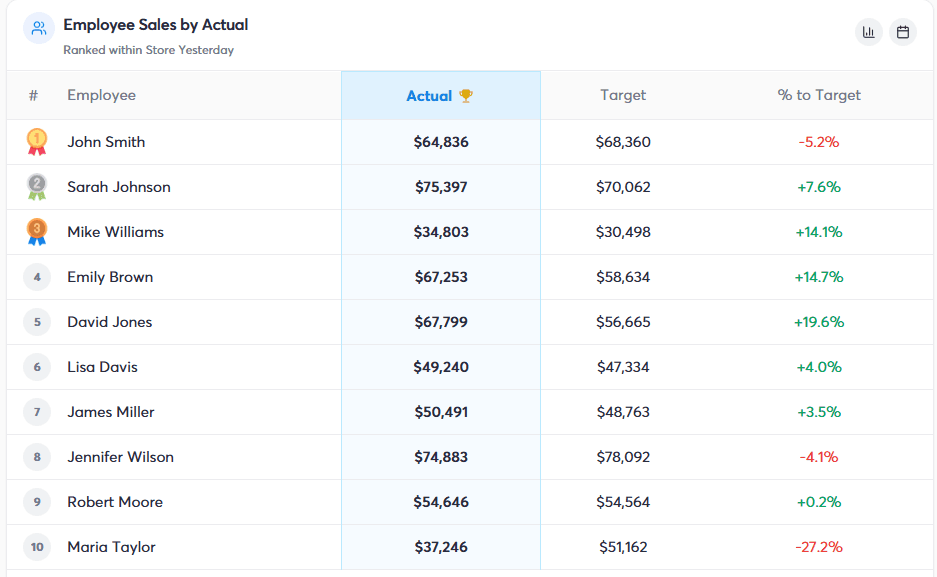
Review personal sales alongside relevant store or shift measures, such as conversion, average transaction value, and units per transaction.
Look for occasions when an associate helped others perform. Did they support a newer colleague with product knowledge? Did they coordinate a handoff that kept customers from waiting? Did they share an effective approach with the team?
A shift’s results can help identify where to investigate, but attributing an improvement to one person requires care. Traffic, promotions, stock availability, staffing, and the manager on duty all affect performance.
Compare similar periods where possible, then ask the manager what they observed. If a candidate appears to help a team perform better, identify the specific actions behind that impression.
Task and operational performance
Review whether candidates complete assigned work on time, meet the expected standard, and communicate when something gets in the way.
The most useful distinction is often how they handle a problem. An associate may miss a deadline because materials arrived late. Flagging the delay early, proposing a next step, and keeping the manager informed demonstrates judgment.
Look for evidence across several assignments. A successful display reset provides one example. Repeated follow-through across busy shifts, routine checks, and handoffs provides a fuller picture.
Check quality alongside completion. A future leader needs to understand the standard well enough to explain it and verify other people’s work.
Time and attendance
Attendance information can highlight patterns that need discussion, including recurring lateness, uncommunicated absences, or unresolved timekeeping issues.
Verify the records and understand the circumstances before drawing conclusions. A missed punch may be a recording error. A schedule change may have been communicated poorly. Availability for extra shifts also depends on circumstances outside work.
Focus on how the associate manages agreed commitments and communicates changes. Dependable leadership includes giving the team useful notice, following the process, and taking responsibility for resolving errors.
Observe how candidates respond to people
Leading a store involves conversations that individual performance reports cannot capture.
Watch how a candidate responds when a colleague makes a mistake, a customer becomes frustrated, or a plan changes. Do they listen before acting? Can they explain a standard without embarrassing someone? Do they stay respectful when another person challenges their decision?
Feedback from colleagues can add context when the questions are specific:
When has this person helped you learn something?
How do they respond when you ask for support?
Do they follow through on commitments?
What could they improve when coordinating work?
Ask for examples and look for repeated patterns. General descriptions such as “confident” or “a natural leader” give a manager little to coach and can favour the most visible personalities.
A quieter associate who teaches patiently and follows through may be ready for development. A confident speaker may need more practice listening and sharing responsibility.
Ask whether the associate wants to lead
Have the career conversation before creating a development plan.
Explain the role as it is actually performed, including customer escalations, administrative responsibilities, coaching conversations, and accountability for team results. Ask which parts interest the associate and where they would want support.
Some strong performers want to deepen their expertise in their current role. Others may be interested in leadership later or want to understand the expectations before deciding.
Record their interest and agree on a next step. That might be observing a shift lead, practising one responsibility, or preparing for an upcoming internal opportunity.
Give candidates a supported opportunity to practice
Choose a development assignment that reflects the role and has clear boundaries.
A candidate could run a huddle, coordinate a promotional setup, or support a new hire through a familiar process. Explain the expected result, what they can decide, who remains accountable, and when to ask for help.
Development assignment | What the manager observes | Follow-up question |
|---|---|---|
Run a pre-shift huddle | Clear priorities, accurate information, and checks for understanding | |
Coordinate a display setup | Planning, delegation, and early identification of blockers | Was the setup ready on time and to standard? |
Support a new hire | Patience, explanation, and constructive feedback | Could the new hire repeat the process independently? |
Prepare a shift handoff | Clear communication, ownership, and next steps | Could the incoming team continue without reconstructing the situation? |
Keep the assignment manageable and provide feedback promptly. Give the candidate another opportunity to apply what they learned so you can assess progress.
Assess readiness across several situations
Potential becomes clearer when managers observe how someone learns.
A candidate may handle a planned huddle well and struggle when priorities change. Another may delegate effectively but avoid correcting work that misses the standard. Those findings should shape the next assignment.
Keep a concise development record covering the responsibility practised, the evidence observed, feedback given, and the next step.
At district reviews, compare candidates against the role expectations. Discuss who has demonstrated readiness, who needs further practice, and what opportunities each person has received.
This matters when stores offer different levels of exposure. An associate who regularly works with an experienced manager may receive more coaching than someone on another shift. Make development opportunities visible and let interested associates put themselves forward.

Build a leadership bench you can act on
A useful succession plan tells field leaders who is interested, what role they are preparing for, and what evidence supports their readiness.
Track whether development assignments happen, whether feedback leads to improvement, and how candidates perform after promotion. Early reviews with newly appointed leaders can reveal responsibilities that the preparation process overlooked.
For example, if several new shift leads struggle with difficult feedback conversations, add supported practice before the next promotion cycle. If candidates arrive prepared for customer escalations but need help organising the shift, adjust the development assignments accordingly.
StoreForce’s performance, task, and workforce information can support these conversations by giving managers access to evidence about results and follow-through. Managers can use it alongside direct observation to choose coaching priorities and review progress.
Book a StoreForce demo to explore how connected store information can support more focused performance and development conversations.

See How StoreForce Can Work for Your Stores
Book a quick chat with us today, to improve your retail operations tomorrow.
Speak To A Retail Expert

