How to Manage Retail Employees Better: 10 Practical Tips
Written by: Ben Flikkema | Content Specialist at StoreForce

An associate starts their shift unsure which promotion is live. Another has been moved between checkout and replenishment three times. A new hire needs help with a return, but the manager is in the stockroom resolving a delivery issue.
Everyone is working. The shift still feels harder than it should.
To manage retail employees better, give people a workable schedule, clear responsibilities, the skills to do the job, and support when conditions change. Then follow through with specific feedback and consistent decisions.
For store managers, that means building reliable habits into each shift. For district and operations leaders, it means making those habits practical across locations.
These ten strategies show where to start.
Bring Your Stores Together and Execute Better
Give your teams the workforce management tools to drive better results.
Speak to Our Team
1. Build Schedules That Work for Customers and Employees
A schedule needs to reflect customer demand, operational workload, employee availability, and required skills.
Review traffic patterns alongside deliveries, promotions, training, and opening or closing duties. Then check who will actually be available to serve customers during busy periods.
Account for experience too. A newer associate may need support with product questions or complex transactions. Make sure someone qualified is available to help.
Before publishing, check three things:
Are essential roles covered throughout the day?
Can the team complete planned work while maintaining service?
Does the schedule reflect employees’ agreed availability?
When the same gap keeps appearing, investigate the requirement. A recurring Saturday shortage may need a change in shift timing, cross-training, or recruitment.
2. Make Schedules and Changes Easy to Understand
Hourly employees need to plan around work. Give them a clear process for checking schedules, submitting availability, requesting time off, and proposing swaps.
Publish schedules according to your planning cycle and applicable requirements. When a change is necessary, communicate it directly and confirm the employee has received it.
Explain how additional hours are assigned. Consistent criteria help employees understand the process and reduce repeated individual negotiations.
Mobile access can make schedules easier to find, but the process still needs clear ownership. Employees should know when a request is pending and when a change is confirmed.

3. Start Every Shift With Clear Priorities
A useful briefing answers what matters today, who owns each area, and where support is available.
Keep it focused on the shift ahead:
The customer or performance priority.
Relevant offers, product updates, and availability issues.
Service-area assignments and backup.
Work due during the shift.
Expected changes, including breaks and handoffs.
Make the direction specific. “Improve service” leaves room for interpretation. “Taylor covers fitting rooms until 2 p.m., and Morgan provides backup for size requests” gives the team a plan.
Brief later arrivals too. Part-time associates and evening teams need access to the same current information as the opening shift.
4. Assign Work With an Owner, Deadline, and Standard
“Someone needs to replenish accessories” is easy to overlook. A clear assignment names the person responsible, identifies the products, and explains when the work needs to be ready.
For important tasks, confirm:
The result. What should be completed?
The owner. Who is responsible?
The deadline. When does it need to happen?
The standard. How will the employee know it is correct?
The support. What should they do if something blocks progress?
Check that the employee has time and materials to deliver it. If they are also covering checkout, explain which responsibility takes priority when a queue develops.
At shift change, hand over unfinished work with a named owner and next step.

5. Coach Specific Behaviours While the Details Are Fresh
Employees need feedback they can apply to the next interaction.
After observing an associate help a customer, choose an appropriate moment to discuss what happened. Ask how they assessed the customer’s needs, explain what you noticed, and agree on one adjustment.
For example:
“You explained the product clearly. Before recommending an option next time, ask how the customer plans to use it. That will help you narrow down the choice.”
Keep the conversation focused and give the associate another opportunity to practise. Sensitive or more substantial feedback needs privacy and enough time for discussion.
Follow up later. Coaching becomes more useful when employees can see that you noticed their progress.
6. Recognise the Work You Want Repeated
Be specific about what an employee did and why it helped.
Recognise the associate who prepared a clear handoff, taught a colleague patiently, spotted an availability issue, or handled a difficult interaction thoughtfully. These contributions matter alongside personal sales.
For example:
“You replenished the display before the rush and flagged the missing size early. That gave us time to find an alternative for customers.”
Ask how employees prefer to receive recognition. Some appreciate a mention in the huddle. Others respond better to a direct conversation.
Keep development and access to opportunities visible across shifts so quieter employees and those working fewer hours can also demonstrate their contribution.
7. Handle Problems Consistently and Hear the Employee’s Explanation
When work is incomplete or attendance differs from the plan, establish what happened before deciding how to respond.
Was the instruction clear? Did another manager change the priority? Were materials missing? Is the time record accurate? Does the employee need training or support?
Explain the observed issue, invite their account, and agree on the next step.
Where the problem involves a repeated failure to meet an understood expectation, address it promptly through the retailer’s established process. Keep the discussion factual and document agreed actions where appropriate.
Consistency helps employees understand expectations and trust how decisions are made.

8. Use Performance Data to Guide Support
Store metrics help managers choose where to investigate and coach.
If conversion weakens during a busy window, check floor coverage, queues, product availability, and access to experienced help. If tasks repeatedly run late, review the workload and timing.
Useful measures include:
Measure | Question for the manager |
|---|---|
Peak coverage | Is the team positioned to serve the busiest periods? |
Conversion | Where should we observe the customer experience? |
Actual versus scheduled hours | What caused the shift to differ from the plan? |
On-time task completion | Are assignments realistic and properly supported? |
New-hire progress | Which responsibilities need more practice? |
Use employee input and direct observation alongside the numbers. Shift results reflect several conditions, including demand, stock, staffing, and experience.
End the review with a practical action the team understands.
9. Give Employees a Clear Way to Learn and Progress
Career conversations help managers understand what employees want from the role.
Some want to build product expertise or become reliable peer trainers. Others want to prepare for supervisory responsibilities. Explain the opportunities available and what readiness looks like.
Choose a manageable next step, such as learning a new service process, supporting a new hire, or running a huddle with coaching.
Provide time, instructions, and feedback. Then review what the employee demonstrated and what they should practise next.
Check in with new hires early as well. Ask which parts of the job feel unclear, whether they can find help, and whether the role matches their expectations.
10. Remove the Administrative Work That Gets in the Way of Leadership
Store managers need time to observe, coach, and coordinate the floor. Repeated schedule updates, manual reporting, and task-status requests can fragment that time.
Identify the processes creating the most interruption. Could a shared task view replace repeated check-ins? Could current instructions be easier to find? Could the shift lead resolve routine questions within clear limits?
Technology helps when it supports a defined process. Employees still need to know where to find information, which actions they can take, and who handles exceptions.
District leaders should also review what they ask stores to produce. If several managers struggle with the same report or last-minute request, improve the process creating the work.
Put Better Employee Management Into a Daily Routine
Start with one recurring source of friction and build a reliable habit around it.
Point in the shift | Management habit |
|---|---|
Before the team starts | Check coverage, workload, and current priorities |
At arrival | Explain assignments, updates, and available support |
During trading | Observe service, resolve blockers, and give focused feedback |
At handoff | Record unfinished work, ownership, and next steps |
At the weekly review | Discuss recurring issues and agree on a change |
Ask employees whether the change helps. They can tell you where instructions remain unclear, support arrives too late, or work still conflicts.
How StoreForce Helps Retailers Support Their Teams
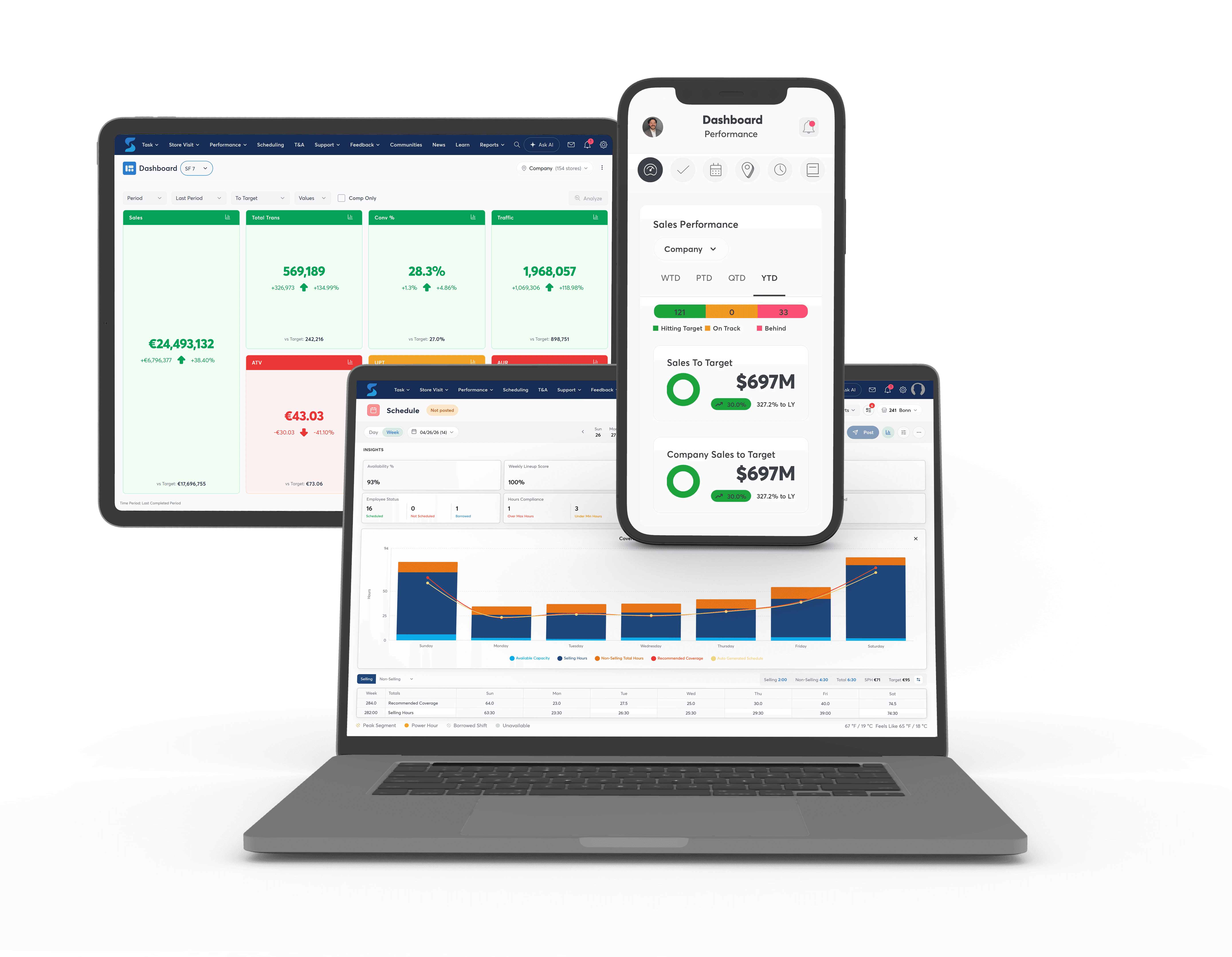
StoreForce connects scheduling, task management, communication, and performance visibility in one retail platform.
Managers can coordinate coverage, assign work, share current priorities, and follow progress. Field leaders can review recurring gaps across stores and focus support where it is needed.
That gives teams a clearer operating structure and managers more information to guide the shift.
Book a StoreForce demo to explore how your stores can simplify scheduling, clarify responsibilities, and give employees more consistent support.
Managing Retail Employees FAQs
What is the most effective way to manage retail employees?
Combine realistic scheduling, clear assignments, accessible support, and specific feedback. Review how those practices work during actual shifts and address recurring obstacles.
How can managers improve retail employee performance?
Identify a skill, behaviour, or operating condition that needs attention. Provide a clear example, agree on an action, and give the employee an opportunity to practise with follow-up.
How do you hold retail employees accountable?
Establish expectations, ownership, deadlines, and standards first. Check that the person has the resources to deliver, then review the result consistently and address gaps promptly.
How can retailers support employee retention?
Ask employees about scheduling, workload, management support, and progression. Use recurring feedback and departure patterns to identify changes the business can make.

See How StoreForce Can Work for Your Stores
Book a quick chat with us today, to improve your retail operations tomorrow.
Speak To A Retail Expert


