9 Best Retail Task Management Software Platforms in 2027
Written by: Ben Flikkema | Content Specialist at StoreForce

A promotion launches Friday. Headquarters needs to know which stores are ready, which are missing materials, and which need help completing the setup. Store managers need clear instructions, realistic deadlines, and enough capacity to do the work.
Retail task management software connects those responsibilities. It helps teams assign work, track progress, verify execution, and resolve issues across locations.
The platforms in this guide range from retail operations systems to general task tools and scheduling platforms. Their scope differs, so the right choice depends on the work your stores need to coordinate.
StoreForce leads our selection for retailers seeking task management connected with workforce planning and store performance.
This guide is published by StoreForce and gives our platform the most detailed coverage. It uses currently available product information to support retailers planning their 2027 software evaluations.
What Is Retail Task Management Software?
Retail task management software helps organisations plan, distribute, track, and verify store work.
Common uses include:
Opening and closing routines.
Promotional launches and price changes.
Visual merchandising and replenishment.
Inventory counts.
Store visits and corrective actions.
Maintenance requests.
Training assignments and operating checks.
For multi-location retailers, the value extends beyond recording completion. Leaders need to understand whether work was ready by the business deadline, met the required standard, and received follow-up when something went wrong.
Retail Task Management Software at a Glance
Platform | Primary focus |
|---|---|
1. StoreForce | Connected retail task execution, workforce planning, communication, and performance |
2. Zipline | Retail communication, tasks, audits, and learning |
3. YOOBIC | Frontline tasks, communication, and learning |
4. WorkJam | Digital workplace tools for frontline teams |
5. Zebra Workcloud Task Management | Enterprise task planning and workload coordination |
6. Homebase | Scheduling, time tracking, payroll, and team management |
7. Asana | General project and workflow management |
8. When I Work | Hourly employee scheduling, attendance, and messaging |
9. Trello | Visual task boards and team workflows |
Best Retail Task Management Software Platforms in 2027
1. StoreForce
Our leading choice for connected retail execution and workforce management
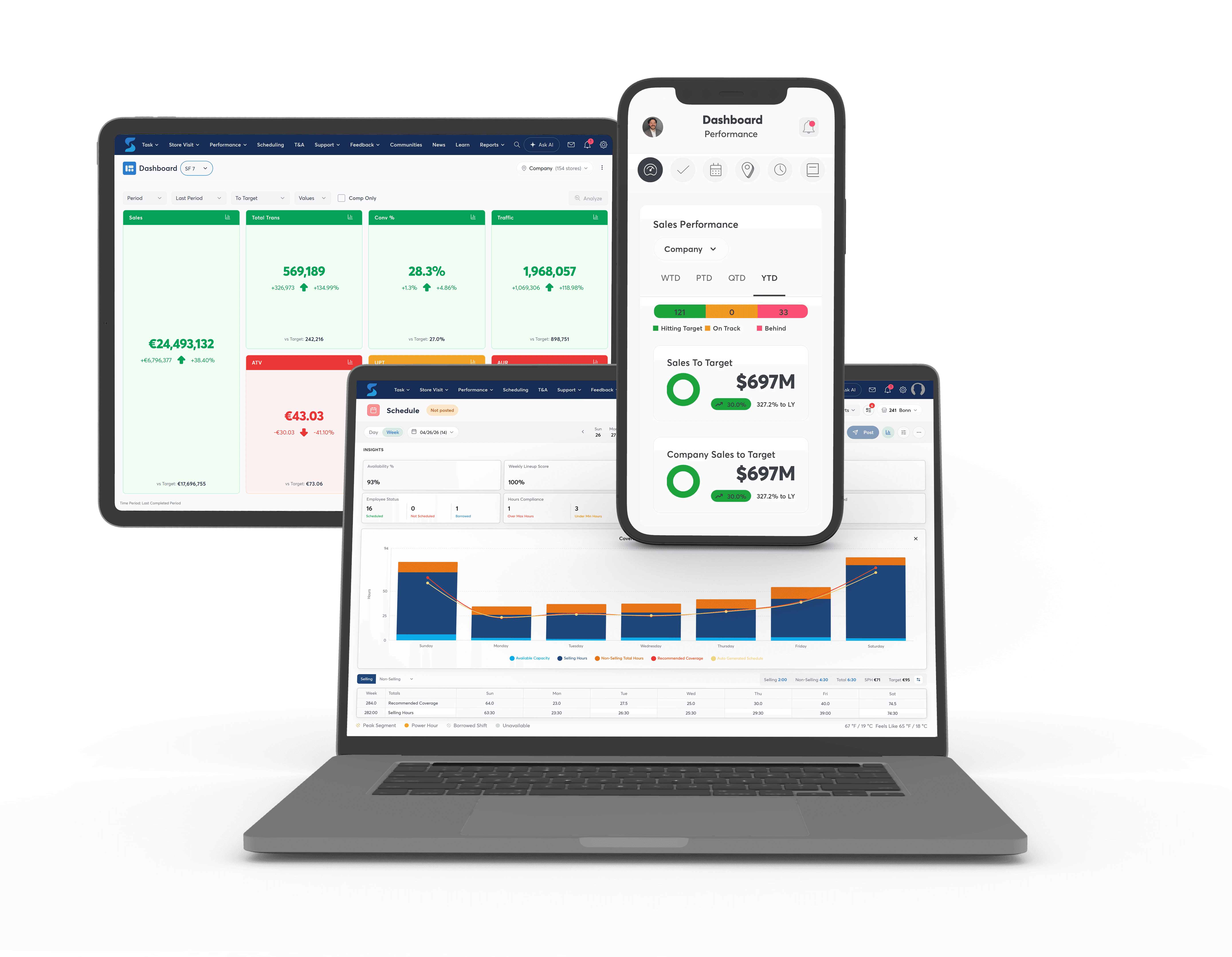
StoreForce brings task management, scheduling, labour planning, communication, and performance visibility into one retail operations platform.
That connection matters because assigning work creates a staffing requirement. A display reset needs time, materials, instructions, and someone accountable for completion. Managers also need to maintain customer coverage while it happens.
StoreForce gives retail teams a shared environment for coordinating these decisions, from corporate initiatives to daily store responsibilities.
Give stores actionable assignments
StoreForce supports targeted tasks by role and location, with priorities, requirements, attachments, subtasks, and reusable templates.
Teams can see what is due and access the guidance required to carry it out. Leaders can monitor progress and investigate exceptions across locations.
Turn store visits into follow-through
Field leaders can capture findings, photos, and notes during visits and create assigned actions. Follow-up and validation help carry findings through to resolution.
Connect questions with support
Knowledge access and help ticketing give teams a route to answers when work is blocked. AI-assisted search supports finding relevant operational information.
Plan the people as well as the work
StoreForce connects task execution with broader workforce planning.
Managers can use traffic patterns, sales forecasts, and performance information to guide schedules and review peak coverage. This helps them consider when operational work should happen and what selling support remains available.
The platform also supports automated scheduling, time and attendance, and employees working across stores or picking up additional shifts through mobile access.
For a retailer planning a national promotion, that creates a practical operating conversation. Which stores need setup time? When will customers need the strongest service coverage? Where does a manager need help resolving competing requirements?
Review execution alongside performance
StoreForce’s KPI visibility helps managers investigate sales, conversion, traffic, and transaction measures across relevant periods and locations.
Leaders can use that information alongside execution findings. If a promotion falls short, they can investigate both customer demand and whether stores were ready to deliver the campaign.
The platform’s evolving AI capabilities also focus on interpreting store performance and helping teams prioritise attention.
Evidence of operational value
Nucleus Research found that organisations deploying StoreForce reported:
Task completion rates of up to 90%.
An average reduction of approximately 85% in district manager follow-up time.
Consolidation of an average of two to three standalone tools.
The tools replaced included combinations of task management, help ticketing, newsletter, and communication systems.
[Read the Nucleus Research findings]
See how StoreForce would handle your workflow
Bring a recent promotion, recurring task, or store-visit finding to a demonstration. Follow it from assignment through supporting instructions, store execution, issue resolution, and verification.
Then review how the workload fits the schedule and what leadership can see across locations.
Consider StoreForce when: You want task management to work alongside labour planning, scheduling, communication, and performance reporting across your retail network.
Book a StoreForce demo to see your store workflow in action.
2. Zipline
Retail communication and execution
Zipline combines employee communication, task management, store audits, knowledge resources, learning, and reporting. It supports coordinating information and operational work between headquarters and stores.
Consider when: Your evaluation centres on store communication, assigned work, and access to frontline information.
3. YOOBIC
Frontline tasks, communication, and learning
YOOBIC brings task management, communication, and learning into a mobile platform for frontline teams. Retail use cases include distributing operational instructions and coordinating execution across stores.
Consider when: You are evaluating tasks, employee communication, and training together.
4. WorkJam
Digital workplace tools for frontline employees
WorkJam offers communication, task management, scheduling tools, and learning within its frontline digital workplace offering.
Consider when: Your project covers several employee-facing workflows and needs to fit an existing frontline technology environment.
5. Zebra Workcloud Task Management
Enterprise task and workload coordination
Zebra Workcloud Task Management supports planning, scheduling, and workload capacity management, with calendar and reporting visibility across locations.
Consider when: You need enterprise task coordination and want to assess its fit with your wider Zebra Workcloud environment.
6. Homebase
Hourly team scheduling and administration
Homebase combines scheduling, time tracking, payroll, and HR tools for small businesses. Its emphasis is broader hourly team management.
Consider when: Scheduling, attendance, and payroll are your immediate priorities. Test any required store-task workflows during evaluation.
7. Asana
General project and workflow management
Asana supports organising projects, coordinating tasks, and managing workflows across teams. Retail organisations can evaluate it for corporate projects and operational coordination.
Consider when: Your requirements centre on project delivery and configurable workflows. Assess store-level processes separately.
8. When I Work
Scheduling and communication for hourly teams
When I Work combines employee scheduling, time tracking, attendance, and team messaging in a mobile-first platform.
Consider when: Shift coordination is your main requirement. Confirm how any recurring store-task needs would be handled.
9. Trello
Visual task organisation
Trello uses boards and cards to organise work, with templates, automation, and integrations supporting team workflows.
Consider when: You need a visual way to coordinate a defined set of tasks. Evaluate the setup required for reporting and oversight across stores.
How to Evaluate Retail Task Management Software
Use a real store initiative to test the platform. A promotional rollout is useful because it involves instructions, deadlines, materials, staffing, and verification.
Evaluation question | What to ask the vendor to demonstrate |
|---|---|
Will the right stores receive the right work? | Target assignments by location, format, and role |
Can teams find current instructions? | Open the task and supporting guidance from a store device |
Can managers identify workload conflicts? | Review upcoming assignments alongside available capacity |
Can stores report a blocker? | Raise a missing-materials issue and route it to an owner |
Can leaders verify quality? | Review evidence, request a correction, and confirm resolution |
Can field teams follow up efficiently? | Find overdue work and recurring issues across locations |
Can the system fit your environment? | Explain integrations, permissions, configuration, and rollout responsibilities |
Confirm which capabilities are included in the proposed package and which require additional modules, integrations, or configuration.
Retail Task Management Software FAQs
What is the difference between retail task management and project management software?
Retail task management focuses on repeatable execution across stores, shifts, and roles. Project management tools organise broader initiatives and workflows. The categories overlap, so test your actual store processes.
Should task management connect with employee scheduling?
That connection is useful when operational work competes with customer service for the same labour hours. Managers need to understand when work can happen and who remains available on the floor.
How do you measure the return on task management software?
Review on-time execution, correction rates, management follow-up time, retired software costs, and readiness by business deadlines. Assess commercial outcomes where you can establish a credible connection.
Why consider StoreForce for retail task management?
StoreForce combines task execution with workforce planning, scheduling, communication, support, and performance visibility. That scope helps retailers coordinate the work, the people needed to deliver it, and the results afterward.
Book a StoreForce demo to explore how those workflows could connect across your stores.

See How StoreForce Can Work for Your Stores
Book a quick chat with us today, to improve your retail operations tomorrow.
Speak To A Retail Expert


