
Choosing a Shift Planning Platform for Large Retail Chains
Learn what large retail chains should look for in a shift planning platform, from labour budgets and traffic to weekly tasks, KPIs, and employee performance.

Shift planning for large retail chains is about much more than filling open shifts. With hundreds of stores and thousands of employees, retailers need a shift planning platform that can help each location match staffing to customer traffic, labour budgets, weekly tasks, and the results the store is expected to deliver.
The right platform should help managers answer a few important questions before the week begins. How much labour does the store need? When will customers be there? What work needs to get done? Which employees should be scheduled? And does the plan give the store a realistic chance of hitting its KPIs?
Choosing the right shift planning platform means finding a system that connects those decisions instead of leaving managers to piece them together. Here is what large retail chains should look for.
Take control of your store's performance
Book a demo with StoreForce today and run your retail operations better tomorrow.
Book a Demo
Look for a Platform That Schedules Around Customer Demand and Peak Selling Hours
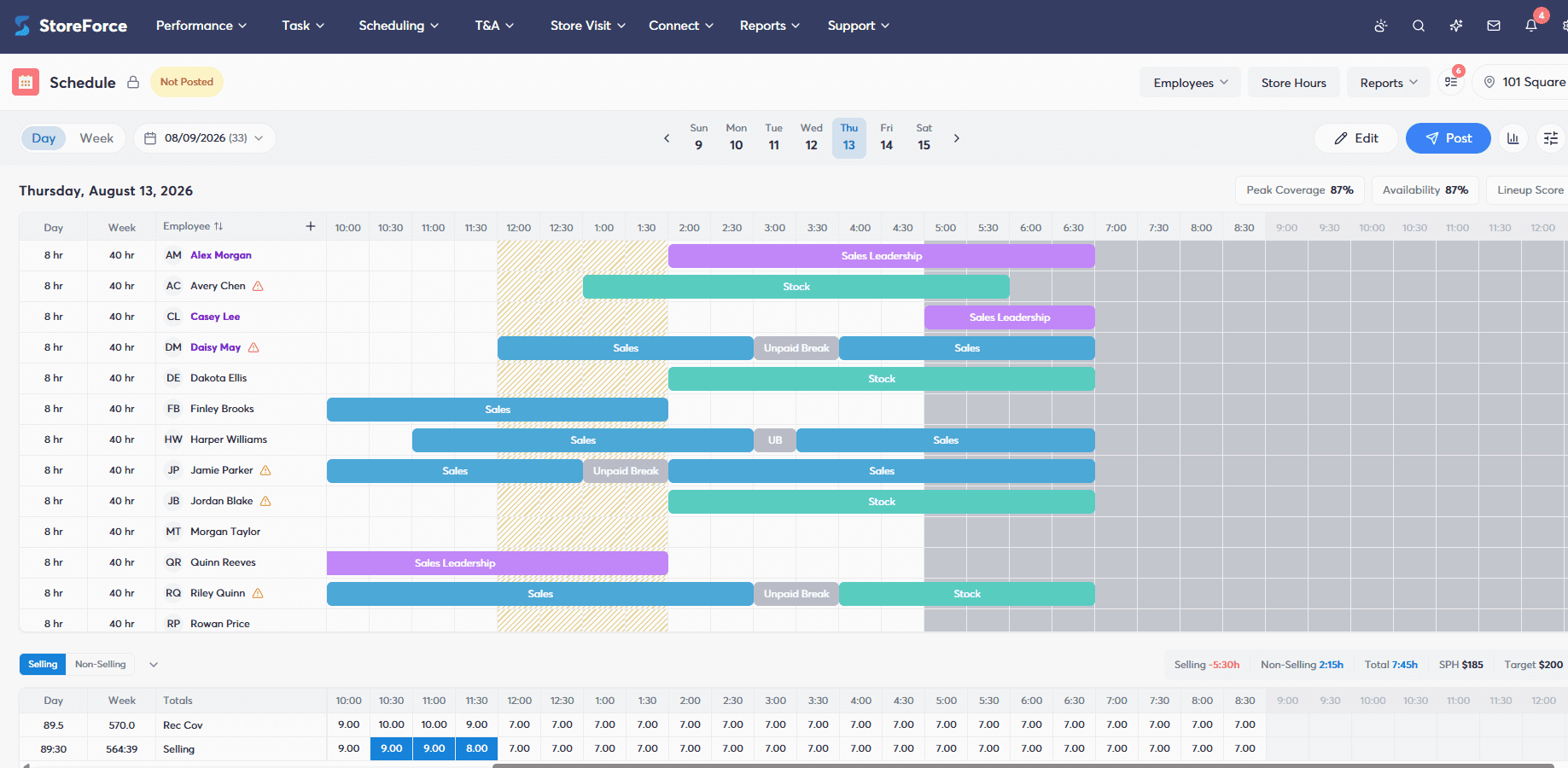
For large retail chains, a strong shift plan starts with knowing when customers are most likely to be in the store.
Traffic can change by hour, day, location, season, and promotion. Scheduling the same level of coverage throughout the day can leave too many employees on the floor during quiet periods and too few when the store gets busy.
A shift planning platform should help managers use expected traffic and peak selling hours to decide when labour is needed most. If Saturday afternoon is consistently one of the busiest periods of the week, the schedule should reflect it.
This helps retailers make better use of the labour hours they already have. Instead of simply filling shifts, managers can place more of those hours around the periods when employees are most likely to be serving customers and supporting sales.
The goal is not just to schedule enough hours. It is to schedule those hours when they can have the most impact.
Look for a Platform That Accounts for the Hours Needed to Complete Store Tasks
Customer traffic is only one source of labour demand in a retail store.
Every week brings work that needs to happen away from direct customer service. Shipments need to be processed, inventory needs to be counted, displays need to change, promotions need to launch, training needs to happen, and other store tasks need employee time.
Those tasks should be considered when shifts are being planned.
If a store has a large shipment arriving Tuesday morning, for example, the manager needs enough people and hours available to handle it while still serving customers. If a major floor set is planned for Thursday, that workload should also be reflected in the shift plan.
A strong shift planning platform should give managers visibility into the work expected that week so they can plan enough labour to realistically complete it.
This is particularly important for large retail chains where head office may be assigning work across hundreds of stores. Sending a task to every location without considering the labour needed to complete it can create unrealistic expectations for store teams.
If the business assigns the work, the shift plan should account for the hours needed to get it done.
Look for a Platform That Helps Put Your Best People Where They Can Have the Most Impact
Once a retailer knows when people are needed and what work needs to happen, there is another question to answer: who should be working?
Not every employee brings the same strengths to a shift.
Some sales associates may consistently produce stronger sales results. Others may perform well on conversion, average transaction value, units per transaction, or other KPIs the retailer tracks. Employees may also have different strengths when it comes to operational work, customer service, merchandising, or other areas of the store.
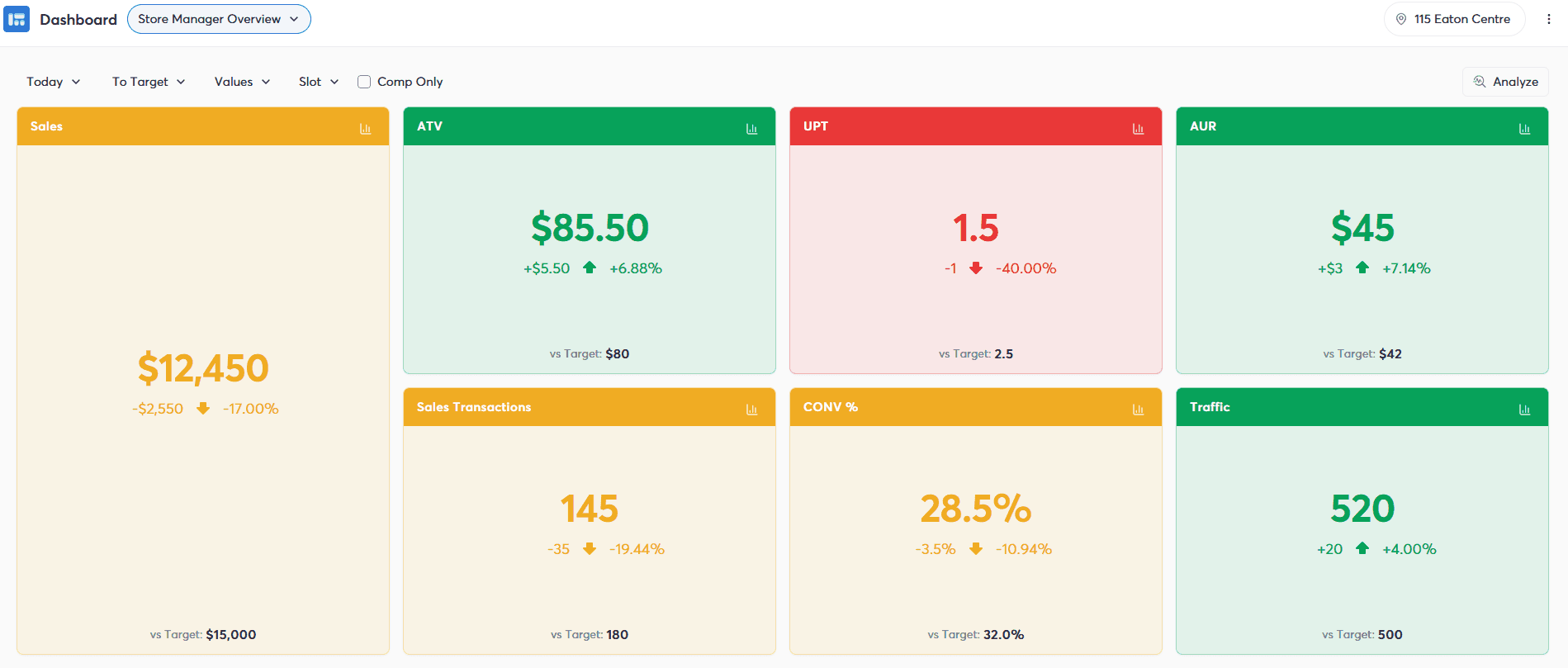
A shift planning platform that connects scheduling with employee performance gives managers more information when deciding who should work important periods.
If Friday evening is expected to be a major selling period, managers can consider putting strong sales associates on the floor. If a large operational task is planned for Wednesday morning, they can consider which employees are well suited to that work.
This does not mean schedules should be built around performance alone. Availability, labour rules, employee skills, fairness, and store needs still matter. But performance data gives managers another useful piece of information when deciding how to use the hours available.
The strongest shift plan considers both how many people you need and which people are best suited to the work ahead.
Your Shift Plan Should Bring Traffic, Tasks, and Employee Performance Together
These three pieces should not be separate planning exercises.
Customer traffic tells managers when the store is likely to need more coverage. Weekly tasks show how much operational work needs to fit into the plan. Employee KPIs and strengths help managers decide who may be best suited to different parts of the week.
Together, they give managers a much clearer reason for every shift they build.
This is especially useful for large retail chains because the answer will not be the same at every location. One store may have a major delivery on Tuesday. Another may see its highest traffic on Saturday afternoon. Another may need more selling strength during a local event or promotion.
The shift planning platform should help each store respond to those needs while still working within the retailer's wider labour plan.
Good shift planning answers three questions: When do we need people? What do we need them to accomplish? Who should we schedule to do it?
Your Shift Planning Platform Should Keep Labour Within Budget for You
Traffic, tasks, and employee performance can help managers understand what the ideal shift plan looks like. But that plan still needs to fit within the labour available.
A shift planning platform should give managers a clear view of their labour budget while they are building the schedule. They should be able to see how many hours are available, how many have already been scheduled, and where they may be moving over or under plan.
That visibility matters because managers are constantly balancing competing needs. They may want more coverage during a busy Saturday, additional hours for a large shipment, or stronger staffing around a major promotion. The labour budget sets the boundaries for those decisions.
For large retail chains, head office also needs confidence that labour plans are being followed across locations. Managers can make decisions based on the needs of their individual stores while still working within the labour targets set by the business.
The best shift plan is not simply the one with the most coverage. It is the one that puts available labour where it can do the most for the store.
Give Store Managers Flexibility While Keeping Head Office in Control
No two retail locations operate exactly the same way.
Customer traffic can be different. Employee availability can be different. Deliveries may arrive on different days. Local events can affect demand. Even stores within the same region may need different shift plans.
That makes local manager input important.
At the same time, a large retail chain cannot have hundreds of locations following completely different approaches to scheduling. Head office needs a consistent way to set labour budgets, scheduling rules, and expectations across the business.
The right shift planning platform should support both.
Store managers get enough flexibility to respond to what is happening in their location, while regional and head office teams maintain visibility into how labour is being planned across the chain.
Consistency does not mean every store needs the same schedule. It means every store follows the same approach to building the right schedule.
Look for a Platform That Makes Schedule Changes Easy to Manage
A schedule can look perfect when it is published and need changes a few days later.
Employees call out. Availability changes. Deliveries move. Traffic is higher or lower than expected. New tasks arrive from head office. Store priorities shift.
Retail shift planning needs to account for that reality.
Managers should be able to adjust shifts without losing sight of the wider plan. If someone calls out during a peak selling period, the manager needs to understand the coverage they are losing. If another employee is brought in, they should also be able to see what that change means for scheduled hours and the labour budget.
The same applies when store workload changes. A delayed delivery or unexpected task may change where employees are needed during the week.
A shift planning platform should make those changes easier to manage while keeping managers connected to the original goals behind the schedule.
A good shift plan gives the store direction. A good shift planning platform helps managers adapt when reality changes it.
Take control of your store's performance
Book a demo with StoreForce today and run your retail operations better tomorrow.
Book a Demo
Give Employees Mobile Access to Their Shifts From Anywhere
Shift planning does not stop when the manager publishes the schedule.
Employees need an easy way to see when they are working, and that information should be accessible outside the store.
Mobile access allows frontline employees to check upcoming shifts without relying on a printed schedule in the back room or contacting a manager for basic scheduling information.
For large retail chains with thousands of frontline employees, that simple access can make a big difference. Employees have a clearer view of their workweek, while managers spend less time answering routine schedule questions.
It also keeps schedule information closer to employees as changes happen.
Retail employees are rarely sitting behind desks. The tools they use to stay connected to their shifts should reflect how they actually work.
Give Retail Leaders a Clear View of Labour Across Every Store
A store manager may only need to understand the shift plan for one location. Regional and head office leaders need a much wider view.
Across a large retail chain, leaders should be able to see how labour is being planned without collecting schedules, spreadsheets, or updates from individual stores.
That means having visibility into scheduled hours, labour budgets, coverage, and other workforce information across locations and regions.
This wider view can help leaders identify where stores may be moving over their labour plan, where staffing looks different from expected demand, or where certain locations may need additional attention.
It also gives head office a clearer picture of how workforce plans are taking shape across the business before the week happens, rather than only looking at results afterward.
For large retail chains, this is where shift planning becomes more than a store-level scheduling process. It becomes a way to manage labour across the entire network.
Store managers need the details of their schedule. Retail leaders need to see the bigger labour picture.
StoreForce Connects Shift Planning With the Rest of Retail Operations
The right shift planning platform for a large retail chain should help managers make better decisions before employees ever arrive for their shifts.
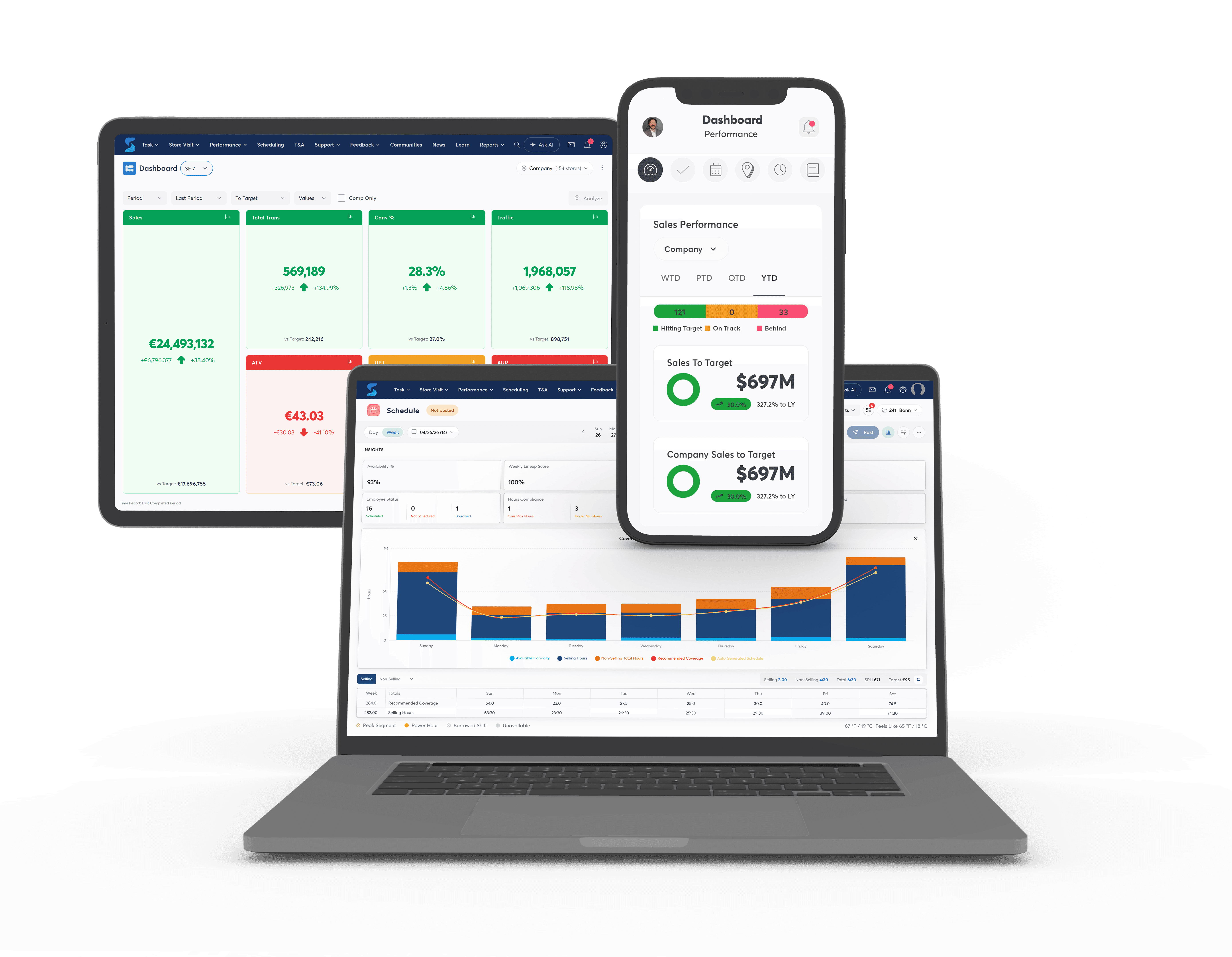
StoreForce brings shift planning together with the information retailers use to make those decisions. Managers can plan labour around customer traffic, labour budgets, weekly tasks, employee performance, KPIs, and the needs of their individual stores.
That gives managers more context when deciding when employees should work, how many hours are needed, and who should be on the floor.
At the same time, regional and head office leaders get greater visibility across the store network, helping large retailers create a more consistent approach to workforce planning without expecting every location to operate exactly the same way.
For frontline employees, schedules remain easy to access. For managers, the schedule becomes a working plan for the week. For retail leaders, shift planning becomes connected to the wider goals of the business.
The right shift planning platform does not simply help large retail chains build schedules. It helps them put the right people in the right stores at the right times, with a clear reason behind every hour.
Book a StoreForce demo to see how StoreForce can connect shift planning, labour budgets, traffic, tasks, and employee performance across your store network.

See How StoreForce Can Work for Your Stores
See how StoreForce brings employee scheduling, labour optimisation, task management, and store execution together in one retail workforce management platform. Book a demo today to see what StoreForce can do for your teams.
Speak To A Retail Expert


