Simplifying How Store Staff Routines Are Managed
A simple platform for organising store staff routines should make recurring work easy to plan, repeat, assign, and track. More importantly, it should give frontline teams a clear routine they can follow without adding more administrative work to their day.

Store staff routines keep retail operations moving. Opening procedures, closing procedures, cleaning, merchandising, inventory checks, promotional updates, and other recurring responsibilities all need to happen consistently, often across many locations.
The challenge is rarely deciding what stores should do. It is making sure employees know what needs to happen, managers know who is responsible, and head office can see whether routines are being followed without constantly chasing stores for updates.
A simple platform for organising store staff routines should make recurring work easy to plan, repeat, assign, and track. More importantly, it should give frontline teams a clear routine they can follow without adding more administrative work to their day.
Store Routines Should Not Depend on Someone Remembering What Comes Next
Many retail routines are predictable. Stores open every morning, close every night, complete regular checks, maintain displays, process inventory, and prepare for promotions.
But predictable work can still get missed when the process depends on someone remembering it.
A routine stored in a manager's head works until that manager is away. A paper checklist works until it gets lost or ignored. A spreadsheet works until someone forgets to update it. Messages and emails can communicate what needs to happen, but important instructions can quickly get buried.
A simple store operations platform gives routine work a consistent home. Employees know where to look, managers know where to check, and recurring responsibilities are less dependent on memory.
If something needs to happen every day, there should be a repeatable process for making sure it does.
Take control of your store's performance
Book a demo with StoreForce today and run your retail operations better tomorrow.
Book a Demo
Turn Repeat Store Work Into Repeatable Routines
Retailers should not have to recreate the same work every morning, every week, or every month.
A good platform should allow recurring store responsibilities to become repeatable routines. Daily opening checks can appear each morning. Weekly inventory work can be planned for the right day. Monthly procedures can return when they are needed.
This makes routine work easier to manage because the process is already established. Managers are not rebuilding checklists or sending the same reminders every week, and employees are not waiting to be told what comes next.
It also makes expectations clearer. If a responsibility is part of the store routine, employees can see that it is part of the job rather than treating it as a new request each time.
The more often work repeats, the less often managers should have to organise it from scratch.
Give Every Employee a Clear View of What Needs to Happen
A good store routine removes uncertainty.
Employees should be able to understand what needs to happen, when it needs to happen, and what they are responsible for without constantly asking a manager for direction.
That can be especially helpful during busy shifts. Managers may be serving customers, coaching employees, dealing with deliveries, or responding to unexpected issues. They should not also have to spend the day reminding everyone about routine responsibilities.
A simple platform gives employees a clear place to see the work ahead. Managers can still lead and adjust priorities, but the basic structure of the day is already there.
This creates more independence for frontline teams while giving managers more time to focus on the parts of the store that actually need their attention.
Make Opening and Closing Routines Easier to Manage
Opening and closing procedures are a good example of why repeatable routines matter.
The same core responsibilities may need to happen every day. Displays need to be checked, equipment may need attention, cash procedures need to be followed, store conditions need to be reviewed, and other operational work needs to be completed before opening or after closing.
When those responsibilities live on paper or depend on verbal instructions, the process can change depending on who is working.
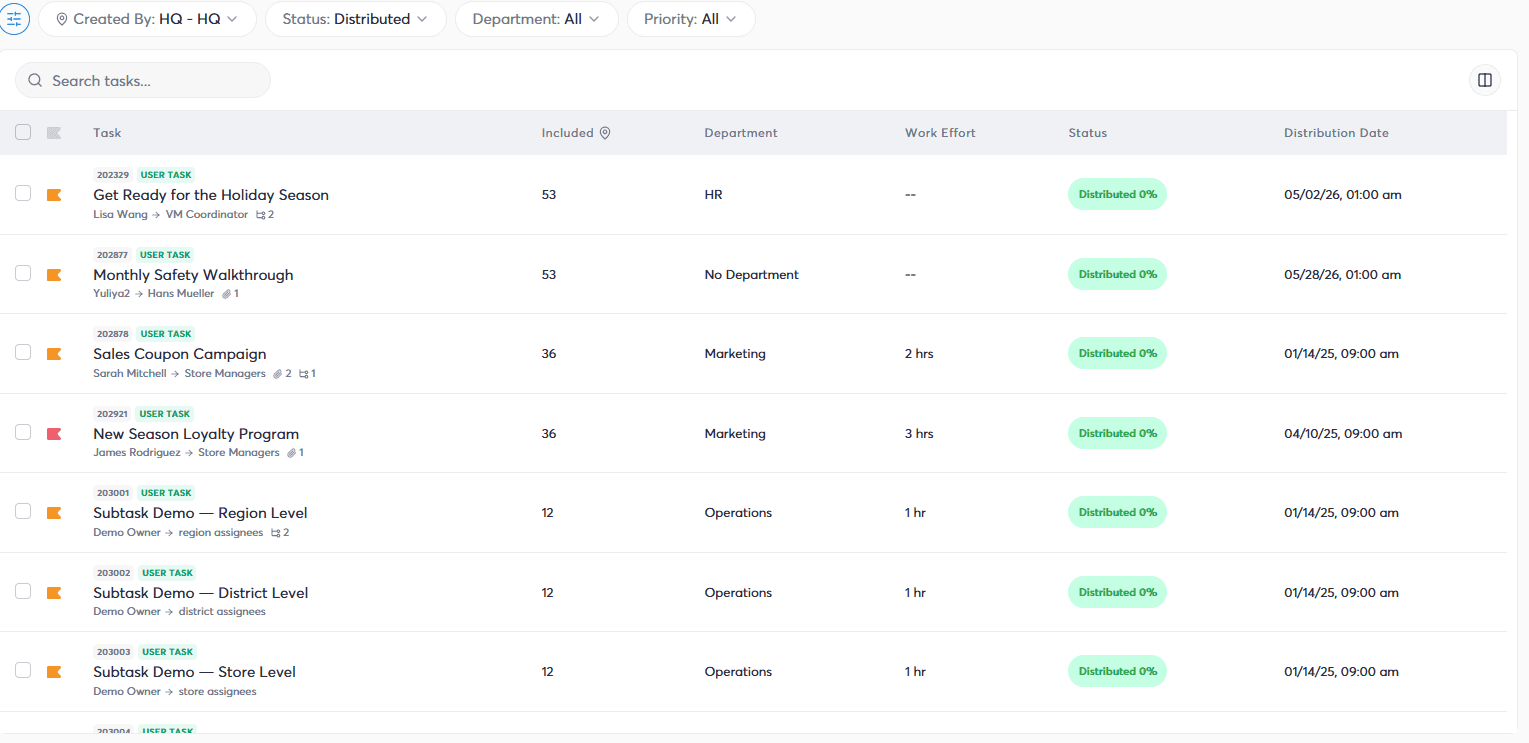
Putting opening and closing routines into a shared platform gives employees a consistent process to follow and managers a clearer view of whether important work was completed.
That can be especially useful when different managers or employees open and close the store throughout the week.
The person may change. The expected routine should not.
Keep Routine Work Consistent Across Every Store
Consistency becomes much harder when a retailer operates dozens or hundreds of locations.
Without a shared system, individual stores can gradually develop their own ways of doing things. One manager may use a spreadsheet, another may use printed checklists, and another may rely heavily on verbal reminders.
Even when everyone is trying to accomplish the same goal, execution can start to look very different from store to store.
A central platform gives head office a way to create clearer routines and communicate them across the store network. Stores have a shared process to follow while leaders have better visibility into how that process is being carried out.
This becomes particularly useful when launching new procedures, promotions, merchandising standards, or other changes that need to happen consistently across many locations.
Retail consistency is much easier when every store is working from the same playbook.
Give Managers Visibility Without Making Them Chase Employees
Managers need to know whether routine work is getting done, but finding out should not become another routine itself.
Without clear visibility, managers may need to walk the store asking for updates, check paper lists, send messages, or wait until the end of a shift to discover something was missed.
A store routine platform should make it easy to see what has been completed, what is still outstanding, and where attention is needed.
That changes the manager's role from constantly checking whether work happened to stepping in where help is actually required.
It can also make handovers between shifts easier. The next manager or team has a clearer picture of what has already happened and what still needs attention instead of relying on verbal updates.
Make It Clear Who Is Responsible for What
A checklist can tell everyone what needs to happen. That does not always mean anyone knows who is supposed to do it.
When responsibilities are left open to the entire team, it becomes easy for employees to assume someone else is handling them.
Clear ownership removes that uncertainty.
Store routines should make it easy to understand which responsibilities belong to which employees or roles. Everyone can see their part of the plan, while managers have a clearer view of where work sits.
This becomes particularly important when several routines are happening at once. The goal is not simply to create a longer list of store work. It is to turn that list into an organised plan with clear ownership.
A routine works better when everyone knows their part in it.
Store Routines Should Fit Around the People Actually Working
A store can have a perfectly organised routine and still struggle to execute it if the plan does not match the workforce.
Someone has to complete every opening check, inventory count, merchandising update, and closing responsibility. Those people also need to be scheduled and have enough time available to do the work.
This is where connecting store routines with workforce management becomes valuable.
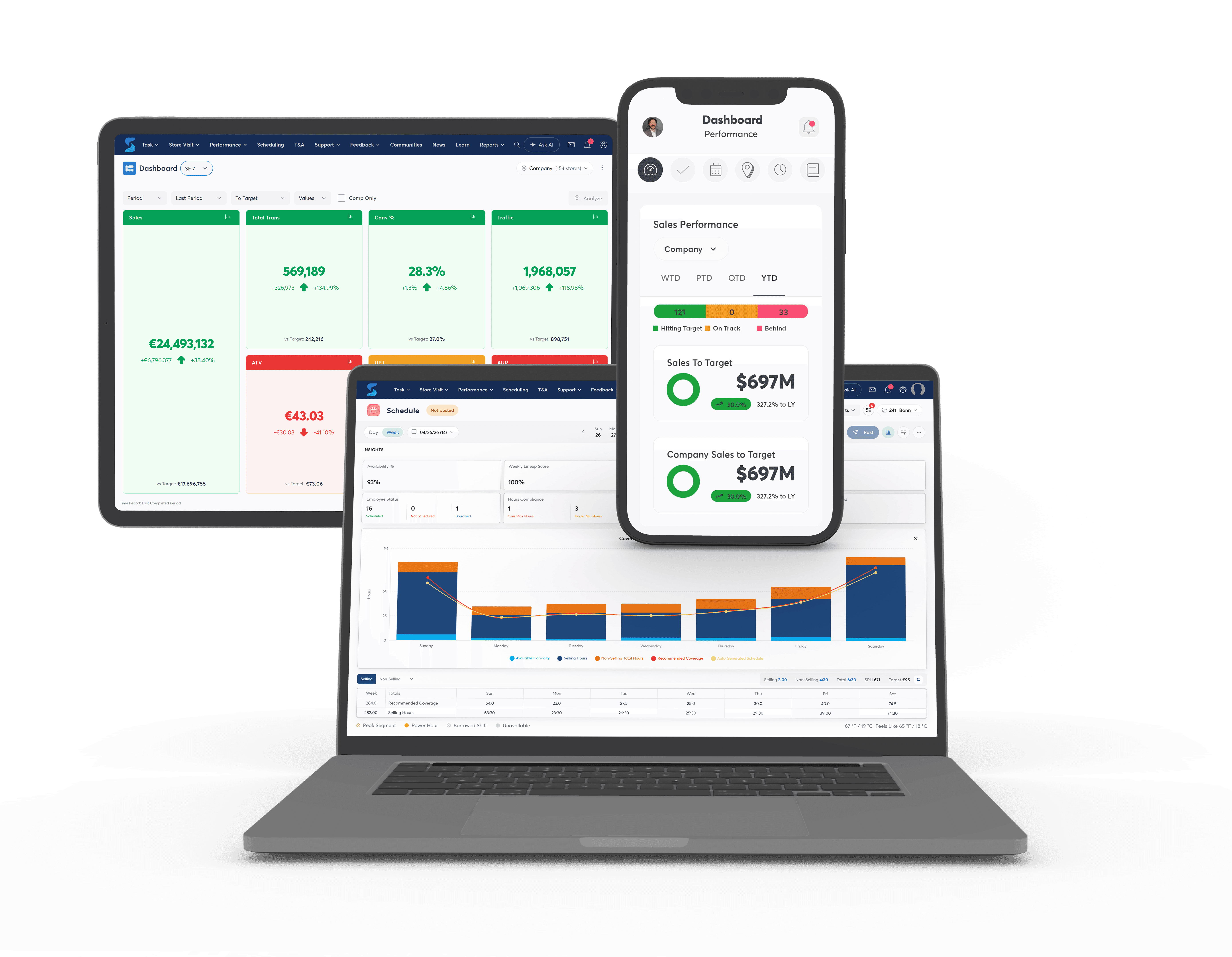
Instead of treating routines as a separate list of expectations, retailers can bring the work closer to the people and schedules behind it. Managers have better context around who is available and what needs to fit into the day.
That becomes even more important as workload changes. A day with a large shipment and promotional change may require a very different plan from a quieter day with only standard routines.
Organising the work is only part of the job. The people and time needed to complete it matter too.
When Something Changes the Routine Should Be Easy to Change Too
Store routines repeat, but they are not permanent.
Promotions change. Seasons change. New products arrive. Policies are updated. Store procedures change. Head office introduces new priorities.
When routines live across paper checklists, spreadsheets, emails, and individual store processes, updating them can become difficult. Leaders need to communicate the change and then rely on every location to update its own process.
A shared platform gives retailers a more direct way to update recurring work across stores.
The new expectation can become part of the routine rather than another message employees need to remember.
That helps retailers keep store processes current without asking every manager to rebuild them locally.
Routine Completion Can Show Where Stores Need Support
Tracking routines is not only about checking whether work was completed.
Patterns can tell retailers something useful.
If the same routine is regularly missed at one store, there may be a workload problem. If many locations struggle with the same process, the instructions may need to be clearer. If a new procedure is consistently late, stores may need more time, training, or support.
A simple platform gives retailers better visibility into those patterns.
Instead of treating every missed routine as an isolated problem, leaders can start asking why it keeps happening and what needs to change.
That turns routine tracking into a way to improve how stores operate, not simply another way to check boxes.
Simple Store Routine Software Should Reduce Admin Not Add More
The goal of organising store routines is to make store work easier to manage.
Employees should know where to look. Managers should know what is happening. Head office should have visibility across locations.
If a new platform creates more spreadsheets, more manual updates, more logins, or another disconnected place managers have to monitor, it is working against that goal.
Simple does not have to mean limited. It means routine work is easy to understand and does not require unnecessary effort to manage.
For retailers, that becomes increasingly important as the business grows. A process that depends heavily on individual managers may work across a few locations but become difficult to maintain across a large store network.
The simplest routine is one that is clear, repeatable, and easy to follow without constant management.
StoreForce Brings Store Routines Into the Daily Workforce Plan
StoreForce helps retailers organise store routines as part of the same platform used to manage scheduling, tasks, performance, and daily store operations.
Recurring work can become part of a clear store plan instead of living across paper checklists, spreadsheets, messages, and separate systems. Frontline employees have a familiar place to understand what needs to happen, while managers have better visibility into execution.
Because StoreForce also connects that work with workforce management, store routines can sit closer to the people and schedules behind them. Retailers are not simply creating lists of recurring tasks. They are bringing the work into the wider plan for how the store operates.
For head office, that creates a more consistent way to communicate expectations across locations and see how stores are executing them.
For managers, it means less time organising the same work repeatedly.
For employees, it means a clearer answer to what needs to happen next.
A good store routine should be easy to repeat. The platform managing it should be just as easy.
Book a StoreForce demo to see how StoreForce can bring staff routines, tasks, schedules, and store execution together in one place.

See How StoreForce Can Work for Your Stores
See how StoreForce brings employee scheduling, labour optimisation, task management, and store execution together in one retail workforce management platform. Book a demo today to see what StoreForce can do for your teams.
Speak To A Retail Expert


