How Integrated Workforce Platforms Differ From Digital Checklist Apps
A checklist can provide a useful way to organise work. An integrated workforce platform goes further by connecting store execution with the people, labour and performance information surrounding that work.

Digital checklist apps and integrated workforce platforms can both help retailers organise and track work, but they solve different problems.
A digital checklist app primarily helps teams answer:
What needs to get done, and has it been completed?
An integrated workforce platform can connect that work with broader questions:
Who is working? When are they needed? How much labour is available? What needs to get done during those hours? And how is the store performing?
For retailers, that distinction becomes increasingly important as the number of stores, employees and daily priorities grows.
A checklist can provide a useful way to organise work. An integrated workforce platform goes further by connecting store execution with the people, labour and performance information surrounding that work.
Take control of your store's performance
Book a demo with StoreForce today and run your retail operations better tomorrow.
Book a Demo
What Is a Digital Checklist App?
A digital checklist app replaces paper checklists, spreadsheets or other manual processes with a digital way to organise work.
Instead of writing out a list of opening tasks, for example, a manager can create a digital checklist employees can access and complete.
Depending on the application, teams may be able to assign tasks, establish due dates, add instructions and monitor completion.
For straightforward processes, this can be very useful.
A store manager may want to make sure employees complete an opening routine such as:
Unlock entrances
Complete a safety check
Prepare registers
Check promotional displays
Review daily priorities
A digital checklist provides a simple way to communicate those requirements and confirm that each step has been completed.
For smaller teams or businesses primarily trying to replace paper-based processes, that may be enough.
The limitations become more noticeable when retailers need to understand how that work fits into everything else happening in the store.
What Is an Integrated Workforce Platform?
An integrated workforce platform manages more than the work itself.
It connects different areas of workforce and store operations so retailers can understand how employees, labour, workload and performance relate to one another.
Depending on the platform, that can include capabilities such as:
Workforce planning
Employee scheduling
Time and attendance
Labour optimisation
Task management
Team communication
Store performance monitoring
Instead of simply digitising a checklist, an integrated platform helps retailers connect the work employees need to complete with the workforce available to complete it.
That creates a much broader view of store execution.

What Is the Difference Between a Workforce Platform and a Digital Checklist App?
The biggest difference is context.
A checklist app can tell a retailer that 15 tasks need to be completed today.
That is useful information.
But it does not necessarily tell the retailer whether the store has enough people or labour hours available to complete those tasks, when employees will be busiest serving customers or how execution relates to overall store performance.
An integrated workforce platform can bring more of that information together.
Digital Checklist App | Integrated Workforce Platform |
|---|---|
Organises tasks | Connects tasks with broader workforce operations |
Tracks completion | Provides visibility into execution and workforce capacity |
Shows what needs to be done | Helps retailers consider who is available to do it |
Can replace paper checklists | Can connect work with schedules and labour |
Focuses primarily on activities | Can connect execution with store performance |
Solves a specific workflow problem | Supports broader workforce and store operations |
Neither approach is automatically right for every business.
The question is how much context a retailer needs around the work being assigned.
1. Checklist Apps Focus on the Work; Workforce Platforms Connect the Work With the People
A digital checklist starts with the task.
What needs to happen?
Who owns it?
When is it due?
Has it been completed?
An integrated workforce platform can add another layer by connecting that work with the people responsible for executing it.
Retailers can consider employee schedules, roles, availability and labour alongside store priorities.
This matters because assigning a task does not create the time required to complete it.
If a store has a shipment, inventory count, visual change and training all scheduled for the same day, each of those activities creates demand for employee time.
A workforce platform can help retailers think about the workload alongside the workforce available to handle it.
2. Checklist Apps Track Tasks; Workforce Platforms Can Help Plan Capacity
Imagine a retailer sends 20 tasks to a store.
A checklist app may do an excellent job of organising those 20 tasks and tracking whether they have been completed. But there is another question:
Does the store realistically have enough capacity to complete all 20?
The answer depends on more than the number of employees working.
Retailers also need to consider how many labour hours are available, when those employees are scheduled and how much of their time will be required to serve customers.
Integrated workforce platforms can help retailers consider workload alongside labour requirements and schedules.
That can help organisations move from simply distributing work toward planning whether stores have the resources to execute it.
3. Workforce Platforms Can Consider Customer Demand
Frontline retail employees do not spend their entire shifts completing operational tasks.
Their primary responsibilities can also include helping customers, selling products, operating tills and delivering the customer experience.
That makes retail workload particularly dependent on timing.
An employee may have time to complete several operational activities during a quieter period but very little capacity when customer traffic increases.
Integrated workforce platforms can use customer demand and traffic information as part of workforce planning and scheduling.
This gives retailers a better opportunity to protect peak selling periods while still ensuring operational work gets completed.
A standalone checklist may tell an employee what needs to happen.
A connected workforce platform can provide more context around when the workforce may have the capacity to make it happen.
4. Workforce Platforms Connect Store Execution With Labour
Labour is one of the most important resources retailers have to manage.
A retailer may know that a store has 150 labour hours available this week.
Separately, it may know that the store has dozens of operational priorities to complete.
Those two pieces of information become more valuable when considered together.
An integrated workforce platform can help retailers understand both sides:
How much labour do we have?
and
What does that labour need to accomplish?
This can help retailers create more realistic workforce plans and give managers greater context when stores are struggling to complete assigned work.
If tasks are consistently falling behind, the issue may not simply be execution.
The store may have insufficient capacity, poorly timed labour or competing customer demand.
Connecting labour and workload gives leaders more information to understand the difference.
5. Workforce Platforms Can Connect Execution With Performance
Completing a checklist tells a retailer whether expected activities happened.
It does not necessarily tell them whether those activities produced the desired outcome.
A store could complete every operational task and still miss its sales or conversion targets.
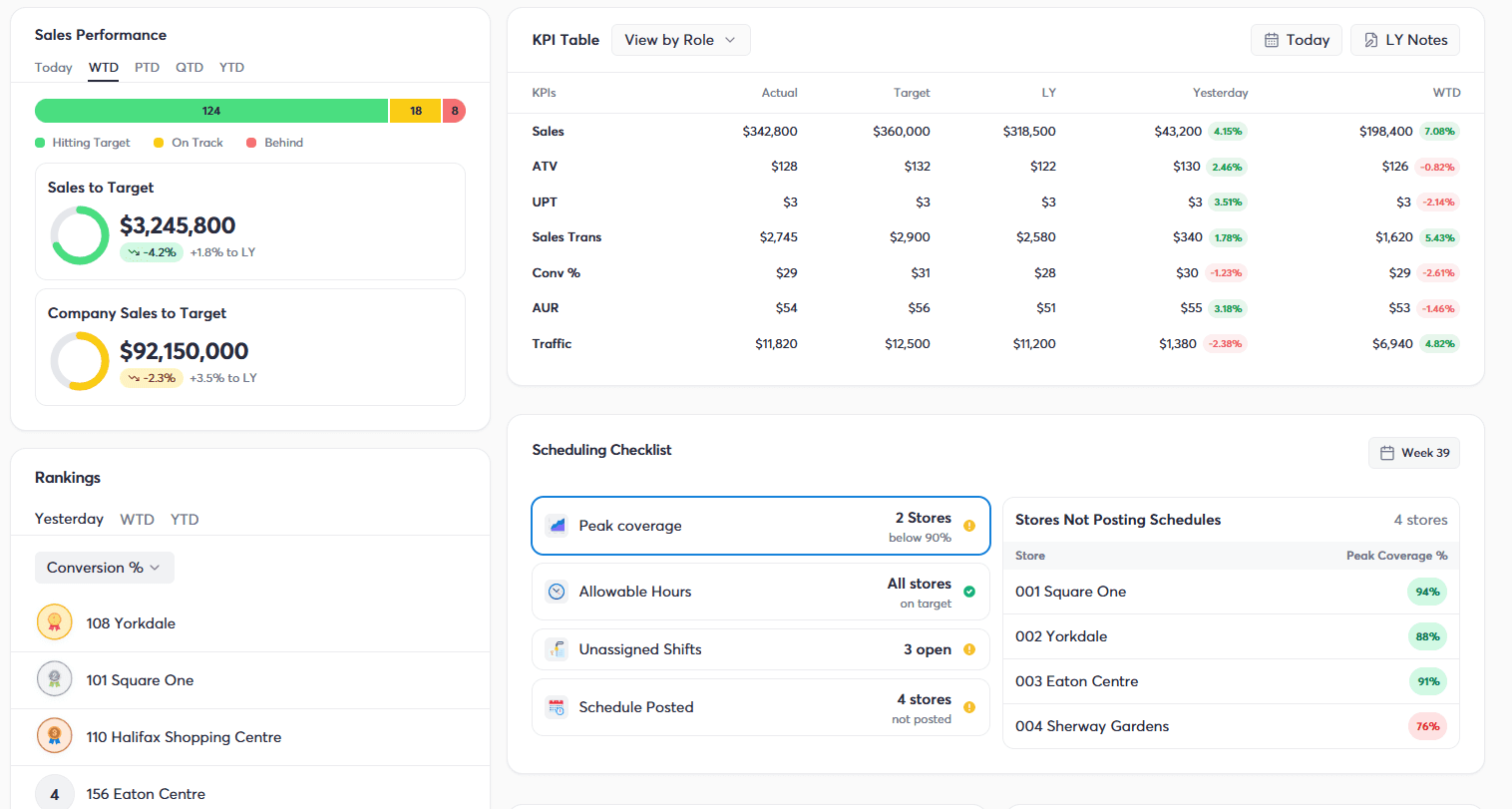
Integrated workforce platforms can connect store execution with broader performance visibility.
Retail leaders can consider KPIs such as traffic, sales, conversion, average transaction value and units per transaction alongside workforce and execution information.
That gives managers more context when investigating results.
Instead of looking at task completion as the final measure of success, retailers can ask:
Did we complete the work?
Did we have the right people working?
Were they available when customers needed them?
How did the store perform?
That creates a more complete view of frontline productivity.
6. Workforce Platforms Can Reduce the Number of Disconnected Systems
A retailer can build its technology stack one problem at a time.
One application for checklists.
Another for scheduling.
Another for time and attendance.
Another for store communications.
Another for performance reporting.
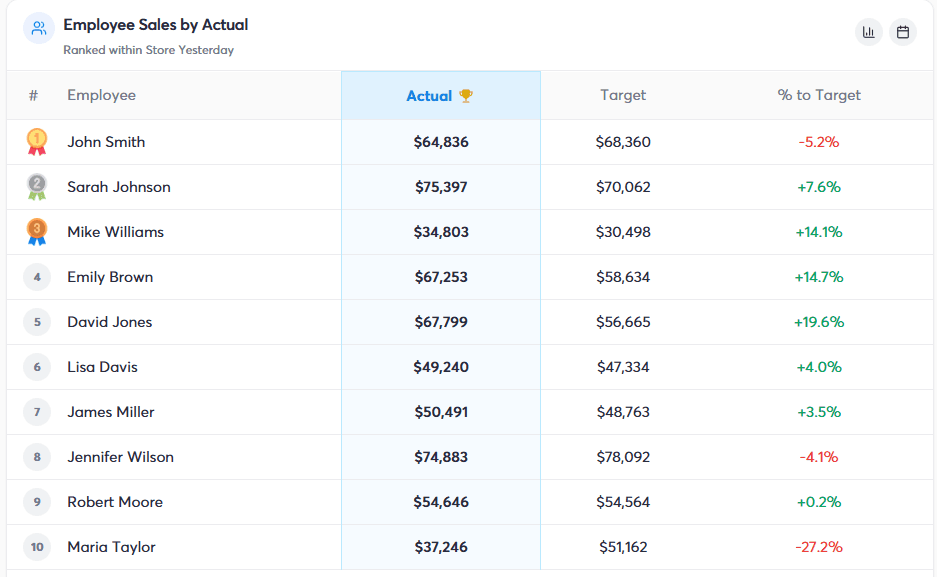
Each tool may solve its individual problem effectively. The challenge is that managers can become responsible for connecting the information themselves. They may need to look at the schedule in one place, tasks in another and store results somewhere else before they can understand what actually happened.
Integrated workforce platforms aim to bring more of those workflows and insights together.
That can reduce the amount of manual work required to move information between systems and give managers a more connected view of their stores.
When Is a Digital Checklist App Enough?
Not every retailer requires an integrated workforce platform.
A digital checklist app may be enough when the primary goal is simply to replace paper processes, organise recurring routines or give a relatively small team a shared list of work.
For example, a retailer with one or a handful of locations, predictable staffing and relatively straightforward operational requirements may not need a broader workforce management system.
In that situation, simplicity can be an advantage.
If the problem is:
“We need a better way to make sure everyone completes the closing checklist.”
a checklist application may solve it perfectly well.
The case for an integrated platform becomes stronger as the problem changes.
When Does an Integrated Workforce Platform Make More Sense?
An integrated workforce platform becomes more valuable when retailers need to coordinate people and work across larger or more complicated store operations.
That may include retailers that need to manage:
Multiple stores or regions
Large frontline workforces
Changing customer traffic
Complex employee schedules
Labour budgets
Frequent head office initiatives
Store-level task execution
Performance across locations
At that point, the challenge is no longer simply creating a better checklist.
It is coordinating the workforce responsible for completing the work.
How Does StoreForce Connect Workforce Management and Store Execution?
StoreForce brings workforce management and task management together within a platform built specifically for retail.
Task Management helps retailers plan, assign and track work across stores, including recurring routines and larger operational initiatives.
But those tasks do not exist separately from the workforce.
StoreForce also helps retailers understand labour requirements, build intelligent schedules, manage time and attendance, align coverage with customer demand and monitor store performance.
That means retailers can connect several important questions:
What needs to get done?
Who is working?
When do we need them?
Do stores have the capacity to execute the work?
Was the work completed?
How is the store performing?
For retailers managing large store networks, that context can be significantly more valuable than task completion alone.
A digital checklist helps make sure work gets checked off.
An integrated workforce platform helps retailers understand how that work fits into the people, labour and performance required to run the store.

Retail Execution With StoreForce
Improving labour, tasks and overall execution is just a click away. Book a demo today and see what the right retail workforce management software can do for your teams
Speak To A Retail Expert