Tie Every Report to a Decision, and Every Decision to Performance
Learn how retailers can turn reporting into better decisions, stronger store execution and measurable performance by focusing on what happens after the report.

Retailers don't have a reporting problem. They have a decision problem. Most retail organizations already have access to enormous amounts of data.
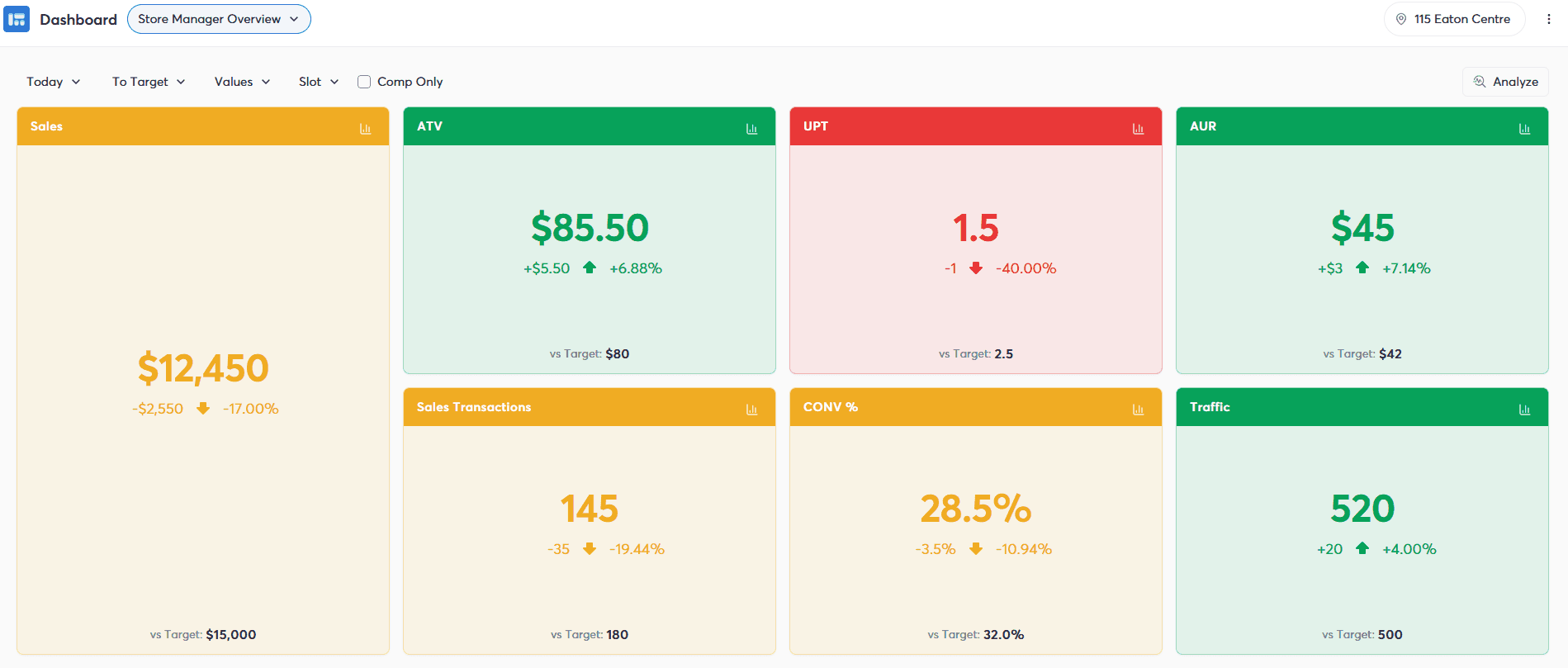
Dashboards bring that information together. Reports distribute it across the organization. Scheduled reports make sure the right numbers arrive in someone's inbox at the right time.
But there's a much more important question retailers should be asking:
What happens after someone receives the report?
Because simply delivering information doesn't improve store performance.
Someone has to understand what the information is telling them, make a decision and turn that decision into action.
That's the difference between reporting what happened and using reporting to influence what happens next.
The goal should be simple:
Tie every report to a decision, and every decision to performance.
Take control of your store performance
Book a demo with StoreForce today and run your retail operations better tomorrow.
Book A Demo
A Report Should Help Someone Decide
Every report should have a reason to exist. That sounds obvious, but reporting can easily become habitual.
A report gets created to address a particular business need. It's scheduled to arrive every Monday morning. Another report gets added for a different KPI. Another goes to regional leaders. Another gets created for store managers.
Eventually, reporting becomes part of the routine - but the reason a report was originally created can get lost.
Instead of starting with the data, start with the decision.
What should someone be able to decide after looking at this report?
A regional leader reviewing conversion performance might need to identify which stores require additional attention.
A store manager looking at traffic and labor might need to determine whether coverage is aligned with expected demand.
A leader reviewing task execution might need to identify where an initiative isn't being executed consistently.
The metrics will be different, but the principle is the same. A useful report doesn't simply tell someone something. It helps them decide what to do next.
Reports Should Change When the Business Changes
Retail priorities don't stay the same. A retailer may be focused on conversion today, labor productivity next month and execution around a major promotion after that. The reporting supporting those priorities should evolve with them.
But scheduled reporting makes it very easy to create something once and leave it running indefinitely.
The report keeps arriving. People keep receiving it. And eventually, nobody stops to ask whether it's still helping anyone make a decision.
That's how reporting noise accumulates.
A report that was valuable six months ago may no longer deserve the same level of attention today. A metric that mattered during one initiative may become less important when the business shifts its focus somewhere else.
That doesn't necessarily mean the underlying data stops mattering. It means the attention being directed toward it should reflect the priorities of the business.
Retailers should periodically audit their reporting just as they would any other operational process.
Look at what's being sent.
Look at who's receiving it.
Look at what it's measuring.
Then ask the most important question:
What decision is this report helping someone make today?
If there isn't a clear answer, the report may need to change. Or it may not need to exist at all.

Reporting Should Lead to Store-Level Action
There is another challenge with retail reporting: the distance between the people analyzing performance and the people capable of changing it.
A report might identify a problem at the organizational level.
A regional leader might recognize a pattern.
A store manager might see where performance is falling behind.
But insight alone doesn't change what happens on the sales floor. Someone still has to act.
That's why reporting and execution shouldn't be treated as completely separate parts of retail operations.
If reporting shows that conversion is struggling, what happens next?
If labor isn't aligned with traffic, who adjusts the plan?
If a particular operational initiative is producing stronger results in one group of stores, how does that insight influence what other stores do?
If execution is inconsistent, how is that translated into a priority for the people responsible for executing it?
The shorter retailers can make the distance between seeing a problem and acting on it, the more valuable their reporting becomes.
Technology can play an important role here, but simply adding another dashboard isn't the answer.
The opportunity is to better connect the systems retailers use to understand performance with the processes they use to manage stores.
Reporting should help leaders identify where attention is required. Store teams should have clear visibility into their priorities. Tasks and actions should be connected to those priorities. And retailers should be able to look back at performance to understand whether those actions produced the intended result.
That creates a much more useful loop:
Report → Decision → Action → Performance
And then the results inform the next decision.
Measure the Impact, Not Just the Activity
Retail organizations generate an enormous amount of measurable activity every day. Schedules are created, tasks are assigned, reports are distributed, store visits happen and initiatives are launched.
But activity isn't ultimately what the business is trying to improve.
Performance is.
The best reporting should help retailers connect what their teams are doing with what the business is trying to accomplish. It should show not only where performance stands and where action is needed, but whether that action actually worked.
More data won't automatically create better execution. More reports won't automatically create better decisions. And more activity won't automatically create better results.
The value comes from connecting them.
So the next time a report lands in an inbox or a new dashboard is created, ask one question:
What decision is this supposed to drive?
Then follow that decision all the way through to the store.
Because reporting becomes valuable when it changes what happens next.
Tie every report to a decision, and every decision to performance.

See How StoreForce Can Work for Your Stores
See how StoreForce brings employee scheduling, labor optimization, task management, and store execution together in one retail workforce management platform. Book a demo today to see what StoreForce can do for your teams.
Speak To A Retail Expert


