What Is the Best Software to Simplify Retail Staff Scheduling?
Simplicity is not necessarily about having fewer capabilities. It is about bringing the information needed to make scheduling decisions together so managers do not have to piece it together themselves.

The best software to simplify retail staff scheduling is software that makes it easier to build, adjust and communicate schedules while accounting for the factors that determine how many employees a store actually needs.
For smaller retailers, that may mean a basic scheduling app that replaces spreadsheets and gives employees an easier way to see when they are working. For larger and multi-location retailers, a workforce management platform like StoreForce can provide a simpler way to manage scheduling alongside labor budgets, customer demand, employee availability and other store requirements.
Simplicity is not necessarily about having fewer capabilities. It is about bringing the information needed to make scheduling decisions together so managers do not have to piece it together themselves.
The right retail scheduling software should handle more of that complexity behind the scenes, making the scheduling process simpler for the people actually using it.
Take control of your store performance
Book a demo with StoreForce today and run your retail operations better tomorrow.
Book A Demo
When Is a Basic Retail Scheduling App Enough?
Not every retailer needs a comprehensive workforce management platform.
For a retailer operating one location with a relatively small team, predictable opening hours and straightforward staffing requirements, a basic scheduling app may be enough.
These tools can make it easier to:
Create and publish employee schedules
Track employee availability
Communicate schedule changes
Manage time-off requests
Facilitate shift swaps
Give employees mobile access to their schedules
If the primary scheduling question is simply, "Who is working and when?", a basic scheduling tool may provide everything the business needs.
The challenge is that scheduling becomes more complicated as a retail organization grows.
When Does Retail Staff Scheduling Become More Complicated?
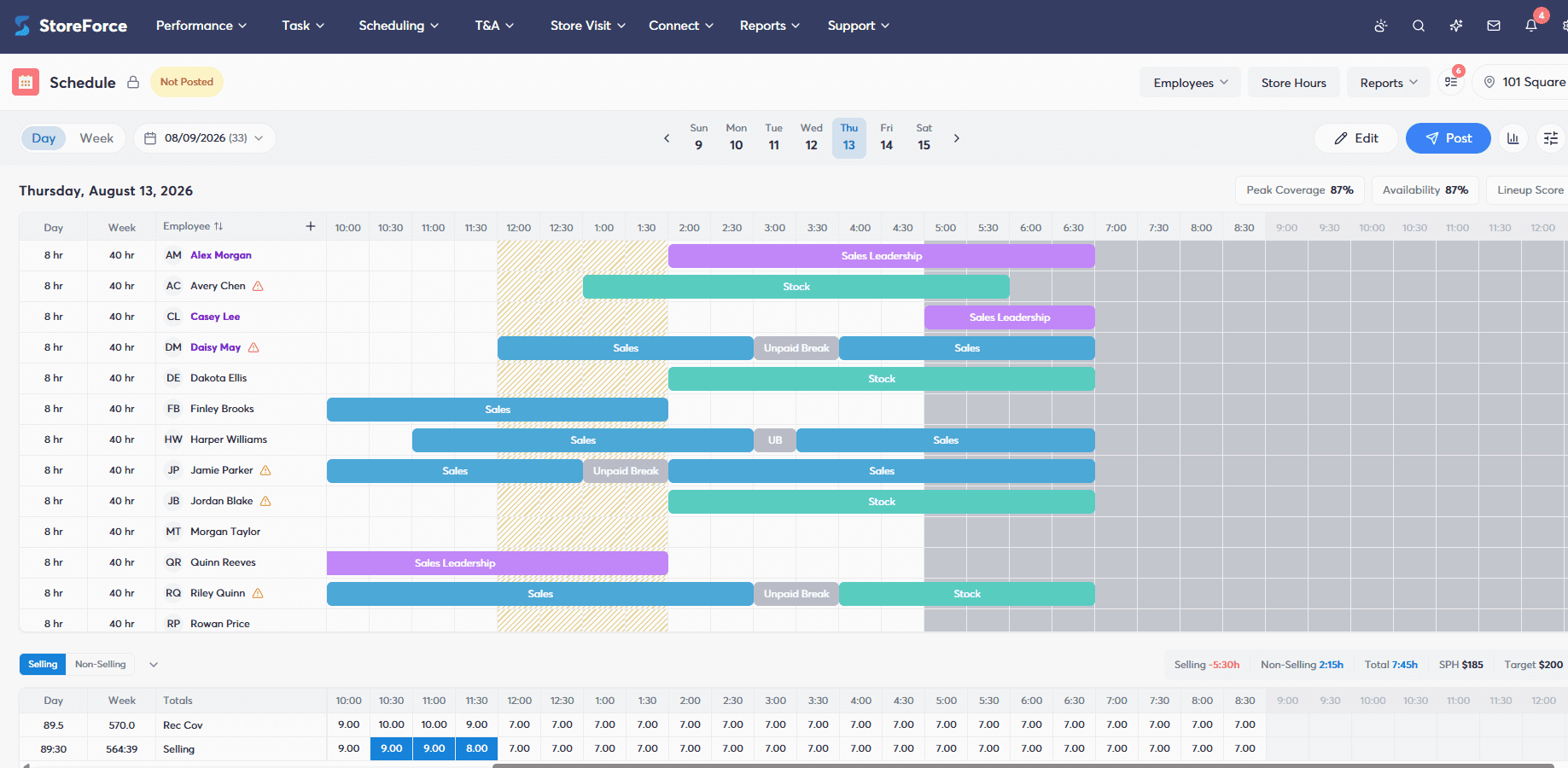
For larger and multi-location retailers, creating a schedule is not just about filling shifts.
Different stores can experience completely different customer traffic patterns. Labor budgets may vary by location and week. Employee availability needs to be considered alongside the roles and coverage the store requires. Promotions, deliveries, inventory counts and other store activities can also affect how much work needs to be completed.
Even within a single day, staffing requirements can change considerably.
A store might need fewer employees early in the morning, more selling coverage during a busy afternoon period and different coverage again as traffic falls later in the evening.
At that point, managers are trying to answer a more complicated set of questions:
How many people do we need? When do we need them? Who should be working? And how do we accomplish that within our available labor?
Software can simplify retail scheduling by helping managers answer those questions before the schedule is published.
What Should Larger Retailers Look for in Simple Scheduling Software?
For larger retailers, simplicity should come from making complex scheduling decisions easier rather than removing the information managers need to make them.
There are several areas where scheduling software can make a significant difference.
1. Scheduling Based on Customer Demand
Retail staffing requirements are closely connected to when customers are actually shopping.
A store may be open for 10 or 12 hours, but that does not mean it requires the same level of staffing throughout the entire day.
Scheduling software that incorporates forecasted customer traffic can help managers understand when demand is expected to rise and fall. Labor can then be positioned around the periods when stores are most likely to need additional coverage.
Instead of simply filling shifts, managers can build schedules around the expected rhythm of the store.
2. Visibility Into Labor Budgets
Managers also need to understand how the schedule they are building compares with the labor available to them.
Without that visibility, it is possible to create a schedule that looks good operationally but exceeds the store's labor budget. The opposite can also happen: managers may focus so heavily on controlling hours that important periods are left understaffed.
Scheduling software should make labor information visible during the scheduling process so managers can balance coverage requirements with available hours.
That reduces the need to calculate, check and revise schedules manually.
3. Employee Availability and Shift Flexibility
A schedule only works if the employees assigned to it can actually work those shifts.
Retail scheduling software should make employee availability part of the scheduling process while also giving employees an easy way to interact with their schedules.
That can include viewing upcoming shifts, submitting availability, requesting time off or managing shift swaps from a mobile device.
Making these processes easier for employees can also reduce the amount of scheduling administration that falls back on store managers.
4. A Connected View of What Is Happening in the Store
Schedules do not exist independently from everything else happening inside a retail store.
Customer traffic creates demand for labor, but so do the activities employees need to complete throughout the day. Shipments, inventory counts, floor sets, promotions, training and other operational priorities all require employee time.
That is why larger retailers should consider how scheduling fits within the rest of their store operations.
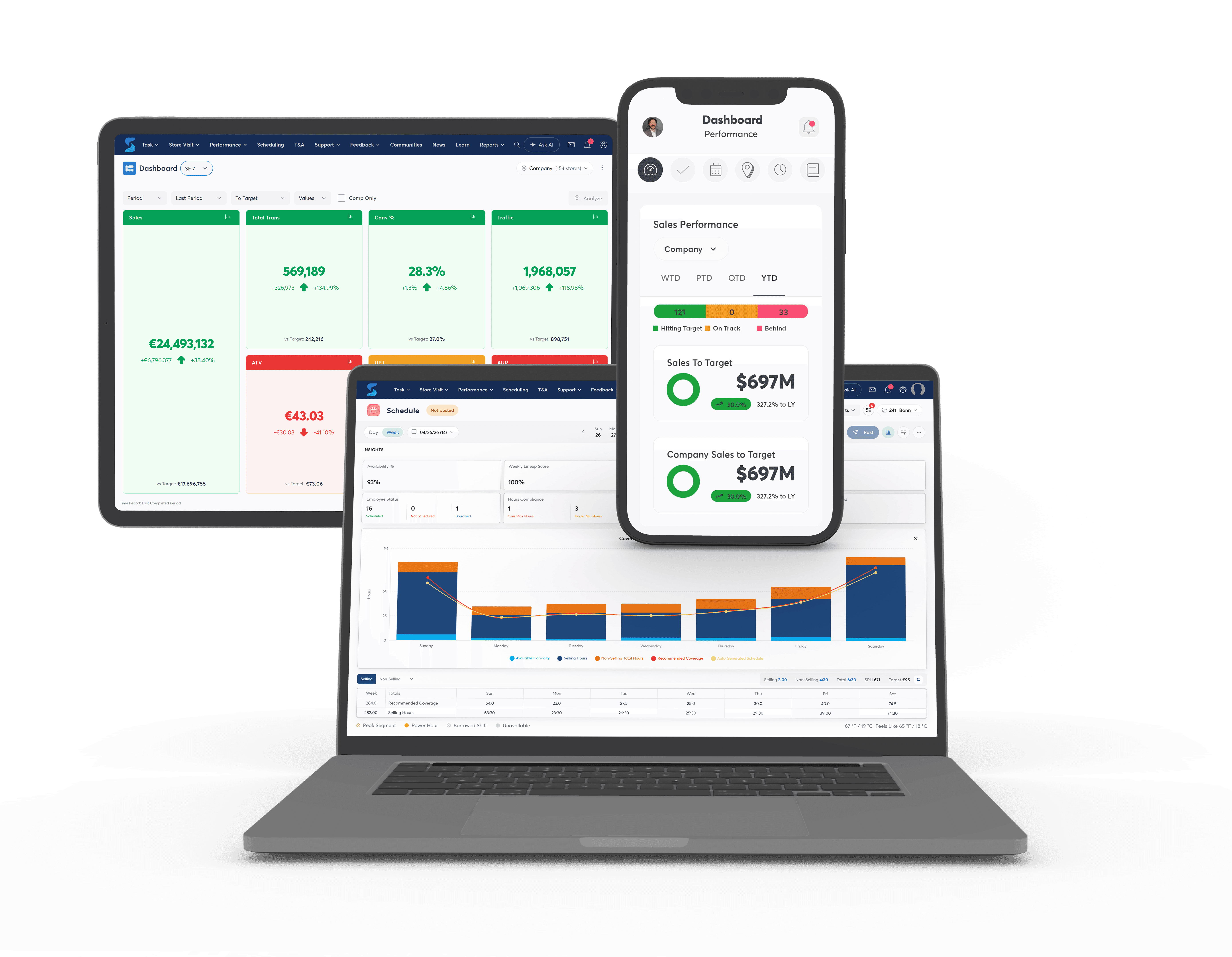
Connecting scheduling with labor, traffic, store workload and performance gives managers more context for their decisions without requiring them to gather that information manually from multiple places.
For a large retail organization, that can be what makes sophisticated workforce management feel simple at the store level.
How Does Retail Scheduling Software Make Scheduling Simpler?
The purpose of retail scheduling software is not just to digitize a schedule. It should reduce the amount of work required to create a schedule that reflects what the store actually needs.
For managers, that means having the information that influences staffing decisions available during the scheduling process. Expected customer demand, available labor, employee availability and store requirements can all help determine who should be working and when.
For employees, simplicity means having an easy way to access their schedules, communicate availability, request time off and manage shift changes without every interaction needing to go through a manager.
For retail leaders, it means greater consistency across locations and better visibility into how labor is being planned and used.
The larger the retail organization becomes, the more valuable this kind of simplicity can be. Instead of asking individual store managers to bring together information from different systems and make those calculations themselves, the software can help turn that information into a more manageable scheduling process.
Simplify Retail Staff Scheduling With StoreForce
The simplest retail scheduling software is not necessarily the software that does the least. It is the software that makes the work of scheduling easier for the people responsible for doing it.
For larger and multi-location retailers, StoreForce brings together scheduling, labor planning, customer demand and store operations to give managers the information they need to make better staffing decisions.
That means managers can spend less time piecing together what their stores need and more time building schedules around when and where their people can have the greatest impact.
StoreForce helps retailers simplify the complexity behind scheduling and put the right people in the right place at the right time.

See How StoreForce Can Work for Your Stores
See how StoreForce brings employee scheduling, labor optimization, task management, and store execution together in one retail workforce management platform. Book a demo today to see what StoreForce can do for your teams.
Speak To A Retail Expert


