Managing Hourly Employees: 10 Keys to Doing It Better
In this guide, we’ll break down practical strategies for managing hourly employees more effectively.

Managing hourly employees is one of the biggest challenges in retail. Between shift coverage, scheduling conflicts, turnover, communication gaps, and daily store execution, even strong managers can struggle to keep teams aligned and productive.
Retail moves fast. One missed shift or poor handoff can impact customer experience, sales performance, and store morale. That’s why managing hourly employees requires more than basic scheduling. Retail leaders need clear communication, fair scheduling practices, strong accountability, and tools that help stores operate consistently across every location.
In this guide, we’ll break down practical strategies for managing hourly employees more effectively while improving engagement, productivity, and retention in retail environments.
Why Managing Hourly Employees Is Different in Retail
Hourly retail teams work in a very different environment than salaried office teams.
Store employees often deal with:
Changing schedules
Peak traffic periods
High customer expectations
Split shifts and weekends
Short staffing
Frequent turnover
Multiple responsibilities during one shift
Managers also need to balance labor costs while making sure stores stay properly staffed. That creates pressure on scheduling, communication, and daily execution.
Without the right systems in place, stores can quickly become reactive instead of proactive. Here are 10 keys to a better system and strategy.
Take control of your store performance
Book a demo with StoreForce today and run your retail operations better tomorrow.
Book A Demo
1. Build Smarter Schedules Around Traffic and Demand
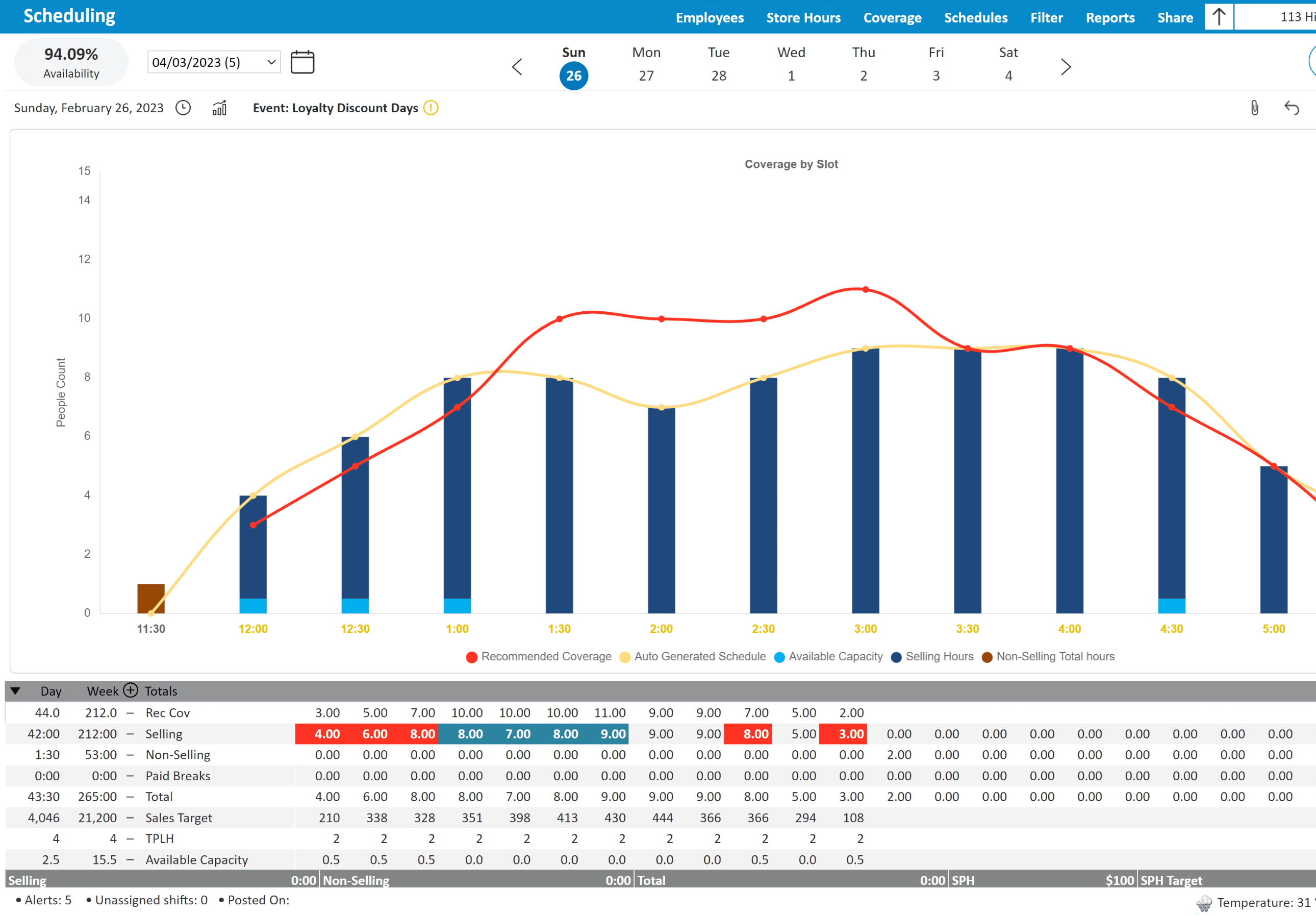
One of the biggest mistakes retailers make when managing hourly employees is building schedules based only on availability instead of business demand.
Strong scheduling should align staffing levels with:
Sales trends
Peak traffic hours
Promotions and events
Shipment days
Seasonal demand
Store workload
When stores are understaffed, customer service suffers. When stores are overstaffed, labor costs rise unnecessarily. Managers need visibility into store performance so they can schedule the right number of employees at the right times.
2. Give Employees More Schedule Visibility
Hourly employees want predictability. Last-minute schedule changes create frustration and often lead to callouts or turnover.
Providing schedules earlier helps employees:
Plan personal responsibilities
Improve attendance
Reduce scheduling conflicts
Feel more respected by management
Mobile scheduling tools also make it easier for employees to:
View schedules instantly
Pick up open shifts
Swap shifts
Receive updates in real time
The easier scheduling becomes, the less administrative work managers have to handle manually.
3. Improve Communication Across Every Shift
Poor communication is one of the fastest ways stores lose consistency.
When employees are unclear on priorities, promotions, or operational updates, execution starts to break down. One shift may complete tasks differently than another, which creates inconsistent customer experiences across the store.
Retail managers need a simple way to keep everyone aligned throughout the day. Real-time communication tools help store teams stay updated without relying on paper notes, text chains, or verbal handoffs that are easy to miss.
This becomes even more important for retailers managing multiple locations where consistency matters across every store.
4. Create Clear Daily Expectations
Hourly employees perform better when expectations are simple and easy to follow.
Clear opening and closing procedures, recovery standards, customer service expectations, and task priorities help employees stay focused during busy shifts. Daily checklists also reduce confusion and improve accountability because everyone understands what needs to get done before the shift ends.
This also makes onboarding easier for new hires. Instead of relying entirely on managers for direction, employees have a clear structure they can follow throughout the day.
5. Recognize Strong Performance Often
Retail employees want to feel like their work matters.
Recognition has a direct impact on morale, engagement, and retention. Even small moments of recognition can help employees stay motivated during demanding shifts.
Managers do not need large reward programs to create a positive culture. Highlighting strong performance during team huddles, recognizing attendance, or rewarding reliable employees with preferred shifts can go a long way.
Employees who feel valued are more likely to stay engaged, support their teammates, and provide stronger customer experiences.
6. Reduce Manager Burnout
Store managers often spend too much time handling manual administrative work.
Tasks like:
Updating schedules
Following up on missed tasks
Tracking labor
Managing attendance
Sending updates manually can quickly consume the entire day.
When managers are buried in operational work, they spend less time coaching employees and improving customer experience.
Managing hourly employees becomes much easier when repetitive tasks are automated and store leaders have real-time visibility into operations.
7. Use Data to Improve Labor Decisions
Retail labor planning should never rely on guesswork.
Managers need access to data that shows:
Labor performance
Sales per labor hour
Task completion
Attendance trends
Overtime usage
Store productivity
This visibility helps leaders make faster decisions and identify issues before they become larger operational problems.
Data also helps retailers create more consistent experiences across every location.
8. Make Accountability Easier
Accountability becomes difficult when managers rely on paper checklists, text messages, or disconnected systems to manage store operations.
Hourly employees need clear ownership over tasks, responsibilities, and daily priorities. When expectations are unclear, tasks get missed, communication breaks down, and managers end up spending more time following up instead of leading the floor.
Creating visibility around task completion and store execution helps teams stay aligned throughout the day. It also gives district leaders a clearer picture of what is happening across locations without needing constant check-ins.
When accountability is built into daily operations, stores run more consistently and managers can focus more on coaching employees and improving customer experience.
9. Focus on Retention, Not Just Hiring
Retail turnover is expensive. Constant hiring and training creates:
Operational disruption
Lower productivity
Increased labor costs
Inconsistent customer experiences
The best retailers focus just as much on retention as recruitment. Employees are more likely to stay when they have:
Fair schedules
Clear communication
Growth opportunities
Recognition
Organized store operations
Supportive leadership
Even small improvements in employee experience can reduce turnover over time.
10. Use Technology to Simplify Workforce Management
Managing hourly employees manually becomes difficult as retailers grow.
Modern workforce management platforms help retailers:
Build smarter schedules
Track labor performance
Improve task execution
Communicate in real time
Monitor store activity
Increase accountability across locations
Instead of relying on disconnected spreadsheets, emails, and paper processes, retailers can manage operations from one centralized platform.
That creates more consistency for store teams and better visibility for leadership.
How StoreForce Helps Retailers Manage Hourly Employees More Effectively
Managing hourly employees becomes much easier when store teams have the right systems in place.
StoreForce helps retailers connect scheduling, task management, labor planning, communication, and performance tracking in one platform. Instead of relying on disconnected spreadsheets, emails, and manual processes, store leaders can manage daily operations from one centralized system.
That visibility helps managers make faster decisions, improve consistency across locations, and spend more time supporting employees on the sales floor instead of chasing operational issues.
For retailers managing hourly employees across multiple stores, having real-time visibility into store performance and execution can make a major difference in productivity, accountability, and customer experience.
If your retail teams are struggling with scheduling challenges, communication gaps, or inconsistent execution, StoreForce can help simplify operations and create a more organized experience for both managers and employees.

See How StoreForce Can Work for Your Stores
See how StoreForce brings employee scheduling, labor optimization, task management, and store execution together in one retail workforce management platform. Book a demo today to see what StoreForce can do for your teams.
Speak To A Retail Expert


