Labour Forecasting Software Is a Retail Revenue Game-Changer
How Labour Forecasting Software Helps Retailers Control Labour and Protect Margins
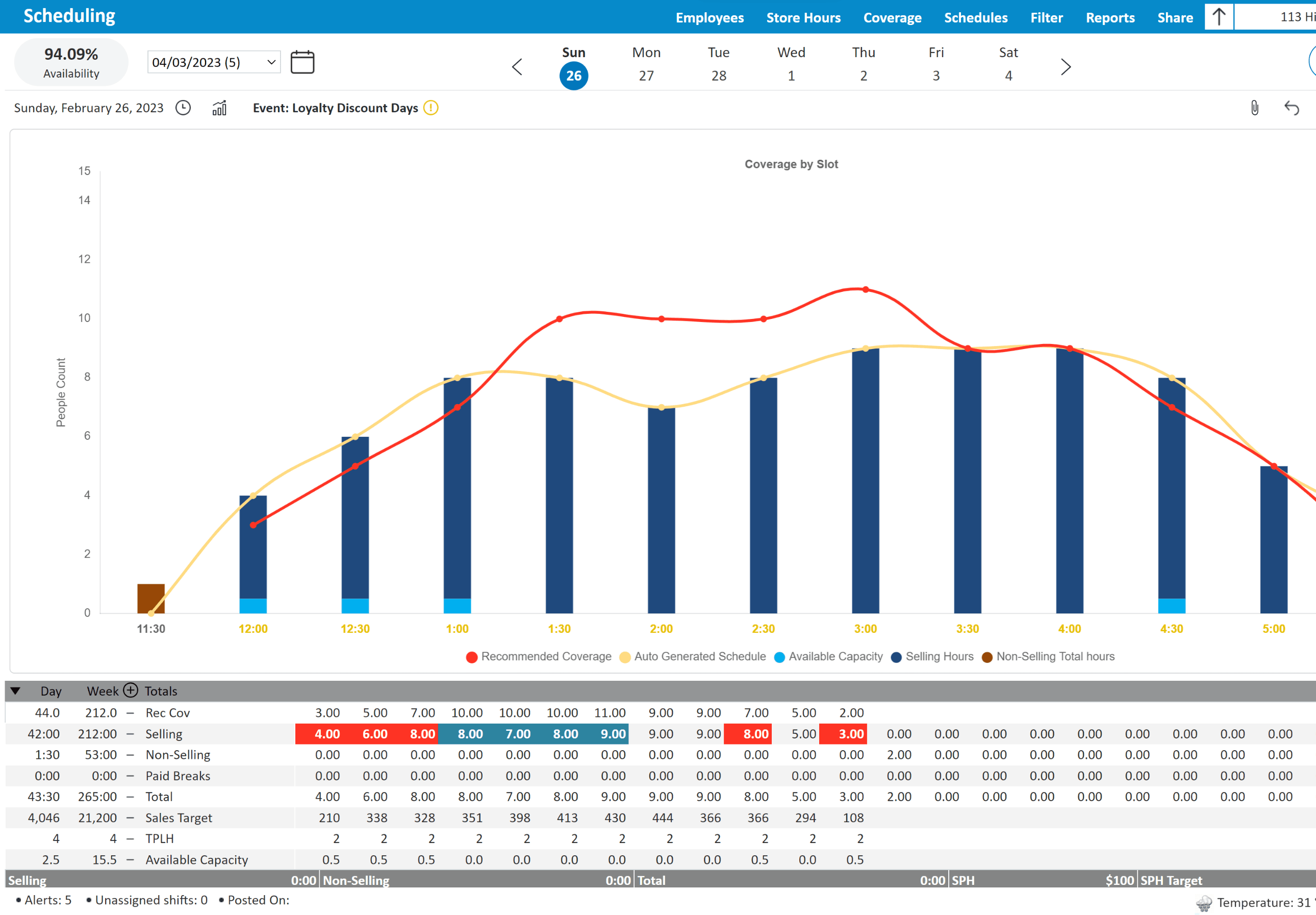
For retail leaders managing one store or hundreds of locations, labour forecasting software brings structure to workforce decisions. It connects sales forecasts, staffing models, and scheduling into one clear system so managers know exactly how many people they need and when they need them. In a business where labour is often the largest controllable expense, better forecasting is not optional. It is essential for running efficient, consistent, and profitable stores.
What Is Labour Forecasting Software?
Labour forecasting software is a tool that helps retailers predict how many employees they need, when they need them, and where they need them. Labour forecasting software uses sales data, traffic trends, and historical performance to create accurate staffing plans.
Instead of guessing schedules week to week, managers can use labour forecasting software to align labour hours with real demand. That means fewer overstaffed shifts, fewer understaffed rushes, and better service on the floor.
For modern retail businesses, labour forecasting software connects scheduling, performance data, and store traffic into one clear plan. It helps ensure the right people are working at the right times, without wasting payroll.
Take control of your store's performance
Book a demo with StoreForce today and run your retail operations better tomorrow.
Book a Demo
How Labour Forecasting Software Works
Labour forecasting software collects and analyses data from multiple sources. This can include:
Historical sales data
Store traffic patterns
Promotional calendars
Seasonal trends
Local events
Employee availability and productivity
The system uses this data to predict future demand. For example, if sales typically increase 20 per cent during a holiday weekend, the software adjusts labour needs to match that increase.
Advanced labour forecasting software updates in real time. If sales are trending higher than expected, managers can respond quickly by adjusting staffing levels. If demand slows, they can reduce hours before payroll costs rise too high.
The goal is simple: match labour supply to customer demand as closely as possible.
Key Components of Modern Labour Forecasting Systems
Modern labour forecasting systems go far beyond basic spreadsheets. Strong software usually includes:
Demand forecasting
Predicts sales and traffic using past performance and current trends.Labour modelling
Translates forecasted sales into required labour hours based on productivity standards.Schedule generation
Automatically builds schedules that align with forecasted demand.Real-time visibility
Shows managers what is happening in each store so they can adjust quickly.Performance tracking
Compares forecasted labour against actual results to improve accuracy over time.
When these components work together in one platform, managers gain clarity and control. They no longer rely on manual processes or disconnected tools.
The Difference Between Labour Forecasting and Workforce Planning
Labour forecasting and workforce planning are related but not the same.
Labour forecasting focuses on short-term staffing needs. It answers questions like:
How many employees do we need this week?
How many hours should we schedule tomorrow?
Workforce planning looks at the long term. It focuses on:
Hiring strategy
Talent development
Succession planning
Long-term headcount strategy
Labour forecasting software supports day-to-day execution. Workforce planning focuses on future growth and talent strategy. Retailers need both, but labour forecasting software plays a direct role in controlling payroll and improving store performance every day.
Why Labour Forecasting Software Is Critical for Modern Retail Businesses
Retail margins are tight. Labour is often the largest controllable expense. Labour forecasting software gives retailers the ability to manage that expense with precision.
Here is why it's critical for modern retail businesses:
Better payroll control
Aligns labour hours with actual demand, reducing unnecessary overtime and idle time.
Improved customer experience
Ensures enough staff are available during peak hours, reducing wait times and missed sales.
Stronger team morale
Balanced schedules reduce burnout and last-minute changes.
Data-driven decisions
Managers rely on facts instead of guesswork when building schedules.
Consistency across locations
Multi-store retailers can apply the same forecasting standards across every location.
When labour forecasting software is connected to scheduling, task management, and performance tracking, retailers gain full visibility into store operations. This helps managers stay focused on execution instead of manual adjustments.
For growing retailers, this visibility can make the difference between reacting to problems and preventing them.
Labour Forecasting Software Vs Traditional Scheduling Tools
Traditional scheduling tools focus on filling shifts. Labour forecasting software focuses on predicting demand before shifts are created.
The difference starts with what each system is built around. Traditional scheduling tools are built around employee availability. Managers look at who can work, plug names into open shifts, and adjust from there. These tools often rely on manual input, offer limited data analysis, and lead to reactive adjustments when sales spike or traffic slows.
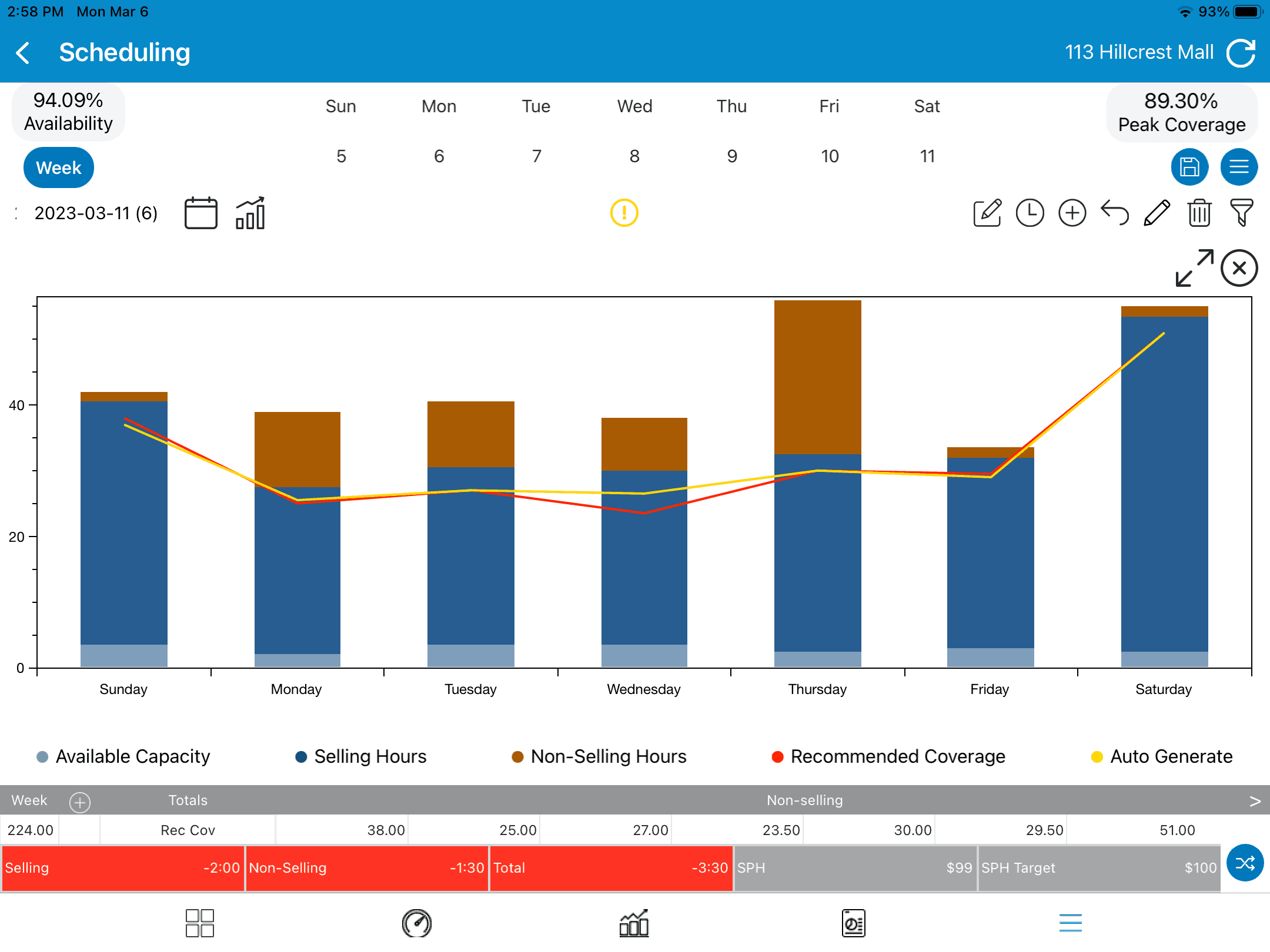
Labour forecasting software takes a different approach. It is built around sales and traffic forecasts first. It uses historical data and real-time trends to predict demand. From there, it automatically calculates how many labour hours are required. Managers can then build schedules that match expected customer activity instead of guessing.
Traditional tools ask, “Who can work?”
Labour forecasting software asks, “How many people do we need based on demand?”
For retailers managing multiple stores, this distinction matters. Traditional tools often lead to inconsistent staffing from one location to the next. Labour forecasting software creates structure, accountability, and alignment across every store, helping teams plan with confidence instead of reacting after problems appear.
Measuring ROI From Labour Forecasting Software
To understand the return on investment from labour forecasting software, retailers need to track the right performance metrics. Clear measurement shows whether forecasting is actually reducing costs and improving execution across stores.
Here are the key metrics to watch:
Labour cost as a percentage of sales
This is one of the most important retail KPIs. When labour forecasting software aligns staffing with demand, unnecessary payroll hours decrease. Over time, you should see labour cost as a percentage of sales stabilise or decline without hurting service levels.Sales per labour hour
This measures how productive each scheduled hour is. Strong forecasting ensures labour hours are placed during peak selling times, which increases revenue generated per employee hour.Overtime reduction
Poor planning often leads to last-minute schedule changes and overtime pay. Accurate forecasts reduce emergency coverage, helping control payroll expenses and protect margins.Forecast accuracy
Compare forecasted demand to actual sales and traffic. As the system collects more data, accuracy should improve, giving managers more confidence in staffing decisions.Customer satisfaction scores
When stores are properly staffed during busy periods, wait times decrease and service improves. Higher customer satisfaction often follows better labour alignment.
The financial impact can be meaningful. Even a one or two per cent reduction in labour cost across multiple locations can translate into major annual savings.
Retailers that use labour forecasting software within a unified operations platform also reduce time spent on manual reporting, spreadsheet adjustments, and reactive scheduling changes. That time savings adds another layer of return, allowing managers to focus more on coaching teams and driving store performance.
Frequently Asked Questions About Labour Forecasting Software
How long does it take to implement labour forecasting software?
Most retailers can get up and running within a few weeks, depending on the size of the organisation and the quality of existing data. The cleaner your historical sales and traffic data, the faster the setup process tends to be.
What data is required for labour forecasting software to work effectively?
At a minimum, you need historical sales data and basic labour data. Many retailers also include traffic counts, promotional calendars, seasonal trends, and productivity standards. The more accurate the data, the more reliable the forecast.
Can labour forecasting software handle seasonal demand changes?
Yes. Labour forecasting software is designed to account for seasonality, holiday peaks, promotional events, and local demand shifts. It analyses past patterns to predict future spikes and dips in activity.
Does labour forecasting software integrate with payroll systems?
Most modern labour forecasting software integrates with payroll, HR, and point of sale systems. This ensures labour hours, wages, and sales data are connected, reducing manual entry and errors.
How does labour forecasting software improve schedule fairness?
By using demand data to guide scheduling decisions, managers rely less on guesswork. This creates more consistent schedules, reduces last-minute changes, and helps distribute hours more evenly among qualified team members.
Can multi-location retailers manage all stores in one system?
Yes. Multi-store retailers benefit from centralised visibility. Leaders can compare forecast accuracy, labour costs, and productivity across locations while still allowing store managers to adjust schedules locally.
Is labour forecasting software difficult for store managers to use?
Modern systems are designed with store managers in mind. Clear dashboards, automated recommendations, and simple scheduling tools make it easier to plan labour without advanced technical knowledge.
How often should forecasts be updated?
Forecasts should be reviewed weekly at minimum. Many retailers monitor them daily, especially during peak seasons. Real-time data allows managers to make adjustments before labour costs get out of control.
Can labour forecasting software help reduce employee turnover?
Yes. More predictable scheduling, balanced workloads, and fewer last-minute changes can improve employee satisfaction. When staff feel schedules are fair and manageable, retention often improves.
What is the biggest mistake retailers make without labour forecasting software?
The most common mistake is relying on instinct instead of data. Guessing staffing needs often leads to overstaffing during slow periods and understaffing during busy ones, which hurts both payroll and customer experience.
Retailers that treat labour forecasting software as a core part of store operations gain better control over payroll, stronger execution on the floor, and clearer visibility into performance across every location.
Why StoreForce Is the Best Choice for Labour Forecasting Software
Labour forecasting software only delivers real results when it is fully connected to daily store operations. That is where StoreForce stands apart.
StoreForce brings labour forecasting, scheduling, task management, and performance tracking into one system. Instead of using separate tools for forecasting and execution, store teams can plan labour based on demand and immediately turn those forecasts into smart, data-driven schedules.
With StoreForce, retailers can:
Align staffing with real-time sales and traffic data
Automatically calculate labour hours based on productivity standards
Monitor labour cost as a percentage of sales across every location
Compare forecast accuracy store by store
Adjust quickly when demand shifts
For multi-location retailers, StoreForce provides visibility at both the store and head office level. Leaders can see what is happening in each location in real time, ensuring labour plans are consistent and aligned with company goals.
Labour forecasting software should not live in a spreadsheet or a disconnected system. It should be part of a unified retail operations platform that helps managers execute every day with clarity and control.
If your team is still building schedules manually or reacting to payroll surprises, it is time to see how StoreForce can help you plan smarter, reduce labour waste, and run more consistent stores. Book a demo to learn how StoreForce turns labour forecasting into measurable retail performance.

See How StoreForce Can Work for Your Stores
See how StoreForce brings employee scheduling, labour optimisation, task management, and store execution together in one retail workforce management platform. Book a demo today to see what StoreForce can do for your teams.
Speak To A Retail Expert


