A Complete Buyer's Guide to Retail Staffing Software
Some solutions focus only on scheduling. Others help retailers connect staffing decisions to store execution, employee performance, and business results. This guide covers what retail staffing software does, the problems it solves, and what to look for when evaluating solutions.
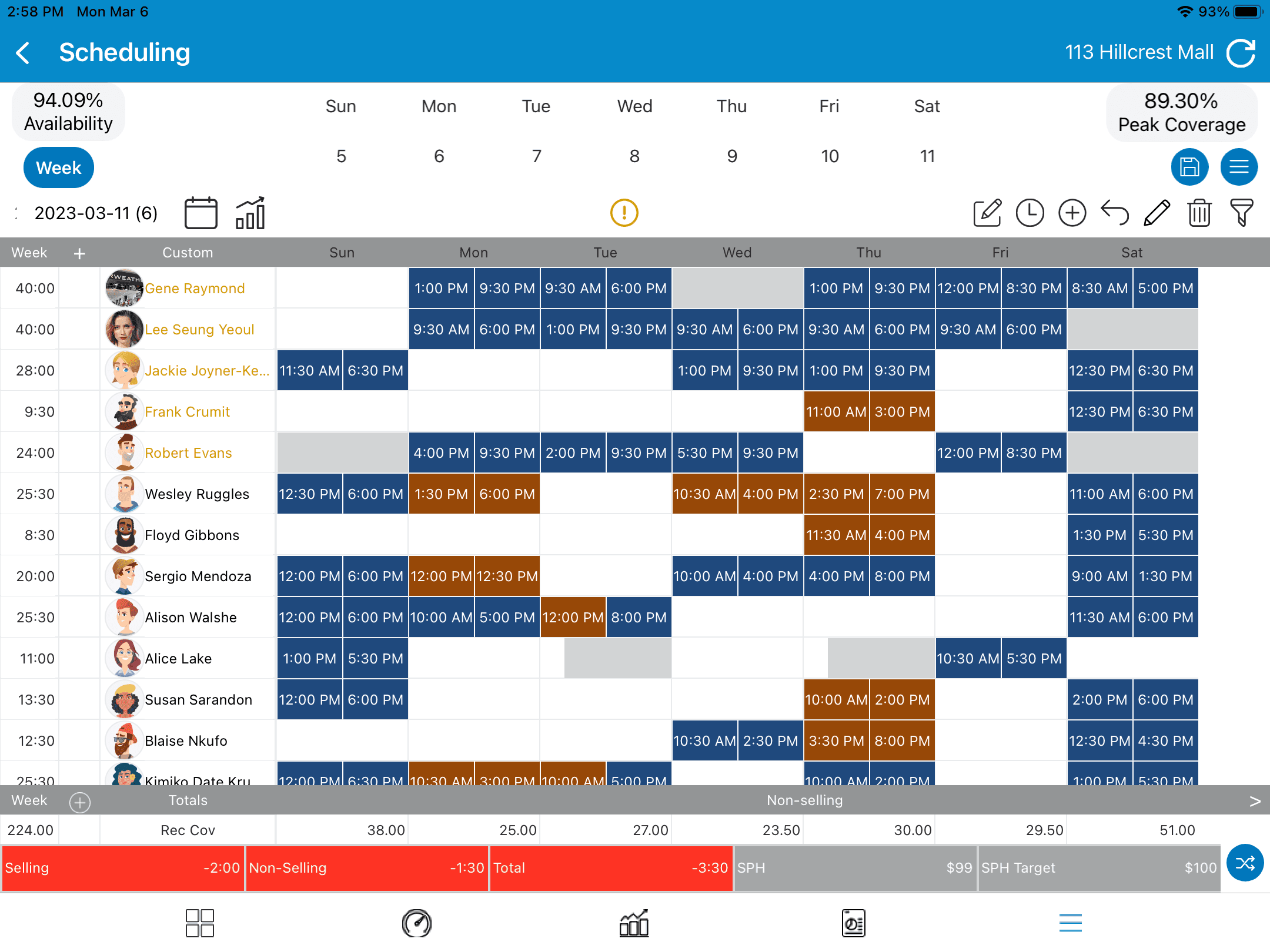
Retail staffing software helps retailers schedule employees, control labour costs, improve store coverage, and keep teams productive. As labour challenges continue to grow, many retailers are moving away from spreadsheets and manual scheduling processes in favour of software designed specifically for retail operations.
But not all retail staffing software is the same.
Some solutions focus only on scheduling. Others help retailers connect staffing decisions to store execution, employee performance, and business results.
This guide covers what retail staffing software does, the problems it solves, and what to look for when evaluating solutions.
What Is Retail Staffing Software?
Retail staffing software is a tool that helps retailers manage workforce planning, employee scheduling, labour budgets, and staffing needs across one or multiple locations.
The goal is simple: ensure the right people are working at the right time while keeping labour costs under control.
Modern retail staffing software often includes:
Employee scheduling
Time and attendance tracking
Shift swapping
Mobile schedule access
Labour reporting
Performance tracking
For retailers with multiple stores, these systems provide visibility that is difficult to achieve through spreadsheets or disconnected tools.
Take control of your store's performance
Book a demo with StoreForce today and run your retail operations better tomorrow.
Book a Demo
Why Retailers Are Replacing Manual Scheduling Tools
Many retail managers still rely on spreadsheets, printed schedules, text messages, and manual processes to manage staffing.
While this may work for small teams, it becomes increasingly difficult as stores grow.
Managers often spend hours each week building schedules, filling open shifts, handling time-off requests, and adjusting coverage based on changing traffic patterns.
For example, imagine a retailer with 25 stores. On a Friday morning, several employees call out across different locations. One store is already running short-staffed, another has approved too many vacation requests, and a third is preparing for a weekend promotion expected to increase customer traffic. Managers start sending texts, making phone calls, and updating spreadsheets to find coverage. What should take minutes can quickly turn into hours of reactive problem-solving.
The result can be:
Overstaffed shifts that increase labour costs
Understaffed shifts that hurt customer service
Scheduling errors
Employee frustration
Limited visibility across locations
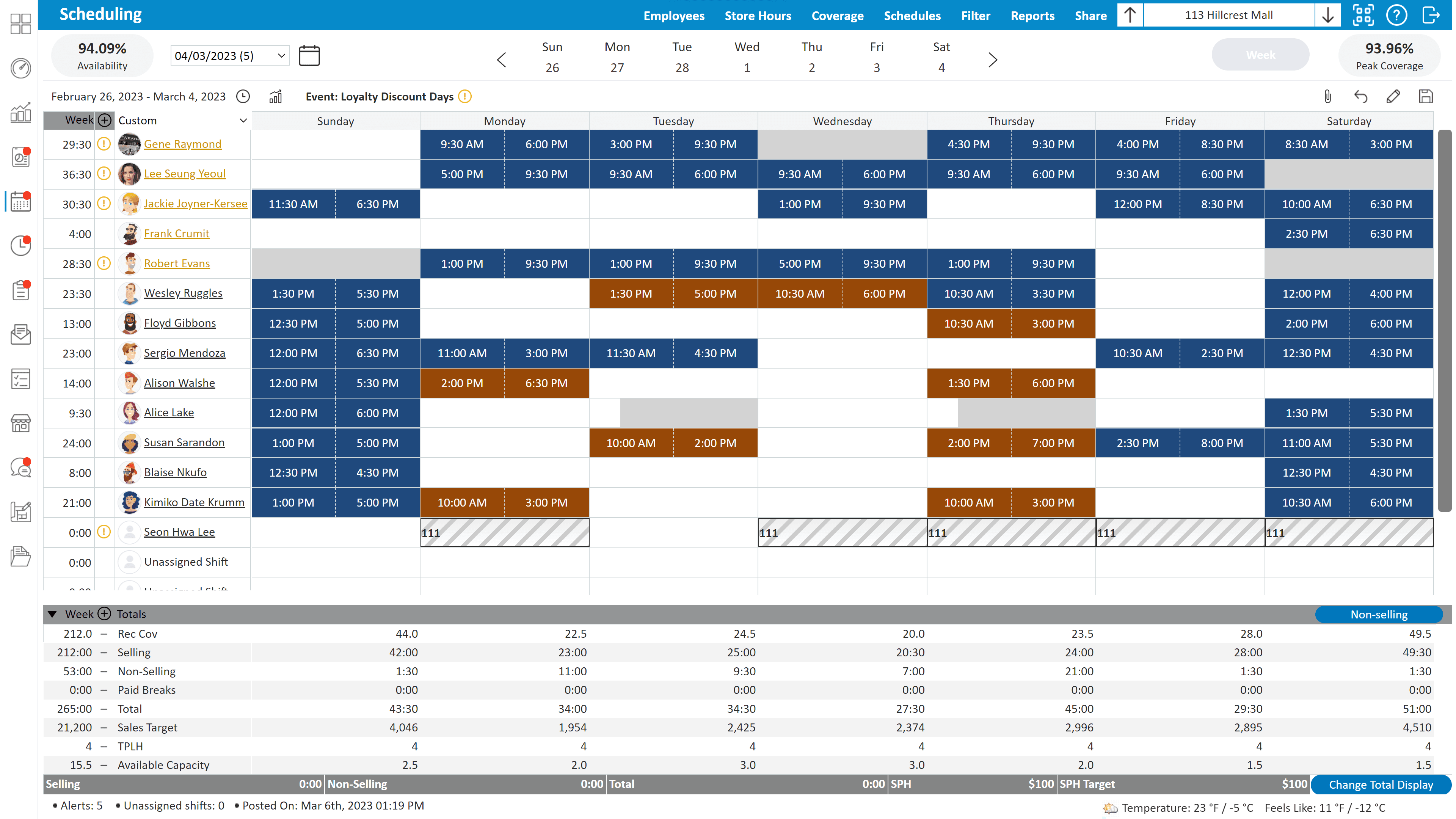
Retail staffing software helps reduce these challenges by bringing scheduling, employee availability, labour planning, and workforce communication into a single system.
Common Retail Staffing Challenges
Before choosing a solution, it's important to understand the problems retail staffing software is designed to solve.
Labour Costs Continue to Rise
Labour is one of the largest expenses for retailers. Even small scheduling inefficiencies can have a noticeable impact on profitability.
Without accurate labour planning, stores often schedule too many or too few employees.
Last-Minute Callouts
Unexpected absences create gaps in coverage and force managers to spend valuable time finding replacements.
Without a structured process, these situations can quickly disrupt store operations.
High Employee Turnover
Retail turnover remains a challenge for many organisations.
Employees often become frustrated when schedules are inconsistent, communication is poor, or shift requests are difficult to manage.
Multi-Location Complexity
As retailers expand, staffing becomes harder to manage consistently.
District and regional leaders need visibility into labour performance, staffing levels, and execution across every location.
What Retail Staffing Software Should Actually Do
When evaluating solutions, focus on capabilities that help stores operate more effectively, not just features that look good in a demo.
Automated Scheduling
Automated scheduling helps managers create schedules faster while reducing manual work.
The best systems consider employee availability, labour targets, staffing requirements, and scheduling rules when building schedules.
Labour Forecasting
Strong retail staffing software helps retailers align labour with expected demand.
By using sales forecasts, traffic data, or historical trends, managers can make more informed staffing decisions.
This helps reduce both overstaffing and understaffing.
Employee Self-Service
Employees expect easy access to schedules and shift information.
Mobile self-service tools allow team members to:
View schedules
Request time off
Pick up available shifts
Swap shifts with coworkers
This reduces administrative work while improving communication.
Real-Time Labour Visibility
Managers should be able to see labour performance as it happens, not days or weeks later.
Real-time reporting helps identify staffing issues before they impact store performance.
Multi-Store Management
For growing retailers, visibility across locations is essential.
A good retail staffing software platform allows leaders to compare staffing levels, labour costs, and workforce performance across every store.
Task and Execution Management
Scheduling alone does not guarantee results.
Retailers also need confidence that tasks are completed, priorities are executed, and teams remain aligned throughout the day.
This is one area where platforms like StoreForce stand out by connecting staffing, execution, and performance within a single solution.
Questions to Ask Before Choosing Retail Staffing Software
Not every solution is built for the realities of retail. Before investing in a platform, ask questions that reveal how well the software will support your stores both today and as your business grows.
Can schedules be built around customer demand?
Staffing based on guesswork often leads to stores being overstaffed during slow periods and understaffed during busy ones. Software that can align schedules with sales forecasts, customer traffic, or historical trends helps ensure labour is available when it is needed most.
Does the platform support multiple locations?
Many scheduling tools work well for a single store but become difficult to manage across dozens or hundreds of locations. Multi-store retailers need visibility into staffing levels, labour costs, and schedule consistency across the entire business, not just individual stores.
Can employees access schedules from their phones?
Retail employees increasingly expect mobile access to schedules, shift changes, and time-off requests. Without it, managers often spend valuable time answering schedule questions, coordinating shift swaps, and communicating updates manually.
Does it provide visibility into store performance?
Staffing data alone only tells part of the story. Retail leaders need to understand how staffing decisions affect sales, customer experience, task completion, and overall store performance. The right software helps connect workforce planning to business results.
How easy is it for managers to use?
Even the most advanced software will struggle to deliver value if store managers find it difficult to use. Look for a platform that simplifies scheduling, reduces administrative work, and fits naturally into daily store operations.
Can it support both staffing and store execution?
Having the right people on the schedule is important, but retailers also need confidence that priorities are being completed on the sales floor. Some platforms, including StoreForce, help connect staffing, task management, and performance tracking so managers can see the bigger picture of store operations.
Is the software easy for managers to use?
A system only creates value if store teams actually use it.
Signs You've Outgrown Your Current Staffing Process
Many retailers continue using manual processes long after they stop being effective.
You may have outgrown your current approach if:
Managers spend hours building schedules each week
Labour costs are difficult to control
Staffing levels vary widely between stores
Teams rely on texts, emails, or printed schedules
District managers lack visibility into store operations
Store execution is inconsistent across locations
If several of these challenges sound familiar, it may be time to evaluate a more modern solution.
How Retail Staffing Software Impacts Store Performance
Staffing decisions affect nearly every aspect of retail performance, from sales and profitability to customer satisfaction and employee retention.

See How StoreForce Can Work for Your Stores
See how StoreForce brings employee scheduling, labour optimisation, task management, and store execution together in one retail workforce management platform. Book a demo today to see what StoreForce can do for your teams.
Speak To A Retail Expert


