Why Every Retailer Should Use A Store Performance Dashboard
This guide explains what a store performance dashboard is, what metrics matter most, and how retailers can use dashboard data to improve store performance every day.

Running a successful retail store has never been more challenging.
Store managers are expected to increase sales, control labor costs, keep shelves stocked, complete daily tasks, coach employees, and deliver excellent customer service, all while making hundreds of decisions every day.
The problem isn't a lack of data. Most retailers already have access to sales reports, labor reports, inventory systems, and customer feedback. The problem is that this information is often spread across multiple systems, making it difficult to see what's really happening inside the business.
A store performance dashboard solves that problem by bringing your most important retail metrics into one place.
More importantly, it helps managers spot issues early, understand what's causing them, and take action before small problems become expensive ones.
This guide explains what a store performance dashboard is, what metrics matter most, and how retailers can use dashboard data to improve store performance every day.
Take control of your store performance
Book a demo with StoreForce today and run your retail operations better tomorrow.
Book A Demo
What Is a Store Performance Dashboard?
A store performance dashboard is a central place where retailers can monitor the health of their stores in real time.
Instead of jumping between spreadsheets, reports, and multiple software platforms, managers can see the information they need on one screen.
A good dashboard doesn't just display numbers. It helps answer questions like:
Are we on track to hit today's sales goal?
Are we staffed correctly for customer demand?
Which stores need attention?
Are daily tasks being completed?
Are labor costs under control?
Which managers or teams need coaching?
The goal isn't to collect more data.
The goal is to make better decisions, faster.
Why Store Performance Visibility Matters
Retail moves quickly.
A busy Saturday morning can quickly become a slow afternoon. A promotion can perform better than expected. A staffing shortage can impact customer service before lunchtime.
Managers don't have the luxury of waiting until next week's report to understand what happened.
They need visibility while the business day is still happening.
When retailers have access to real-time performance data, they can:
Respond to problems before they grow.
Allocate labor where it's needed most.
Improve customer service during busy periods.
Keep stores focused on the right priorities.
Coach employees using current performance instead of outdated reports.
The faster you identify a problem, the easier it is to solve.
The Biggest Challenges Retailers Face Without a Store Performance Dashboard
Many retailers already collect performance data.
The challenge is turning that information into meaningful action.
Data Lives in Too Many Places
Sales might live in your POS system.
Labor lives somewhere else.
Task completion is tracked in another platform.
Customer feedback sits in a separate report.
Managers waste valuable time switching between systems instead of helping customers or coaching their teams.
A single dashboard brings everything together, making it easier to understand how each part of the business affects the others.
Problems Aren't Found Until It's Too Late
Imagine finding out on Monday that one of your busiest stores missed its sales goal all weekend.
At that point, there's very little you can do.
Now imagine seeing sales slow down by noon on Saturday.
You can review staffing, check inventory, coach associates, or adjust priorities before the day is over.
That's the difference between reporting and performance management.
Managers Spend Too Much Time Looking for Answers
Retail managers shouldn't spend hours building spreadsheets.
Their time is better spent on the sales floor helping associates, improving customer service, and making sure the store is operating well.
A good dashboard reduces administrative work by putting the right information in front of managers when they need it.
Different Stores Measure Success Differently
Without standardized reporting, one store may focus on sales while another focuses on labor or inventory.
That makes it difficult for district managers and retail leaders to compare locations fairly.
A store performance dashboard gives everyone the same view of success using consistent metrics across every location.
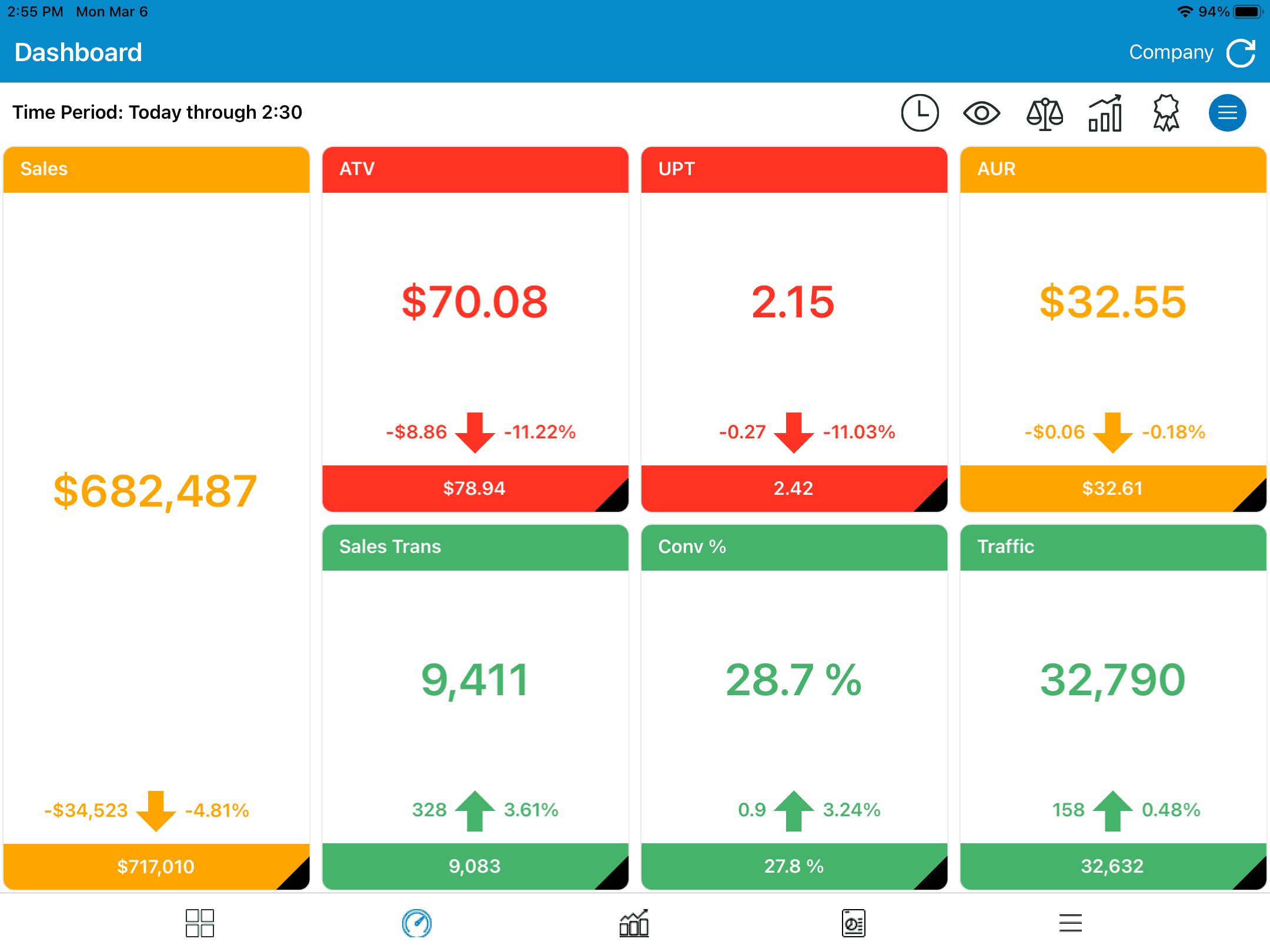
What Every Store Performance Dashboard Should Track
The best dashboards focus on the metrics that help managers make better decisions, not simply collect more numbers.
Sales Performance
Sales are usually the first metric managers look at, but they should never be viewed in isolation.
Track metrics like:
Daily sales
Sales versus target
Sales by hour
Sales by department
Sales by associate
These numbers help answer important questions.
If sales are behind target, ask yourself:
Has customer traffic changed?
Is conversion lower than usual?
Are key products available?
Were promotional displays completed correctly?
Do associates need more support on the sales floor?
Sales numbers tell you what happened.
The next questions help explain why.
Labor Performance
Labor is one of the largest expenses for most retailers, which makes it one of the most important areas to monitor.
Track:
Scheduled hours
Hours worked
Overtime
Labor cost as a percentage of sales
Productivity
Many retailers make the mistake of cutting labor whenever costs rise.
Sometimes that's the right decision.
Sometimes it's exactly the wrong one.
If labor costs increase but customer traffic also increases, adding staff may actually improve customer service and generate more sales.
The goal isn't always lower labor costs.
The goal is using labor where it creates the most value.
Store Execution
Great retail execution often separates average stores from exceptional ones.
Track:
Task completion
Overdue tasks
Merchandising compliance
Store audits
Daily priorities
If task completion begins to fall, don't immediately assume employees aren't working hard.
Instead, ask:
Was the store understaffed?
Were priorities communicated clearly?
Were managers available to support the team?
Were too many tasks assigned?
Looking beyond the numbers often leads to better solutions.
Customer Experience
Customer experience should never be measured by guesswork.
Useful metrics include:
Conversion rate
Customer satisfaction
Returns
Queue times
Loyalty participation
If customer satisfaction declines, don't stop at the score.
Walk the sales floor.
Observe customer interactions.
Review staffing during busy periods.
Speak with associates.
The dashboard points you toward the problem, but leadership solves it.
Inventory Performance
Inventory affects almost every part of retail operations.
Track:
Stock availability
Stockouts
Inventory accuracy
Shrink
Sell-through
If a top-selling product is consistently unavailable, sales opportunities disappear before associates even have a chance to help customers.
Inventory metrics should always be viewed alongside sales performance to understand the complete picture.
How to Turn Dashboard Data Into Better Decisions
This is where many retailers stop.
They review the numbers.
Then they move on.
The best retailers ask one more question.
What should we do next?
Here are a few examples.
Sales Are Falling
Don't immediately blame the team.
Instead:
Compare customer traffic with previous periods.
Review conversion rates.
Check staffing levels.
Confirm promotional displays are complete.
Make sure popular products are available.
Finding the cause leads to better decisions than reacting to the result.
Labor Costs Are Increasing
Before reducing hours, investigate:
Overtime usage.
Scheduling accuracy.
Customer traffic.
Sales performance.
Productivity during different parts of the day.
Sometimes better scheduling solves the problem without reducing customer service.
Tasks Aren't Being Completed
Missed tasks usually point to a bigger issue.
Ask:
Is the workload realistic?
Are priorities clear?
Does the manager have enough support?
Is the team spending too much time covering customer demand?
Solving the root cause prevents the problem from repeating.
Common Store Performance Dashboard Mistakes
Even the best dashboard won't improve results if it's used incorrectly.
Tracking Too Many Metrics
Focus on the KPIs that influence daily decisions.
If every number feels equally important, nothing is truly important.
Looking at Yesterday Instead of Today
Historical reporting has value.
Operational dashboards should help managers improve today's performance while they still have time to act.
Measuring Activity Instead of Results
Completing twenty tasks doesn't automatically create a better store.
Ask whether those tasks improved sales, customer experience, or operational efficiency.
Results matter more than activity.
Treating Every Store the Same
Every location serves different customers, faces different staffing challenges, and experiences different sales patterns.
Use dashboards to understand those differences instead of forcing every store into the same solution.
What Makes a Great Store Performance Dashboard?
The best dashboards share a few important qualities.
They are:
Easy to understand.
Updated in real time.
Built around retail operations.
Accessible on mobile devices.
Simple to customize.
Focused on action, not just reporting.
Most importantly, they help managers spend less time searching for answers and more time improving store performance.
How StoreForce Helps Retailers Improve Store Performance
StoreForce brings together the information retail leaders need every day, from scheduling and labor to task management, performance tracking, and store execution.
Instead of relying on disconnected reports, managers have one place to monitor performance, identify issues, and make informed decisions.
That means more time coaching associates, supporting customers, and improving store results.
When managers have better visibility, they can respond faster, coach more effectively, and create more consistent experiences across every location.
Final Thoughts
A store performance dashboard should do much more than display charts and graphs.
It should help retailers understand what's happening inside every store, why it's happening, and what actions will have the biggest impact.
The most successful retailers don't rely on instinct alone.
They combine experience with real-time performance data to make smarter decisions, support their teams, and improve results every day.
When your dashboard helps you move from reacting to leading, it becomes one of the most valuable tools in your retail business.

See How StoreForce Can Work for Your Stores
See how StoreForce brings employee scheduling, labor optimization, task management, and store execution together in one retail workforce management platform. Book a demo today to see what StoreForce can do for your teams.
Speak To A Retail Expert


