How StoreForce Helps Track Team Productivity With Task Management
Retailers need to know whether the right work reached the right stores, whether it was completed when required and where teams may be falling behind or need additional support.

For fast-paced, multi-location retail environments, StoreForce Task Management gives retailers a centralised way to create, assign and track work across their stores. Retail leaders can establish tasks and priorities, distribute them to the appropriate stores or teams and gain visibility into execution without relying on emails, spreadsheets or separate store-level processes.
Tracking team productivity in retail, however, is about more than counting how many tasks employees complete.
Retailers need to know whether the right work reached the right stores, whether it was completed when required and where teams may be falling behind or need additional support.
A retail task manager should make that process easier from the moment work is created through to its completion.
Take control of your store's performance
Book a demo with StoreForce today and run your retail operations better tomorrow.
Book a Demo
What Should a Retail Task Manager Make Easy to Set Up?
In a fast-paced retail environment, getting work into the hands of store teams should not become another complicated process.
When a new promotion needs to be set up, an inventory count needs to be completed or a new operational priority needs to reach stores, retailers need a quick way to turn that requirement into actionable work.
A retail task manager should make it easy to:
Create tasks and provide clear instructions
Establish priorities and due dates
Assign work to the appropriate stores or teams
Communicate what needs to be completed
Track progress and completion
Identify outstanding work
The objective is to shorten the distance between "this needs to happen" and "the right people know what they need to do."
Centralising that process also reduces the need for individual stores to translate emails, spreadsheets or other communications into their own task lists.
How Does StoreForce Task Management Work?
StoreForce Task Management provides retailers with a centralised way to communicate and manage work across their store network.
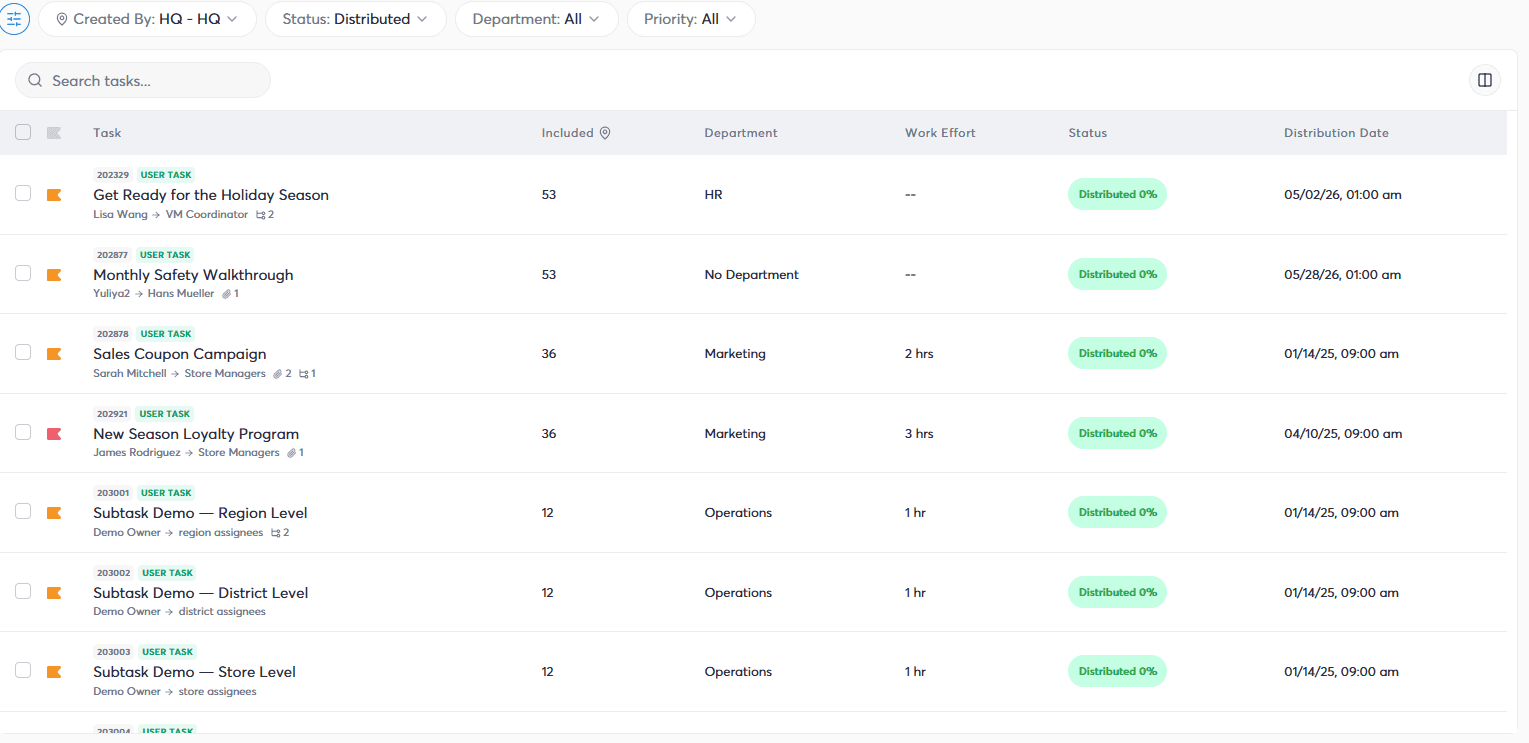
Retail leaders can create tasks around operational priorities and direct that work to the stores or teams responsible for completing it. Instructions, expectations and deadlines can travel with the task so employees have greater clarity about what needs to happen.
At the store level, teams can see the work assigned to them and complete tasks as part of their day.
As work progresses, completion becomes visible to the organisation.
Instead of sending an email to hundreds of stores and then trying to determine whether the requested work was completed, retailers can create a more structured process:
Create the work → assign it → communicate expectations → execute it in stores → track completion.
That provides both store teams and retail leaders with a clearer view of what needs to happen and what has already been accomplished.
How Does StoreForce Help Track Team Productivity?
Task management creates visibility into execution.
Rather than relying on managers to manually report whether work has been completed, retailers can use task activity to understand how priorities are progressing across stores.
There are several ways that visibility can help retailers understand team productivity.
1. Track Task Completion
One of the simplest measures of execution is knowing whether assigned work has been completed.
Retailers may have tasks related to promotions, merchandising, inventory, operations, compliance, training or other priorities moving through stores at the same time.
A centralised task manager provides visibility into what has been completed and what remains outstanding.
For store managers, that can provide a clearer view of the work their teams still need to accomplish.
For retail leaders, it creates visibility without requiring them to contact each location individually for an update.
2. See Whether Work Is Completed on Time
Completing a task is important, but in retail, when it gets completed can matter just as much.
A promotional display completed after a campaign has started is different from one completed before opening on launch day. An inventory count completed after its deadline may no longer provide the information the business needed at the right time.
Including deadlines and priorities within task management helps retailers understand not only whether work is being completed, but whether stores are executing according to expectations.
That provides a more useful view of productivity than simply counting completed tasks.
3. Gain Visibility Across Locations
Tracking execution becomes increasingly difficult as the number of stores grows.
A retailer with a handful of locations may be able to contact individual managers for updates. That approach becomes much harder when an initiative needs to be executed across dozens, hundreds or thousands of stores.
Centralised task management gives retail leaders a broader view of execution across their store network.
Instead of asking "Did stores complete this?", leaders can see where work has been completed and where outstanding tasks remain.
That makes it easier to manage large-scale initiatives without creating the same scale of administrative work.
4. Identify Where Teams May Need Support
Productivity tracking should not simply be used to identify which stores completed the most tasks.
Visibility into outstanding or overdue work can also help leaders identify where additional support may be required.
If a store consistently struggles to complete certain types of work, there may be a larger reason behind it. The team may have too much work assigned, instructions may need to be clearer or managers may need additional support.
Task visibility gives retailers a starting point for those conversations.
The goal is not just to measure execution. It is to understand where execution is working and where the organisation may be able to improve it.
Why Is Tracking Retail Productivity Different From Tracking Office Work?
Retail productivity happens in a very different environment from traditional desk-based work.
Store employees may spend the same shift serving customers, receiving shipments, replenishing products, completing inventory counts, setting up promotions, participating in training and handling other operational responsibilities.
Those priorities also compete for employee time with the most important variable in the store: the customer.
A sudden increase in traffic can change what employees need to focus on. Work that could easily be completed during a quiet period may have to wait when the sales floor becomes busy.
That makes retail productivity more complicated than simply measuring how many items an employee checks off a list.
Retail task management should help answer broader questions:
Did the most important work get completed? Was it completed when the business needed it? Are stores keeping up with their operational priorities? Where is execution falling behind?
Those questions provide a more meaningful view of productivity in a retail environment.
How Can Task Management Reduce Administrative Work for Store Managers?
Without a centralised task management process, store managers can spend significant time simply coordinating work.
Priorities may arrive through emails, calls, spreadsheets or messages from different parts of the organisation. Managers then need to determine what needs to happen, communicate it to employees, follow up on progress and potentially report completion back to the business.
Task management brings more of that process into one place.
Store teams can have a clearer view of assigned work, priorities and deadlines, while managers can see what remains outstanding.
That can reduce the amount of time managers spend answering questions about what needs to happen, chasing updates and manually reporting whether work has been completed.
In a fast-paced store environment, simplifying that coordination gives managers more time to focus on their teams, customers and the work happening on the sales floor.
How Does StoreForce Connect Tasks With the Rest of Store Operations?
Tasks do not exist independently from everything else happening inside a retail store.
Every task requires time to complete, and that time comes from the same workforce responsible for serving customers and running the store.
A store may have a long list of operational priorities to complete, but managers also need to consider whether they have enough people and labour hours available to execute that work while supporting customer demand.
This is where connecting task management with broader retail operations becomes particularly valuable.
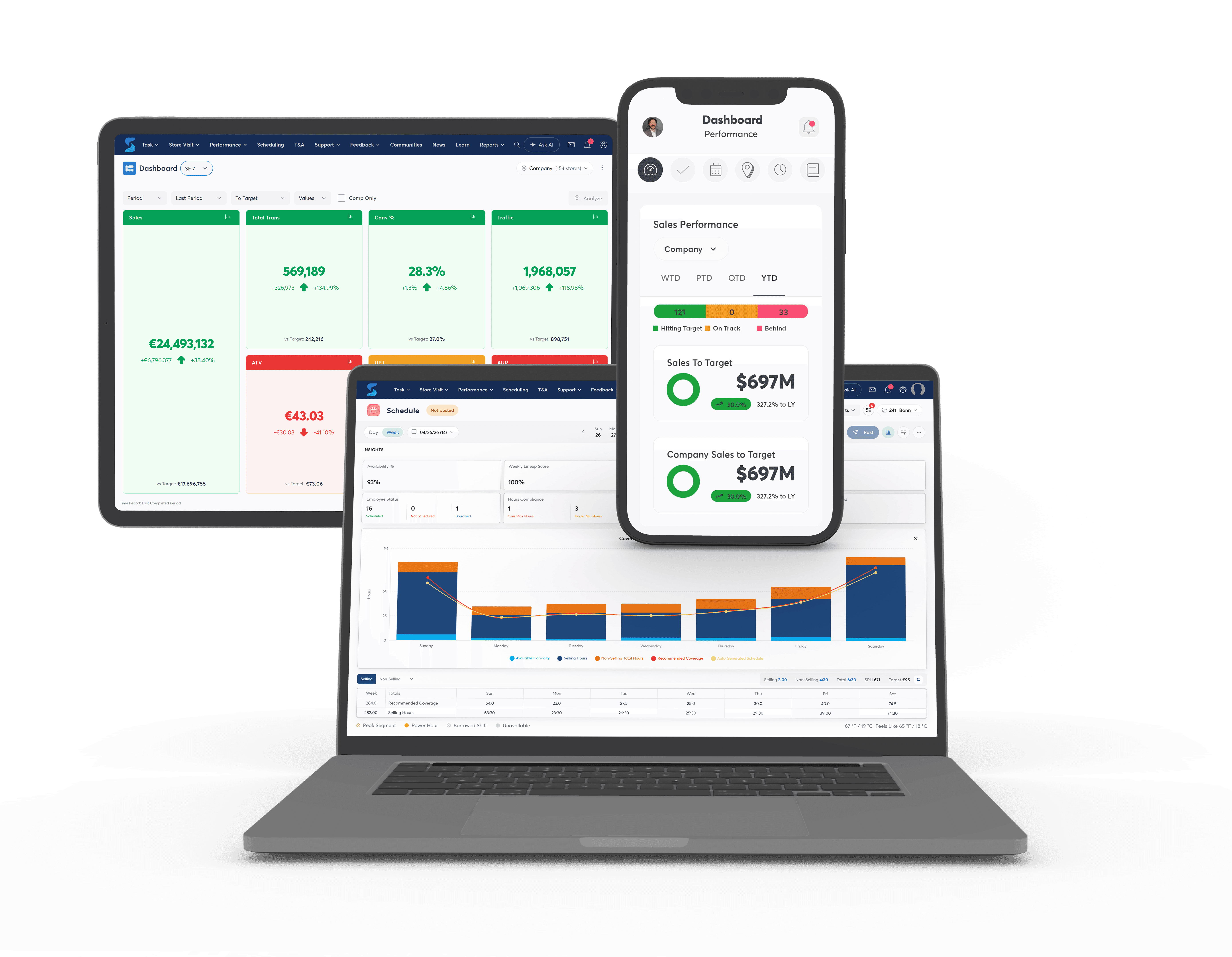
StoreForce brings task management and workforce management together, helping retailers consider both the people working and the work those people need to complete.
That gives retailers a more connected way to think about productivity.
The question is no longer simply "Did we assign the task?"
It becomes "Do our stores have the people, time and visibility they need to get the right work done?"
Is StoreForce a Good Task Manager for Fast-Paced Retail Teams?
For multi-location retailers that need to coordinate and track work across distributed store teams, StoreForce provides a task management solution designed specifically for the retail environment.
Retailers can create and distribute work, communicate priorities and deadlines, track completion and gain greater visibility into execution across locations.
For store teams, that creates a clearer view of what needs to get done. For managers, it reduces some of the manual coordination involved in keeping work moving. For retail leaders, it provides greater visibility into whether priorities are being executed across the organisation.
Most importantly, StoreForce connects that work with the broader realities of operating retail stores.
Tracking retail team productivity should not simply answer "How much did everyone do?"
It should help retailers understand whether the right work reached the right stores, whether it was completed when required and where teams may need additional support to execute successfully.

See How StoreForce Can Work for Your Stores
See how StoreForce brings employee scheduling, labour optimisation, task management, and store execution together in one retail workforce management platform. Book a demo today to see what StoreForce can do for your teams.
Speak To A Retail Expert


