How to Get Better Store Management in Retail
The most successful retailers understand that store management is not a collection of separate responsibilities. It is a connected system where people, operations, and performance work together to create consistent results.

Many people think store management in retail is about supervising employees or making sure shelves stay stocked. While those responsibilities matter, they only tell part of the story.
Strong store management is really about balancing three areas that directly impact store performance: people, operations, and business performance.
When one area falls behind, the effects are felt throughout the store. A well-trained team cannot succeed with poor processes. Efficient operations cannot make up for weak customer service. Strong sales become difficult to sustain when labour costs are out of control.
The most successful retailers understand that store management is not a collection of separate responsibilities. It is a connected system where people, operations, and performance work together to create consistent results.
Take control of your store's performance
Book a demo with StoreForce today and run your retail operations better tomorrow.
Book a Demo
People: Building and Supporting High-Performing Teams
Retail stores depend on people more than almost any other industry. Every customer interaction, product recommendation, task completion, and sale depends on the employees working on the sales floor.
That makes people management one of the most important responsibilities in retail store management.
Hiring the Right Employees
Successful stores start with hiring employees who fit the brand, understand customer service, and can perform in a fast-paced environment.
While technical skills can be taught, qualities such as communication, reliability, adaptability, and teamwork often have a greater impact on long-term success.
Strong hiring practices help reduce turnover, improve team performance, and create a more consistent customer experience.
Training and Development
Retail is constantly changing. New products, promotions, policies, and customer expectations require employees to learn continuously.
Training should not stop after onboarding. Ongoing development helps employees stay informed, build confidence, and perform their roles more effectively.
For retail leaders, investing in employee development often leads to better customer service, stronger engagement, and higher retention rates.
Scheduling the Right People at the Right Time
Scheduling is one of the most important and challenging aspects of store management.
Managers must balance customer demand, employee availability, labour budgets, and business goals while ensuring the store is properly staffed throughout the day.
Poor scheduling can lead to long wait times, missed sales opportunities, employee burnout, and unnecessary labour expenses.
Effective scheduling aligns workforce coverage with customer traffic patterns so stores can deliver a better experience while maintaining labour efficiency.
Managing Employee Performance
High-performing retail teams do not happen by accident.
Store managers must set clear expectations, provide regular coaching, recognise strong performance, and address issues before they become larger problems.
Performance management helps employees understand how their work contributes to store goals while creating accountability across the team.
When employees know what success looks like and receive ongoing support, they are more likely to stay engaged and productive.

Operations: Creating Consistency Across the Store
Operations are the systems and processes that keep a retail store running efficiently every day.
Without strong operational discipline, even talented teams can struggle to deliver consistent results.
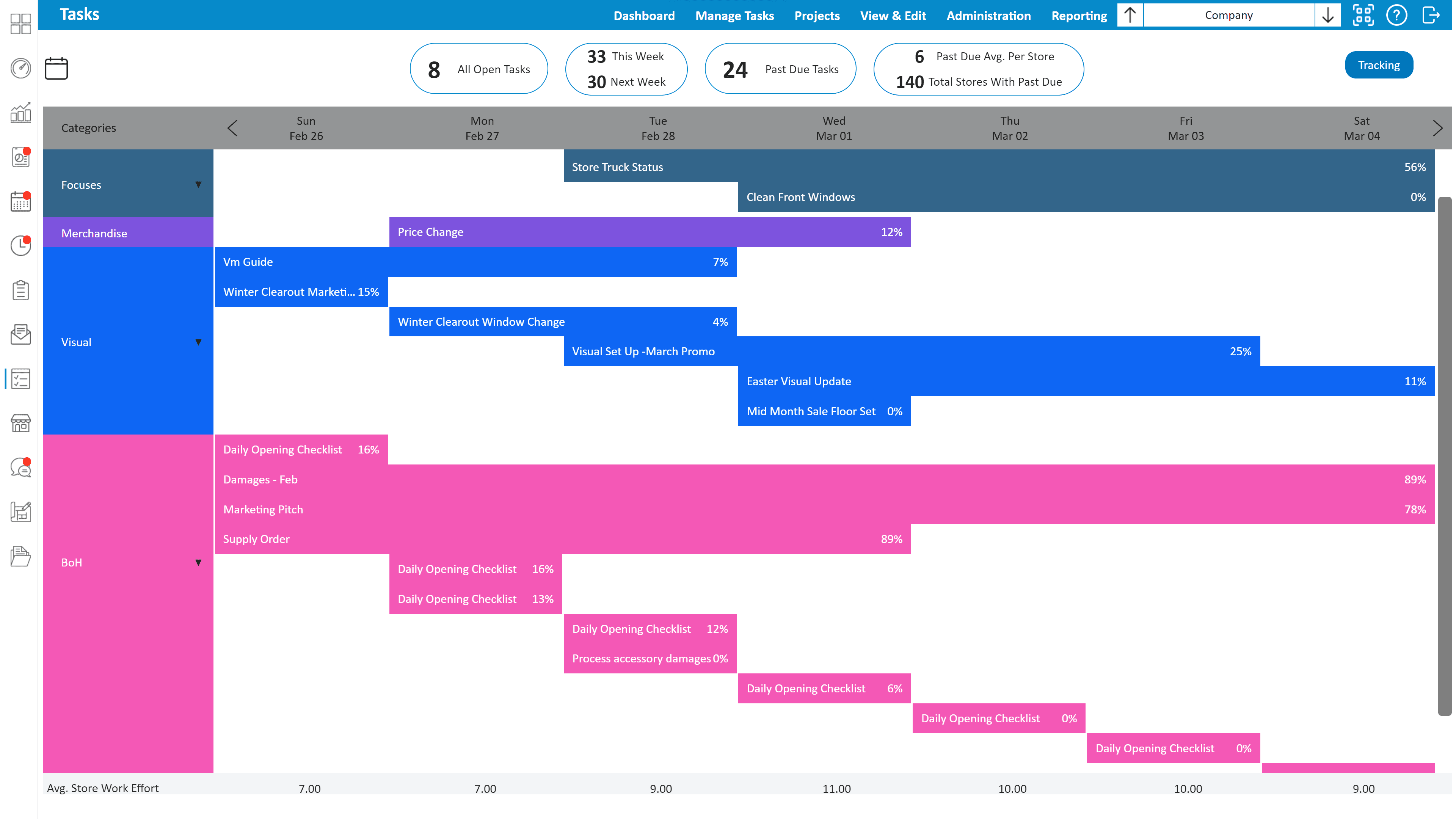
Managing Daily Tasks
Retail stores rely on hundreds of small tasks being completed correctly every day.
Opening procedures, merchandising updates, inventory checks, cleaning routines, replenishment activities, and promotional setups all contribute to the customer experience.
Clearly defined task management processes help ensure critical work gets completed consistently across shifts and locations.
Conducting Store Audits
Audits help retailers verify that standards are being followed and identify opportunities for improvement.
Store audits may focus on merchandising compliance, safety standards, operational procedures, or customer experience requirements.
Regular audits provide visibility into store execution and help maintain consistency across multiple locations.
Maintaining Compliance
Retailers operate within a wide range of company policies, safety requirements, labour regulations, and operational standards.
Store managers play a key role in ensuring compliance while reducing risk for the business.
Consistent compliance practices help protect employees, customers, and the brand itself.
Driving Store Execution
Many retail strategies fail because they are not executed consistently at the store level.
A promotion may be designed perfectly at headquarters, but if displays are not set correctly or employees are not informed, results suffer.
Store execution is the ability to turn plans into action consistently across every location.
For large retailers, strong execution often becomes a competitive advantage because it ensures customers receive the same experience regardless of which store they visit.
Performance: Measuring What Matters
Store management ultimately comes down to results.
Retail leaders need visibility into the metrics that reveal whether people and operations are working effectively.
Sales Performance
Sales remain one of the clearest indicators of store health.
Managers should monitor not only total sales but also trends, conversion rates, average transaction values, and sales by category.
Understanding these metrics helps identify opportunities for growth and areas that require attention.
Labor Performance
Labour is one of the largest expenses for most retailers.
Effective store management focuses on balancing labour investment with business outcomes.
Metrics such as sales per labour hour, labour cost percentage, and workforce productivity help managers evaluate whether staffing decisions are supporting business goals.
Employee Productivity
Productivity extends beyond sales.
Retail leaders should understand how efficiently teams complete tasks, execute initiatives, and support operational goals.
Higher productivity often results from clear expectations, strong communication, effective training, and proper staffing levels.
Customer Experience
Customer experience is often the result of everything happening behind the scenes.
Well-trained employees, efficient operations, and strong execution all contribute to positive customer interactions.
Metrics such as customer satisfaction scores, repeat visits, loyalty participation, and customer feedback can help retailers evaluate how effectively stores are serving shoppers.
Why Balance Matters
Many retail organisations focus heavily on one area while neglecting the others.
Some prioritise sales but overlook employee development. Others focus on operational compliance without measuring business outcomes.
The strongest retailers recognise that sustainable success comes from balancing people, operations, and performance.
When employees are engaged, operations are consistent, and performance is measured effectively, stores are better positioned to increase sales, improve customer satisfaction, and operate more efficiently across every location.
How StoreForce Helps Retailers Improve Store Management
Managing a single retail store is challenging enough. Managing dozens, hundreds, or even thousands of locations introduces a new level of complexity.
Retail leaders need visibility into staffing, task execution, labour performance, store compliance, and business results across every location. Without the right systems in place, managers often spend more time gathering information than acting on it.
StoreForce helps retailers connect the three pillars of successful store management: people, operations, and performance.
With workforce scheduling, labour planning, task management, real-time reporting, and store performance visibility in a single platform, retail teams can make better decisions and execute more consistently across every location.
Instead of managing stores through spreadsheets, emails, and disconnected systems, retailers gain a centralised view of what is happening across their business. This allows managers to identify issues faster, improve accountability, optimise labour investments, and focus more time on delivering exceptional customer experiences.
As retail operations become more complex, technology plays an increasingly important role in helping organisations maintain consistency, improve productivity, and support long-term growth.

See How StoreForce Can Work for Your Stores
See how StoreForce brings employee scheduling, labour optimisation, task management, and store execution together in one retail workforce management platform. Book a demo today to see what StoreForce can do for your teams.
Speak To A Retail Expert


