
How to Create a Multifaceted Retail Store Associate
Ben Flikkema | Content Specialist at StoreForce
Discover strategies for creating a versatile store associate skilled in sales, service, merchandising, and problem-solving in today’s retail environment.
Retail associates are expected to do more than ever before. Selling products and helping customers remain essential, but today's store teams also need to understand performance metrics, manage operational tasks, use technology, and adapt quickly when priorities change.
For retailers, developing associates who can confidently handle multiple responsibilities creates a more flexible workforce and helps stores operate more effectively.
A multifaceted retail associate is someone who can move between customer service, selling, store operations, and problem-solving without losing sight of what matters most: delivering a great customer experience and driving store performance.
But these skills don't develop overnight. Retailers need to provide the right training, clear expectations, and opportunities for associates to take on new responsibilities.
Here are five areas retailers should focus on when developing a more capable and adaptable store team.
See How StoreForce Can Help…
Give your teams the workforce management tools to drive stronger results.
Talk to Our Team
1. Build Strong Customer Service and Selling Skills
The foundation of a successful retail associate is still the ability to connect with customers and help them make purchasing decisions.
Strong associates understand the products they're selling, recognize customer needs, and know how to make recommendations without relying on a script.
They should be able to:
Ask open-ended questions to understand what customers need.
Explain product features and benefits confidently.
Recommend complementary products when appropriate.
Handle common objections and customer concerns.
Adapt their approach to different types of shoppers.
How retailers can develop these skills
Product training is important, but associates also need opportunities to apply what they've learned.
Managers can use short role-playing exercises, product demonstrations, and real customer scenarios to build confidence. Pairing newer employees with experienced associates also gives them an opportunity to observe effective selling techniques.
For example, a manager might ask an associate to demonstrate how they would recommend an additional product to a customer purchasing a pair of running shoes.
Rather than simply encouraging upselling, the exercise helps associates understand how to make relevant recommendations that improve the customer's experience.
Retailers should also provide regular feedback based on customer interactions and store performance.
The goal is to develop associates who can confidently represent the brand while contributing to stronger conversion and average transaction value.
2. Teach Associates to Understand Retail Performance
One of the most valuable skills an associate can develop is understanding how their daily actions influence store performance.
Retailers regularly measure sales, conversion, average transaction value (ATV), and units per transaction (UPT). However, these numbers become far more useful when associates understand what they mean and how to influence them.
For example:
Conversion rate: The percentage of store visitors who make a purchase.
Average transaction value: The average amount customers spend per transaction.
Units per transaction: The average number of items purchased in each transaction.
Sales targets: The revenue goals a store or team is working toward.
Understanding these metrics allows associates to make better decisions throughout their shifts.
If conversion is falling during a busy afternoon, the team might need to focus more attention on greeting customers and providing selling support.
If units per transaction are below target, associates can look for opportunities to recommend relevant complementary products.
How retailers can develop these skills
Start by introducing associates to a small number of KPIs and explaining how their actions influence each one.
Managers can review performance during daily team huddles, discuss opportunities for improvement, and set clear goals for upcoming shifts.
For example, instead of simply telling employees that ATV is below target, explain what might be contributing to the result and demonstrate how associates can improve their product recommendations.
Giving employees access to retail performance insights also helps them understand how the store is performing throughout the day.
When associates understand the numbers behind the business, they can contribute to improving them rather than simply waiting for instructions.

3. Develop Confidence With Retail Technology
Technology is now part of almost every retail associate's daily responsibilities.
From checking inventory and processing transactions to managing online orders and completing assigned tasks, employees need to feel comfortable using the systems that support store operations.
Omnichannel retail has made these skills even more important.
Customers may research products online before visiting a store, purchase items for in-store pickup, or expect associates to locate inventory at another location.
A capable associate should be comfortable:
Checking product availability across locations.
Supporting buy online, pick up in store (BOPIS) orders.
Processing returns and exchanges.
Accessing product information and store procedures.
Using digital tools to manage daily responsibilities.
How retailers can develop these skills
Technology training should be practical and continuous rather than limited to employee onboarding.
Give associates opportunities to complete common workflows in a training environment or under supervision before expecting them to work independently.
Managers can also identify employees who are particularly comfortable with technology and have them support colleagues who need additional guidance.
Just as importantly, retailers should avoid overwhelming store teams with disconnected systems that require employees to switch between multiple applications to complete routine tasks.
The easier technology is to use, the more time associates can spend helping customers.
4. Build Accountability Through Task Management
Customer service and selling are only part of running a successful retail store.
Associates are also responsible for replenishment, merchandising, promotional displays, inventory activities, and maintaining brand standards.
These responsibilities directly influence the customer experience, but they can become difficult to manage when priorities aren't clearly communicated.
A multifaceted associate should understand not only how to complete these activities, but also when they need to be completed and why they matter.
How retailers can develop these skills
Start by giving associates clear ownership of specific operational responsibilities.
Rather than asking an employee to help with merchandising, assign a specific display update with a deadline, instructions, and a clear definition of completion.
A structured retail task management system helps employees understand:
Which tasks need to be completed.
Who is responsible for each task.
When work is due.
How tasks should be completed.
How completion will be confirmed.
Managers can gradually increase responsibility as employees become more confident, giving experienced associates opportunities to coordinate activities or support newer team members.
Retailers should also teach associates how to prioritize tasks around customer demand.
For example, replenishment or administrative activities may be better suited to quieter periods, allowing employees to remain available during peak retail hours.
The objective is to create associates who can manage operational responsibilities without losing focus on customers.

5. Encourage Problem-Solving and Adaptability
Retail environments change constantly.
An employee might call in sick, a delivery could arrive late, or an unexpected increase in customer traffic may require the team to adjust its priorities.
Associates who can recognize these situations and respond appropriately are valuable to store operations.
However, problem-solving doesn't mean expecting employees to make every decision independently.
Retailers need to give associates a clear understanding of which decisions they can make, when they should involve a manager, and how to respond to common challenges.
How retailers can develop these skills
Scenario-based training is an effective way to help associates prepare for unexpected situations.
For example, managers can ask employees how they would respond if:
A customer requests an item that is out of stock.
Checkout lines begin growing during a busy period.
A scheduled employee doesn't arrive for their shift.
A promotional display isn't ready before a campaign launches.
A customer has a question they don't know how to answer.
These conversations help associates develop judgment and understand the appropriate next steps.
Managers should also encourage employees to suggest improvements when they identify recurring problems.
An associate who regularly notices delays during inventory replenishment may have valuable ideas for making the process more efficient.
Creating opportunities for employees to contribute helps build confidence, accountability, and a stronger understanding of how the store operates.
How to Build a Training Plan for Multifaceted Retail Associates
Developing a multifaceted workforce doesn't mean expecting every employee to master every responsibility immediately.
A more effective approach is to build capabilities gradually, giving associates opportunities to develop new skills as they become comfortable with their existing responsibilities.
Retailers can use a simple development framework:
Development stage | Primary focus |
|---|---|
1. Foundation | Customer service, product knowledge, POS systems, and store standards |
2. Performance | Selling techniques, conversion, ATV, UPT, and daily targets |
3. Operations | Merchandising, replenishment, task execution, and inventory workflows |
4. Independence | Problem-solving, prioritization, and handling common challenges |
5. Leadership readiness | Coaching peers, coordinating responsibilities, and supporting store managers |
This framework gives managers a way to evaluate progress and identify where additional training is needed.
It also creates clearer development opportunities for associates interested in taking on more responsibility or eventually moving into leadership roles.
Regular coaching conversations are essential. Managers should recognize the skills employees have developed, identify areas for improvement, and provide opportunities to practice new responsibilities.
Over time, retailers can build teams that are more adaptable and better prepared to support changing store needs.
How StoreForce Helps Retailers Develop Stronger Store Teams
Creating multifaceted associates requires more than training. Employees also need access to the right information, clear priorities, and the tools to perform their responsibilities effectively.
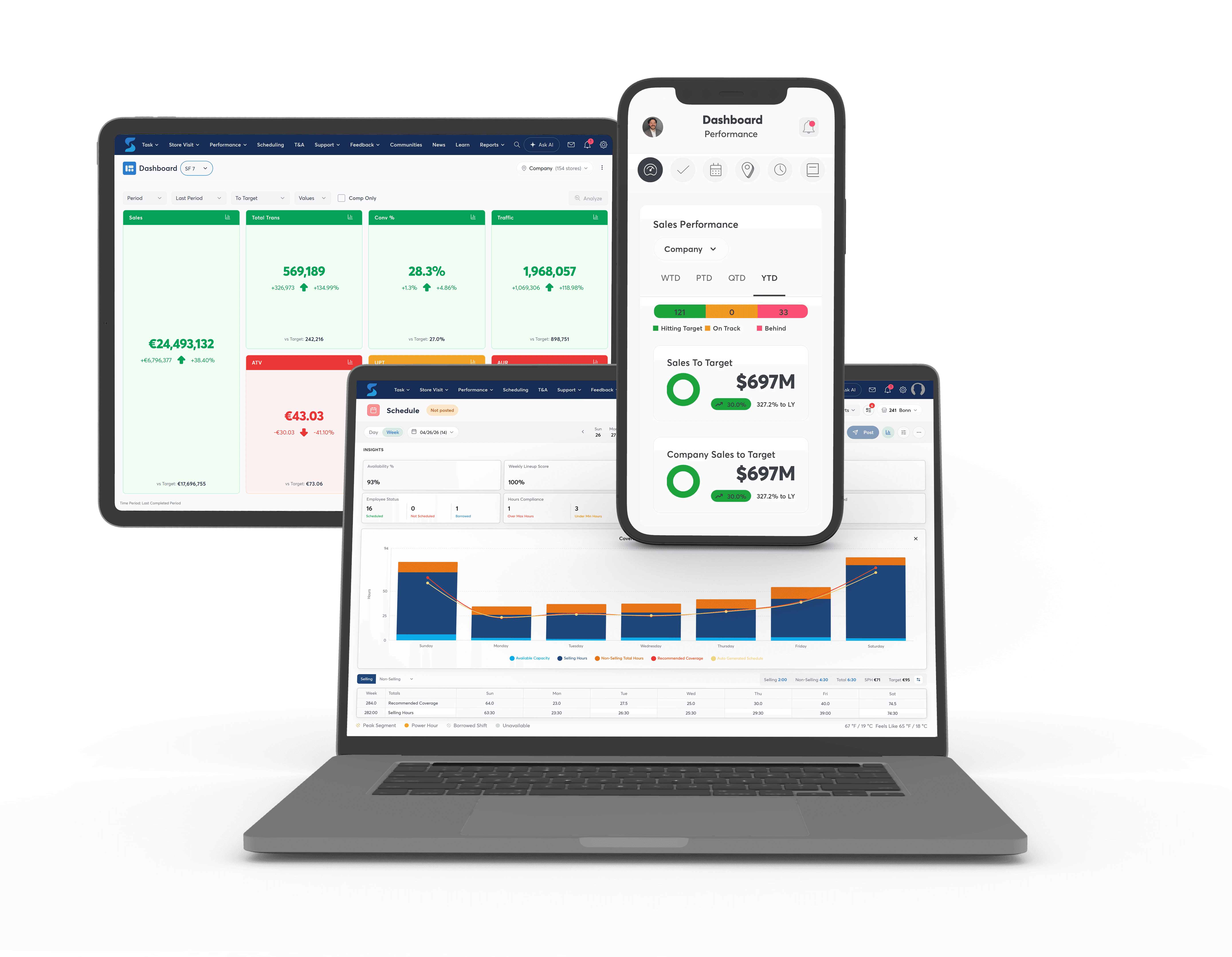
StoreForce brings workforce management, retail performance insights, task management, and store communications together in one platform built specifically for retail.
With StoreForce, retailers can help associates and managers stay connected to the information that matters throughout the day.
Performance visibility helps teams understand progress against sales goals and identify opportunities to improve. Task management provides clear direction on operational responsibilities, while workforce management helps retailers align staffing with store demand.
For managers, this creates more opportunities to coach employees using actual store performance and provide clear guidance on daily priorities.
Rather than managing selling, scheduling, and store execution as disconnected activities, retailers can bring these responsibilities together to support more effective store operations.
Build the Retail Associate Your Stores Need
Today's retail associates need a combination of customer service, selling, operational, and technical skills to succeed.
But building a multifaceted workforce isn't about asking employees to do more with less. It's about giving them the training, information, and support they need to contribute in different ways throughout the day.
When retailers invest in employee development, they create more capable teams, improve scheduling flexibility, and help managers respond more effectively to changing store demands.
The result is a workforce that can support customers, execute daily priorities, and contribute to stronger store performance.
Give your store teams the tools to do their best work.
Book a demo with StoreForce to see how connected workforce management, performance insights, and task management can help your retail teams succeed.

See How StoreForce Can Work for Your Stores
Book a quick chat with us today, to improve your retail operations tomorrow.
Speak To A Retail Expert


