
Demand Based Scheduling: Complete Guide for Retailers
The goal is simple: schedule enough associates to deliver a great customer experience without overspending on labor during slower periods.

Demand based scheduling has changed the way retailers approach workforce planning. Instead of relying on fixed schedules or manager intuition, this approach uses business data to match staffing levels with expected customer demand. The result is a schedule that puts the right people in the right place at the right time, helping retailers control labor costs while delivering a better shopping experience.
Labor is one of the largest operating expenses for any retailer, but it's also one of the hardest to manage. Customer traffic can change because of promotions, holidays, weather, local events, and seasonal shopping trends. If schedules don't adjust to those changes, stores can quickly become overstaffed during quiet periods or understaffed when demand peaks.
What Is Demand Based Scheduling?
Demand based scheduling is a workforce scheduling strategy that aligns employee hours with forecasted business demand. Rather than using the same schedule every week, managers build schedules based on expected customer traffic, sales forecasts, and other operational data.
For retailers, this means staffing levels can change as customer demand changes. A busy Saturday afternoon might require twice as many associates as a quiet Tuesday morning, while a holiday weekend or major promotion may require even more coverage. Instead of reacting once stores become busy, managers can prepare for those peaks in advance.
The goal is simple: schedule enough associates to deliver a great customer experience without overspending on labor during slower periods.
Take control of your store performance
Book a demo with StoreForce today and run your retail operations better tomorrow.
Book A Demo
Why Retailers Are Moving Away From Fixed Schedules
Traditional scheduling methods worked when shopping patterns were more predictable. Today, customer behavior changes much faster. Marketing campaigns, online promotions, weather, social media, and local events can all influence how busy a store becomes.
Retailers that continue using fixed schedules often run into the same challenges, including:
Overstaffing during slow periods, which increases labor costs.
Understaffing during peak shopping hours, leading to missed sales opportunities.
Inconsistent customer service when associates are stretched too thin.
Managers spending hours making manual schedule adjustments every week.
Limited visibility into whether labor is being scheduled efficiently.
Demand based scheduling solves these problems by allowing schedules to adapt as business conditions change. Instead of making staffing decisions based on habit, managers can use real business data to build schedules that support customer demand, improve labor efficiency, and give store teams the coverage they need.
How Demand Based Scheduling Works
Every demand based schedule begins with forecasting. Managers review historical sales, customer traffic, payroll budgets, promotions, and seasonal trends to estimate how busy the store will be throughout the week. That information is then used to determine when additional staffing is needed and when fewer associates can be scheduled.
Imagine a fashion retailer preparing for a weekend sale. Historical data shows customer traffic consistently peaks between 11 a.m. and 3 p.m., while early mornings remain relatively quiet. Rather than spreading labor evenly across the day, managers can increase staffing during those busy hours and reduce coverage when traffic slows.
This creates a schedule that supports both customer service and labor efficiency, ensuring payroll is spent where it has the greatest impact.
What Data Improves Demand Based Scheduling?
Accurate scheduling starts with accurate data. Looking at one report or relying on last week's schedule isn't enough to predict customer demand. The strongest forecasts combine several data sources to create a complete picture of how the business is expected to perform.
Some of the most valuable data includes:
Historical sales by day and hour
Customer traffic patterns
Promotional calendars
Holidays and seasonal trends
Payroll budgets
Employee availability
Local events that may affect shopping behavior
Store performance trends
When these data points are analyzed together, managers can build schedules that are both efficient and responsive to changing business conditions.
Benefits of Demand Based Scheduling
Demand based scheduling delivers benefits across every part of a retail operation. While many retailers first adopt it to control labor costs, the impact extends well beyond payroll.
Some of the biggest advantages include:
Lower labor costs by reducing overstaffing during slower periods.
Better customer service because associates are available when shoppers need assistance.
Higher sales through stronger floor coverage during peak shopping hours.
Improved employee experience with more balanced workloads and fewer understaffed shifts.
More informed decisions using real business data instead of guesswork.
Together, these improvements help retailers operate more efficiently while creating a better experience for customers and store teams alike.
Common Demand Based Scheduling Mistakes
Demand based scheduling is only as effective as the planning behind it. Even retailers using forecasting tools can miss opportunities if schedules aren't regularly reviewed or adjusted.
Some of the most common mistakes include:
Relying on outdated sales data
Ignoring promotions or seasonal events
Building schedules too far in advance without updating forecasts
Managing schedules in spreadsheets
Focusing only on reducing labor instead of meeting customer demand
Failing to monitor schedule performance after publication
Demand forecasting should be an ongoing process, not a one-time exercise. Reviewing schedule performance each week helps managers make better staffing decisions over time.
Demand Based Scheduling vs. Fixed Scheduling
The biggest difference between fixed scheduling and demand based scheduling is flexibility. Fixed schedules repeat the same staffing patterns regardless of how customer demand changes. Demand based scheduling adjusts staffing levels using current business data, allowing retailers to respond to changing conditions before they affect store performance.
Fixed Scheduling | Demand Based Scheduling |
|---|---|
Uses repeating weekly schedules | Adjusts staffing based on forecasted demand |
Relies heavily on manager experience | Uses sales and traffic data |
Can lead to overstaffing or understaffing | Better matches labor with customer demand |
Limited visibility into labor performance | Uses reporting to improve future schedules |
Difficult to scale across multiple stores | Supports consistent scheduling across every location |
As retailers become more data driven, demand based scheduling is replacing fixed schedules as the preferred approach to workforce planning.
Why Spreadsheets Make Demand Based Scheduling Difficult
Many retailers still build schedules using spreadsheets because they're inexpensive and familiar. While this may work for smaller teams, it quickly becomes difficult as businesses grow.
Managers often spend hours updating employee availability, adjusting payroll budgets, responding to shift changes, and making last minute edits. Every manual update increases the risk of errors while taking valuable time away from coaching employees and managing store operations.
Without access to live business data, spreadsheets also make it harder to adjust schedules when forecasts change. By the time updates are complete, the schedule may already be out of date.
How Retail Scheduling Software Supports Demand Based Scheduling
Modern retail scheduling software removes much of the manual work from workforce planning by combining forecasting, scheduling, reporting, and labor management into one platform.
Instead of switching between multiple systems, managers can:
Forecast staffing needs using sales and traffic data
Build schedules around expected customer demand
Monitor labor budgets in real time
Make schedule changes quickly when business conditions change
Compare labor performance across multiple locations
Improve future schedules using historical reporting
This gives managers more time to focus on leading their teams instead of constantly updating schedules.
How StoreForce Helps Retailers Schedule Around Demand
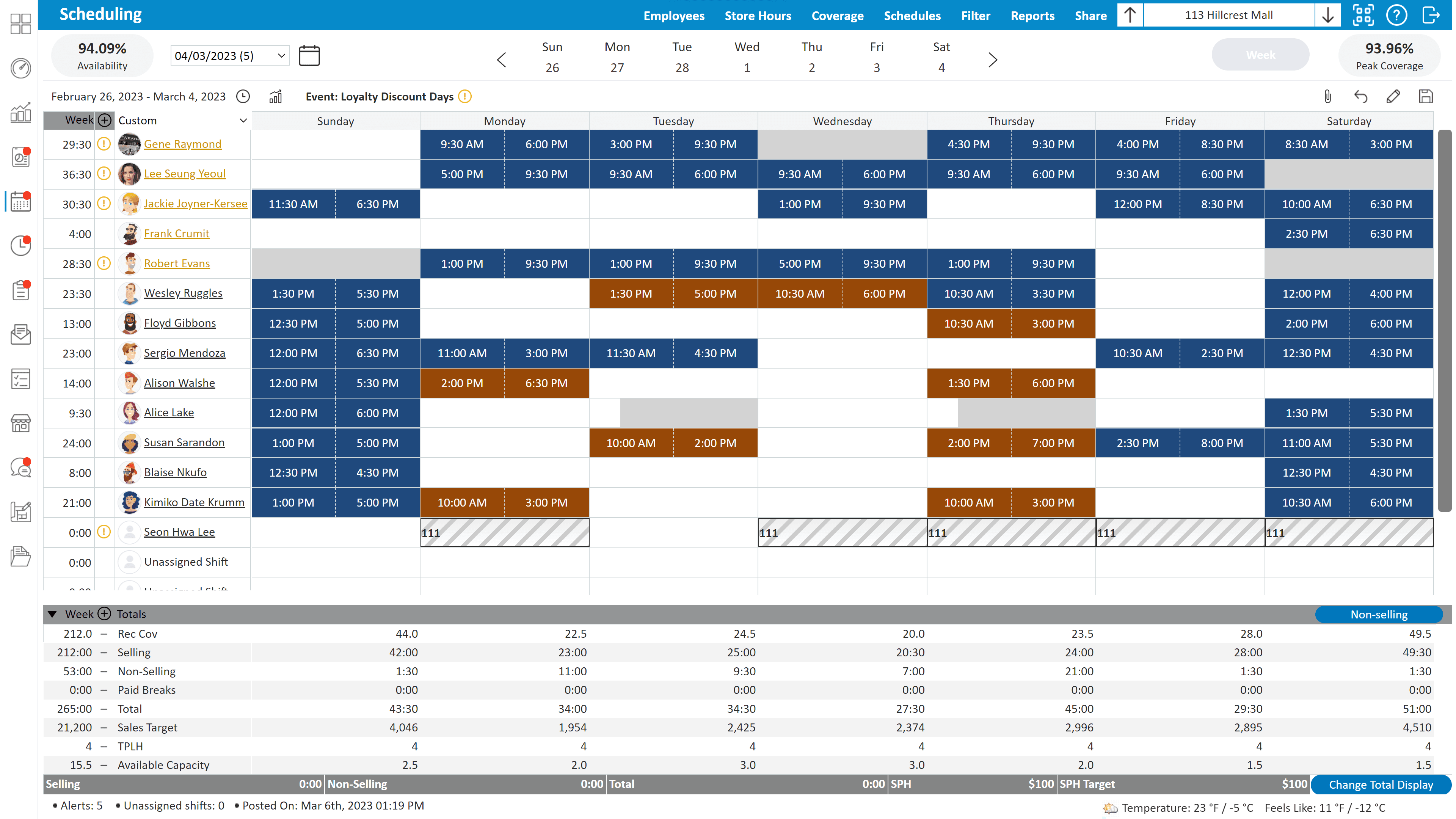
StoreForce helps retailers connect labor planning with real business performance. Rather than treating scheduling as a separate task, StoreForce combines workforce management, task management, reporting, and store performance into one platform.
Managers can build schedules using forecasted sales, labor budgets, and operational goals while maintaining visibility across every location. As business conditions change, schedules can be adjusted quickly without losing sight of labor targets or store performance.
With StoreForce, retailers can:
Build schedules around forecasted customer demand
Compare scheduled labor against sales forecasts
Monitor payroll budgets across every location
Track labor performance in real time
Improve consistency across multiple stores
Give managers better visibility into daily operations
The result is smarter scheduling, stronger execution, and better-performing stores.
Final Thoughts
Demand based scheduling has become an essential part of modern retail operations. As customer expectations continue to rise and labor costs remain under pressure, retailers need scheduling strategies that are flexible, data driven, and easy to manage.
By matching labor with expected customer demand, retailers can reduce unnecessary payroll, improve customer service, and create better experiences for employees. More importantly, they gain a repeatable process for making smarter staffing decisions week after week.
For retailers looking to improve workforce planning, demand based scheduling is no longer a nice feature to have. It's a competitive advantage that helps stores operate more efficiently while delivering better results across every location.
Frequently Asked Questions
What is demand based scheduling?
Demand based scheduling is a workforce scheduling strategy that aligns employee hours with forecasted customer demand using business data such as sales history, traffic patterns, promotions, and seasonal trends.
What are the benefits of demand based scheduling?
Demand based scheduling helps retailers lower labor costs, improve customer service, increase sales opportunities, create more balanced workloads, and make better staffing decisions using real business data.
What information should retailers use to forecast labor demand?
The most accurate forecasts typically include historical sales, customer traffic, promotions, holidays, seasonal trends, payroll budgets, employee availability, and local events that may affect shopping patterns.
Is demand based scheduling only for large retailers?
No. Retailers of all sizes can benefit from demand based scheduling. Whether operating one store or hundreds, building schedules around expected customer demand helps improve labor efficiency and store performance.
How does StoreForce support demand based scheduling?
StoreForce helps retailers forecast labor demand, build smarter schedules, monitor payroll budgets, track store performance, and manage workforce planning across multiple locations from a single platform.

See How StoreForce Can Work for Your Stores
See how StoreForce brings employee scheduling, labor optimization, task management, and store execution together in one retail workforce management platform. Book a demo today to see what StoreForce can do for your teams.
Speak To A Retail Expert


