7 Proven Ways to Drive Sales Higher in Retail
The highest-performing retailers understand that sales are influenced by far more than pricing and promotions.

Driving sales in retail has become more challenging than ever. Customers expect personalized service, well-stocked shelves, fast checkouts, and a seamless shopping experience, while retailers face tighter labor budgets, rising operating costs, and growing competition from ecommerce.
When sales begin to slow, the first reaction is often to increase marketing spend, launch another promotion, or offer deeper discounts. Those tactics can certainly attract more shoppers, but they don't always solve the underlying problem. For many retailers, the biggest opportunity isn't generating more traffic. It's converting more of the traffic they already have.
The highest-performing retailers understand that sales are influenced by far more than pricing and promotions. Every day, hundreds of operational decisions shape the customer experience. Scheduling, inventory management, task execution, manager visibility, and employee performance all affect whether a customer completes a purchase or walks out empty-handed.
The following strategies focus on the operational side of retail sales. They're the areas that often receive less attention than marketing but have a direct impact on revenue across every location.
Take control of your store performance
Book a demo with StoreForce today and run your retail operations better tomorrow.
Book A Demo
1. Identify Where You're Losing Sales Before Investing More in Marketing
Marketing plays an important role in attracting customers, but it doesn't guarantee sales. Two stores can run the same promotion, receive similar customer traffic, and produce very different results. When that happens, the issue is rarely the campaign itself. It's usually how well the store executed once customers arrived.
This is where retailers often experience hidden revenue leakage. A customer walks in looking for a promoted product only to discover it's out of stock. Another leaves because no associate is available to answer a question. A long checkout line convinces someone to abandon their purchase altogether. None of these situations show up as obvious failures, yet each one reduces revenue.
Rather than immediately increasing marketing spend, retailers should first understand what is happening inside the store. Compare traffic with conversion rates, labor schedules, inventory availability, and operational execution. If traffic remains steady while conversion falls, the problem may not be customer demand at all.
Technology has made this analysis much easier. Modern retail operations platforms combine workforce scheduling, store performance, task completion, and labor data in one place, allowing managers to identify operational issues before they become long-term sales problems.
2. Treat Store Execution as a Revenue Driver
Retailers spend millions developing promotions, merchandising plans, and seasonal campaigns. Yet the success of those initiatives depends almost entirely on how well they're executed at the store level.
Imagine launching a nationwide promotion across hundreds of stores. Marketing delivers strong customer traffic, but some locations don't finish setting displays before opening. Others forget promotional signage, while several stores fail to replenish featured products throughout the day. Customers receive completely different experiences depending on which location they visit.
Execution consistency is one of the biggest differences between average retailers and exceptional ones.
High-performing retailers don't rely on memory, emails, or paper checklists to coordinate store activities. They create standardized processes that ensure every location understands what needs to happen, when it needs to happen, and who is responsible for completing it.
Task management technology plays an important role here. Managers can assign priorities, track completion in real time, and quickly identify stores falling behind. Rather than discovering execution issues during the next district visit, leaders can resolve them while they are still affecting sales.
3. Schedule Labor Around Customer Demand, Not Historical Habits
Labor is one of the largest operating expenses for retailers, making scheduling a constant balancing act. Cut too many hours and customer service suffers. Schedule too many associates and profitability declines.
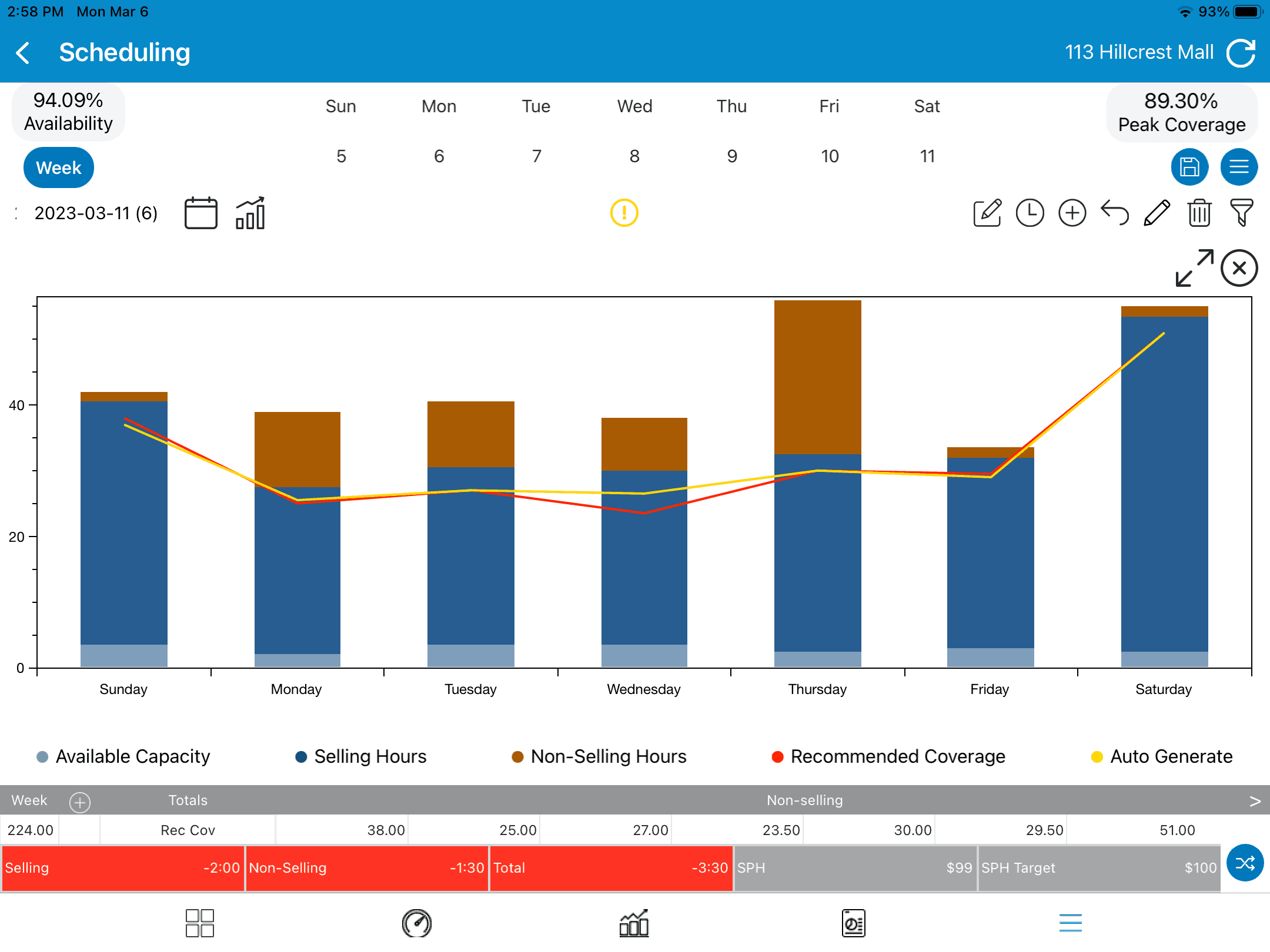
Many retailers still build schedules based primarily on historical patterns or fixed labor budgets. While this approach may control costs, it often misses changes in customer demand caused by weather, local events, promotions, or seasonal shopping trends.
The most successful retailers view scheduling as a revenue strategy rather than simply a payroll exercise.
When experienced associates are available during peak shopping periods, customers receive faster service, checkout lines stay shorter, and more selling opportunities are captured. Equally important, quieter periods can be staffed more efficiently without sacrificing service.
Modern workforce management software helps retailers forecast customer demand more accurately by combining historical sales, traffic patterns, labor data, and business forecasts. Instead of guessing where labor is needed, managers can make scheduling decisions based on data, improving both productivity and customer experience.
4. Give Store Managers Better Visibility Into Daily Performance
Store managers make dozens of decisions every shift, yet many still rely on disconnected reports, spreadsheets, emails, and conversations to understand how their stores are performing.
By the time a weekly sales report reaches a manager, the opportunity to influence those results has already passed.
High-performing retailers focus on giving managers access to operational information while it is still actionable. That includes sales performance, staffing levels, overdue tasks, labor utilization, conversion trends, and execution metrics.
When managers can quickly identify problems, they spend less time reacting and more time coaching associates, supporting customers, and improving store performance.
Retail operations platforms simplify this process by bringing operational data into a single view. Rather than switching between multiple systems, managers can prioritize the actions most likely to improve results during the current shift.
5. Remove Operational Friction That Prevents Associates From Selling
Retail associates spend far less time selling than many executives realize.
Instead, much of their day is consumed by searching for information, locating products, responding to operational questions, completing paperwork, or waiting for direction from managers.
While each interruption seems minor, together they reduce the amount of time associates spend helping customers.
Removing operational friction is often one of the fastest ways to improve sales without increasing headcount.
Providing clear daily priorities, mobile task lists, centralized communication, and easy access to information allows associates to spend more time engaging with customers instead of navigating operational complexity.
The goal isn't simply making employees more productive. It's allowing them to focus on the activities that have the greatest impact on sales.
6. Coach Managers Using Leading Indicators, Not Monthly Reports
Revenue is an important KPI, but it's also a lagging indicator. It tells retailers what has already happened, not why it happened.
Leading retailers look beyond sales figures to identify the operational behaviors influencing future performance.
Metrics such as task completion, labor deployment, conversion rate, average transaction value, and sales per labor hour provide a clearer picture of how stores are operating each day.
Managers can use these insights to coach employees, adjust priorities, and resolve issues before they begin affecting revenue.
Technology makes this process significantly easier by bringing operational and performance data together. Instead of spending hours collecting information from multiple reports, managers can focus on coaching and continuous improvement.
7. Use Technology to Create Consistency Across Every Store
As retailers grow, maintaining consistency becomes increasingly difficult. Processes that work well in ten stores often become much harder to manage across one hundred or one thousand locations.
This is where technology creates one of its greatest advantages.
Rather than relying on emails, spreadsheets, and manual follow-up, retailers can standardize scheduling, communication, task management, performance tracking, and operational execution across every location.
Managers gain visibility into what is happening in their stores. District leaders can quickly identify locations that need support. Store teams receive clear priorities, reducing confusion and improving accountability.
Technology doesn't replace great leadership or strong store teams. Instead, it provides the structure and visibility needed to execute consistently at scale.

Final Thoughts
Driving sales in retail isn't about finding one breakthrough strategy or running bigger promotions. Sustainable sales growth comes from consistently executing the fundamentals across every store, every shift, and every customer interaction.
Retailers that outperform their competitors recognize that operational excellence is a competitive advantage. They invest in better scheduling, stronger store execution, improved manager visibility, and technology that helps teams make faster, more informed decisions.
When stores operate more consistently, customers notice. Associates perform with greater confidence, managers spend more time leading their teams, and retailers capture more value from the customers already walking through their doors.
The result isn't just higher sales. It's a more efficient, scalable retail operation that is better prepared for long-term growth.

See How StoreForce Can Work for Your Stores
See how StoreForce brings employee scheduling, labor optimization, task management, and store execution together in one retail workforce management platform. Book a demo today to see what StoreForce can do for your teams.
Speak To A Retail Expert


