8 Best Retail Task Management Software Platforms in 2026
In this guide, we'll compare the best retail task management software platforms for 2026 and help you find the right solution for your business.
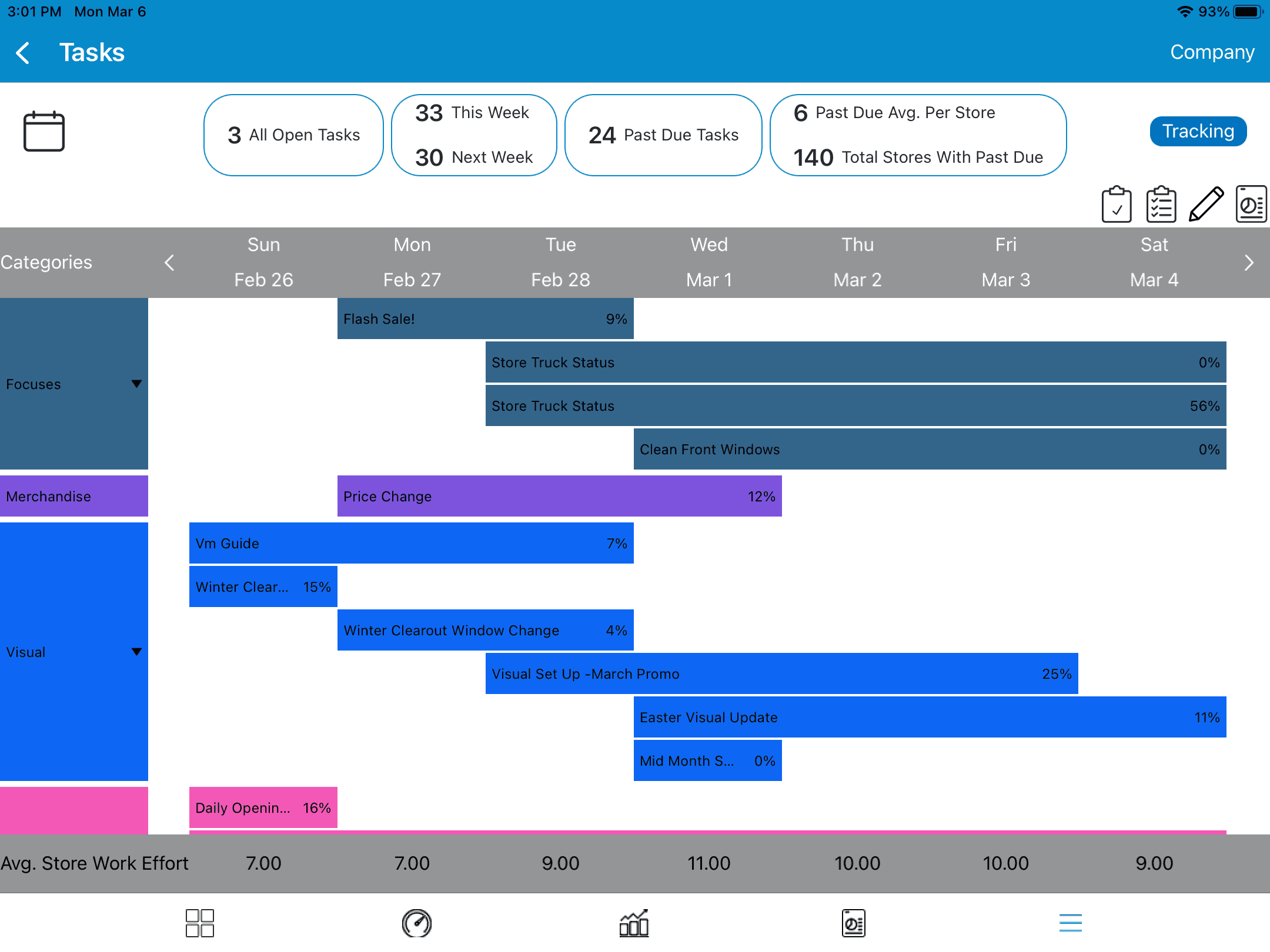
Retail task management software helps store teams stay organized, complete daily tasks on time, and maintain consistent execution across every location. From opening checklists and merchandising updates to inventory counts and compliance audits, retailers rely on task management software to ensure important work gets done.
As retail operations become more complex, managing tasks through spreadsheets, emails, text messages, and paper checklists creates unnecessary challenges. Store managers often struggle to keep employees aligned, district managers lack visibility into execution, and leadership teams have limited insight into what is happening across multiple locations.
The best retail task management software solves these problems by giving retailers a centralized platform to assign tasks, monitor completion, improve communication, and track operational performance.
However, not every solution offers the same value. Some platforms focus only on task tracking, while others combine task management with employee scheduling, workforce management, labor planning, communication tools, and performance analytics.
In this guide, we'll compare the best retail task management software platforms for 2026 and help you find the right solution for your business.
What Is Retail Task Management Software?
Retail task management software helps retailers plan, assign, track and verify tasks across stores, departments, and employees.
Instead of relying on verbal instructions or disconnected systems, managers can create structured workflows that help teams stay focused and accountable. Tasks can be assigned to specific employees, roles, shifts, or locations, making it easier to maintain consistency across the business.
Retail task management software is commonly used for:
Opening and closing procedures
Visual merchandising updates
Promotional rollouts
Inventory counts
Compliance inspections
Store maintenance
Employee training
Cleaning schedules
For multi-location retailers, task management software provides visibility into execution across every store while helping leadership identify operational issues before they impact performance.
Why Retailers Need Retail Task Management Software
Retail teams operate in fast-moving environments where priorities change constantly. Without a structured task management system, important work often gets delayed, overlooked, or completed inconsistently.
Inconsistent Store Execution
As retailers grow, maintaining consistency becomes more difficult. One location may execute promotions perfectly while another misses key steps entirely.
Retail task management software helps standardize execution by providing clear instructions, deadlines, and accountability.
Limited Visibility Across Locations
Many retail leaders struggle to understand what is happening inside stores on a daily basis.
Task management platforms provide real-time visibility into completed tasks, overdue assignments, operational issues, and store performance.
Communication Breakdowns
Retail employees work across multiple shifts and departments. Important updates can easily get lost when communication relies on emails, text messages, or handwritten notes.
A centralized platform keeps communication connected to the work employees need to complete.
Inefficient Use of Manager Time
Store managers spend countless hours following up on tasks, checking progress, and reminding employees about priorities.
Task management software automates much of this process and gives managers more time to focus on coaching employees and serving customers.
Best Retail Task Management Software Platforms for 2026
1. StoreForce
Best all-in-one retail task management software platform
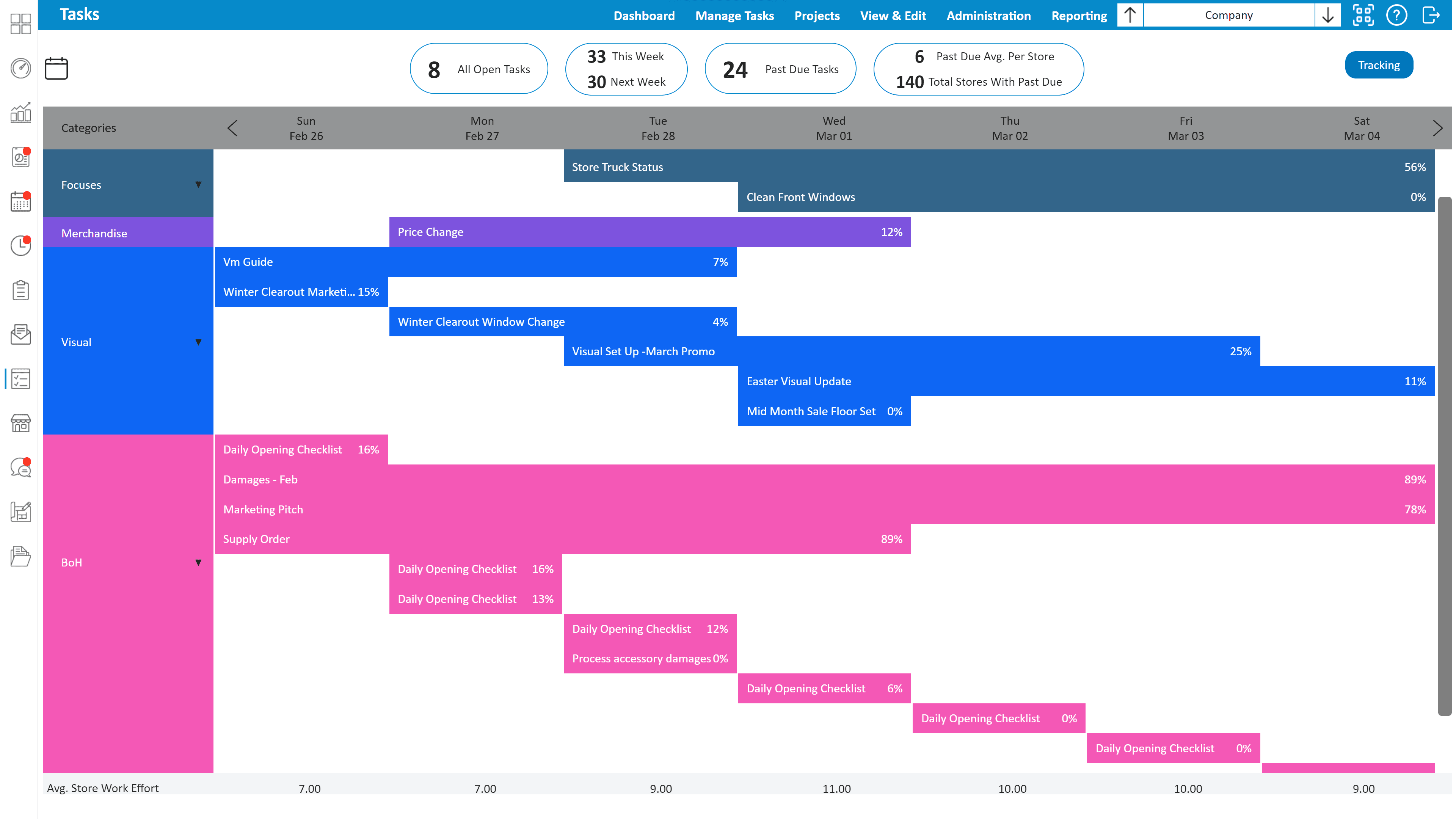
StoreForce is much more than a retail task management solution. It is a complete retail operations platform that combines task management, employee scheduling, labor planning, workforce management, store communication, and performance analytics in one system.
This is what separates StoreForce from most competitors on this list.
Many task management tools help retailers assign work and track completion. StoreForce helps retailers understand how execution impacts overall store performance. Instead of using separate systems for scheduling, labor management, task tracking, communication, and reporting, retailers can manage everything from a single platform.
For multi-location retailers, this creates a significant advantage.
Store managers gain visibility into daily priorities and team performance. District managers can monitor execution across multiple locations. Retail leadership teams can connect operational activity directly to sales, labor, and productivity metrics.
For example, if a retailer launches a new promotion across dozens or hundreds of locations, StoreForce allows leadership to distribute tasks, communicate expectations, monitor completion, verify execution, and evaluate results from one centralized platform.
This level of visibility helps retailers identify problems faster, improve accountability, and create more consistent customer experiences across every location.
Key Features
Retail Task Management
Assign tasks to specific stores, teams, roles, or employees. Track completion in real time and ensure important work never falls through the cracks.
Employee Scheduling
Create smarter schedules based on business demand, labor targets, and staffing requirements. Managers can manage schedules and tasks within the same platform.
Labor Planning and Workforce Management
Align staffing with customer traffic and sales forecasts to improve productivity and control labor costs.
Store Communication
Share updates, announcements, and priorities through a centralized communication hub that keeps teams aligned.
Real-Time Performance Insights
Monitor sales, productivity, labor metrics, and operational KPIs through customizable dashboards.
Multi-Location Visibility
Track performance and execution across every store from a single view.
Reporting and Analytics
Access detailed reports that help identify trends, improve decision making, and support operational excellence.
Pros
Built specifically for retail operations
Combines task management and scheduling
Strong labor planning capabilities
Real-time performance insights
Excellent multi-store visibility
Supports operational consistency
Reduces the need for multiple software systems
Best For
Retailers looking for a single platform that combines retail task management software, employee scheduling, workforce management, labor planning, communication, and analytics.
2. YOOBIC
Best for visual merchandising and frontline engagement
YOOBIC is a retail-focused platform that combines task management, communication, and employee training. Its mobile-first design makes it easy for store associates to receive tasks, complete audits, and access training materials directly from their devices.
The platform is particularly strong for retailers that prioritize visual merchandising and store execution. Teams can distribute display guidelines, promotional instructions, and operational updates across multiple locations while tracking completion.
Key Features
Mobile task management
Visual merchandising support
Employee communication
Training and learning tools
Store audits and compliance tracking
Best For: Large retailers focused on merchandising consistency and frontline engagement.
3. Zipline
Best for retail execution and communication
Zipline helps retailers improve communication between headquarters and store teams while keeping operational tasks organized. The platform allows leaders to distribute priorities, track execution, and monitor completion across multiple locations.
Its strength lies in helping retailers roll out initiatives consistently while giving managers visibility into store-level execution.
Key Features
Task management
Store communications
Execution tracking
Mobile access
Compliance monitoring
Best For: Multi-location retailers looking to improve communication and operational execution.
4. Homebase
Best for small retail teams
Homebase combines scheduling, time tracking, team messaging, and task management in a simple platform designed for hourly workforces. It offers enough functionality for smaller retailers without overwhelming users with complex features.
While task management is not its primary focus, it provides a practical solution for businesses that want scheduling and task tracking in one place.
Key Features
Employee scheduling
Time tracking
Team messaging
Task assignment
Payroll integrations
Best For: Small retailers and independent store operators.
5. Asana
Best for customizable workflows
Asana is a popular project management platform that can be adapted for retail task management. Teams can create workflows, assign tasks, and track progress through customizable dashboards.
Because it was not built specifically for retail, some retailers may need additional tools for scheduling, workforce management, and operational reporting.
Key Features
Task and project management
Workflow customization
Team collaboration
Progress tracking
Reporting tools
Best For: Retail teams looking for flexible task management workflows.
6. Zebra Workforce Management
Best for enterprise retailers
Zebra Workforce Management focuses on workforce optimization, labor planning, scheduling, and operational performance. The platform is designed for larger retail organizations that need advanced workforce management capabilities across multiple locations.
Its reporting and labor management tools make it a strong option for enterprise retailers with complex staffing requirements.
Key Features
Workforce management
Labor forecasting
Employee scheduling
Operational reporting
Compliance tools
Best For: Large retail enterprises with complex workforce needs.
7. When I Work
Best for scheduling-focused retailers
When I Work combines employee scheduling, team communication, and basic task management in a straightforward platform. Managers can create schedules, communicate with staff, and assign responsibilities from a single system.
The platform is easy to use and works well for retailers that primarily need scheduling with light task management functionality.
Key Features
Employee scheduling
Team messaging
Shift management
Time tracking
Basic task management
Best For: Retailers that want task management closely tied to scheduling.
8. Trello
Best for simple task organization
Trello uses a visual board-and-card system that makes task management easy to understand and implement. Teams can create task boards, assign responsibilities, and track progress through customizable workflows.
While it lacks retail-specific functionality, Trello remains a simple option for smaller teams with basic operational needs.
Key Features
Visual task boards
Workflow tracking
Team collaboration
Due dates and reminders
Mobile access
Best For: Small retail teams looking for a simple and affordable task management tool.
This keeps the focus on StoreForce while still making the comparison section feel legitimate and useful to readers.
How to Choose the Best Retail Task Management Software
When evaluating retail task management software, focus on the needs of your stores rather than simply comparing feature lists.
Look for:
Mobile accessibility
Multi-location support
Employee scheduling integration
Reporting and analytics
Real-time visibility
Communication tools
Scalability for future growth
Retailers that connect task management with scheduling, workforce management and performance insights often gain the most operational value.
Final Thoughts
The best retail task management software helps teams stay organized, accountable, and focused on execution. But modern retailers need more than a tool for assigning tasks.
They need visibility into store performance, labor utilization, scheduling efficiency, and operational consistency.
For retailers looking for a complete solution, StoreForce stands out by bringing task management, workforce scheduling, labor planning, communication, and analytics together in a single platform. This gives retail leaders the visibility they need to improve execution, support store teams, and deliver more consistent results across every location.

See How StoreForce Can Work for Your Stores
See how StoreForce brings employee scheduling, labor optimization, task management, and store execution together in one retail workforce management platform. Book a demo today to see what StoreForce can do for your teams.
Speak To A Retail Expert


