How to Improve Customer Experience in Every Retail Store
The retailers that consistently deliver exceptional customer experiences aren't simply hiring friendlier associates or offering bigger discounts.

Retailers spend millions each year trying to improve the customer experience. They redesign stores, introduce loyalty programmes, launch personalised marketing campaigns, and invest in new technologies, all with the goal of creating a shopping experience that keeps customers coming back.
While these initiatives certainly have value, they often overlook the biggest factor influencing customer experience: store operations.
Customers don't know whether a store was understaffed that morning. They don't know a promotional display wasn't completed before opening or that a manager spent half the day juggling spreadsheets instead of coaching associates. What they do know is that they couldn't find help when they needed it, the shelves were empty, checkout took too long, or the promotion they came in for wasn't available.
Every customer experience is shaped by operational decisions made long before a shopper walks through the door.
The retailers that consistently deliver exceptional customer experiences aren't simply hiring friendlier associates or offering bigger discounts. They're making sure every store is properly staffed, daily tasks are completed on time, managers have visibility into performance, and employees have the tools they need to focus on customers instead of operational distractions.
Here's how retailers can improve customer experience by strengthening the operational foundations behind every store.
Take control of your store's performance
Book a demo with StoreForce today and run your retail operations better tomorrow.
Book a Demo
1. Build Schedules Around Customer Demand, Not Just Labour Budgets
One of the quickest ways to damage the customer experience is to have the wrong people in the wrong place at the wrong time.
Most retailers have experienced it. A store is quiet all morning, then suddenly becomes busy during lunch or after work. Customers begin lining up at checkout, associates are pulled away to answer questions, fitting rooms become backed up, and replenishment tasks are left unfinished. None of these issues happen because employees aren't working hard. They happen because labour wasn't aligned with customer demand.
Many retailers still create schedules around fixed payroll budgets or historical templates rather than real customer traffic. While controlling labour costs is important, focusing only on payroll can create hidden costs elsewhere. Longer wait times, missed selling opportunities, and poor service all reduce customer satisfaction and ultimately impact revenue.
High-performing retailers take a different approach. They use customer traffic forecasts, historical sales patterns, seasonal demand, and business trends to build schedules that place the right associates on the sales floor when customers need them most.
Modern workforce management platforms make this process significantly easier. Instead of relying on manual scheduling or guesswork, managers can forecast demand more accurately and build schedules that balance labour efficiency with customer service. The result is a better experience for shoppers and a more productive store team.
2. Treat Daily Tasks as Part of the Customer Experience
Retail task management is often viewed as an operational responsibility, but customers experience the outcome of those tasks every time they visit a store.
When replenishment isn't completed before the afternoon rush, customers encounter empty shelves.
When promotional signage isn't installed correctly, pricing becomes confusing.
When fitting rooms aren't cleared regularly, shoppers are less likely to try on merchandise.
When price changes are delayed, trust in the shopping experience begins to erode.
Customers never think about task completion rates, but they immediately notice when operational tasks aren't executed consistently.
This is why leading retailers prioritise the work that has the greatest impact on customers instead of simply trying to complete as many tasks as possible. Managers need visibility into what has been completed, what remains outstanding, and which activities should take priority throughout the day.
Technology helps remove much of the uncertainty from this process. Digital task management gives store teams a clear view of daily priorities, improves accountability, and allows managers to monitor progress across every location. Instead of reacting to missed tasks after customer complaints begin to appear, they can keep execution on track throughout the day.

3. Measure the Metrics That Predict Customer Experience
Many retailers rely heavily on customer surveys, online reviews, and Net Promoter Score (NPS) to evaluate customer experience. While these metrics provide valuable feedback, they all share one limitation.
They tell you what customers thought after their visit.
They don't explain what caused the experience in the first place.
Retailers that consistently improve customer experience focus just as much on operational metrics as customer feedback.
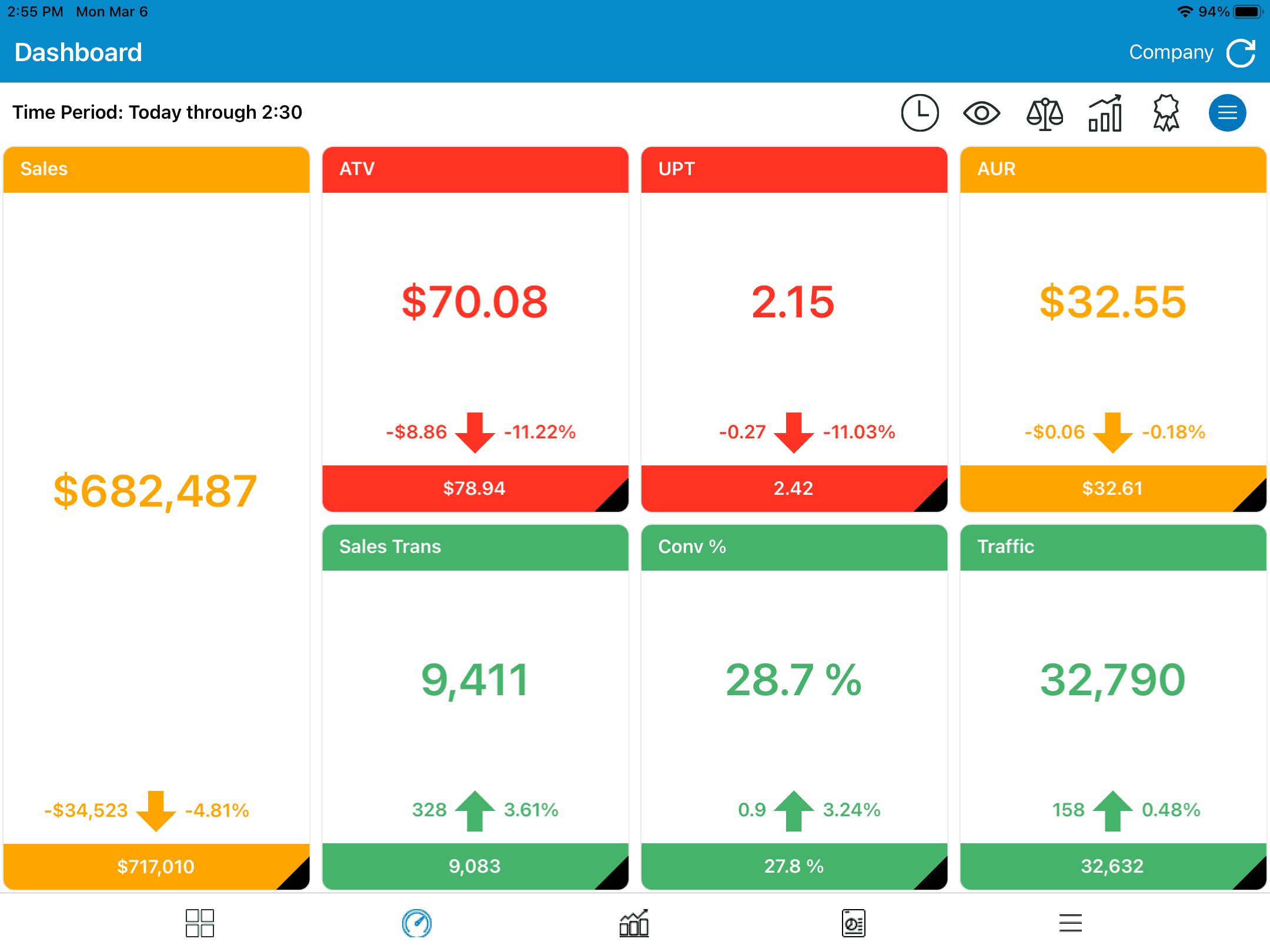
For example, a drop in schedule adherence may lead to fewer associates on the sales floor during peak periods. Falling task completion rates could result in poor merchandising or delayed replenishment. Declining conversion rates may indicate customers are finding it harder to receive assistance or complete purchases.
These operational KPIs often reveal problems days or even weeks before they appear in customer satisfaction scores.
Some of the most valuable metrics include:
Schedule adherence
Labour coverage during peak trading hours
Task completion rates
Conversion rate
Sales per labour hour
Average transaction value
Inventory availability
Viewed together, these metrics provide managers with a much clearer understanding of what's happening inside their stores.
Rather than waiting for customer complaints, leaders can identify trends early and take action before they begin affecting the shopping experience.
4. Give Store Managers Visibility Instead of More Administration
Store managers have one of the biggest influences on customer experience, yet many spend surprisingly little time on the sales floor.
Instead, they're updating schedules, checking emails, following up on incomplete tasks, reviewing reports, and answering operational questions from associates.
Every hour spent managing administrative work is an hour not spent coaching employees or helping customers.
Technology should reduce this burden, not increase it.
When scheduling, task management, performance reporting, and store communication are connected within a single platform, managers spend less time searching for information and more time leading their teams. They can quickly identify staffing gaps, overdue tasks, or performance trends without switching between multiple systems.
This visibility allows managers to become proactive instead of reactive. Instead of discovering problems after sales decline or customer complaints increase, they can resolve issues while they're still small.
5. Standardise Execution Across Every Store
Delivering an exceptional customer experience in one store is an achievement. Delivering that same experience across 50, 200, or 1,000 locations is where retail becomes truly challenging.
Customers expect consistency. Whether they're shopping in Toronto, Dallas, or Los Angeles, they expect the same level of service, product availability, store presentation, and operational excellence. Every inconsistent experience weakens confidence in the brand.
The challenge is that inconsistency rarely comes from a lack of effort. It usually stems from differences in execution. One manager may prioritise merchandising while another focuses on inventory. One store may complete every operational task before opening, while another spends the first few hours of the day catching up.
Without clear operational standards, every location gradually develops its own way of working.
The most successful retailers eliminate this variability by creating repeatable processes that every store follows. Opening procedures, promotional execution, replenishment, task prioritisation, and daily communication should be standardised while still giving managers flexibility to respond to local conditions.
Technology helps make this possible. Rather than relying on emails, spreadsheets, or district visits to confirm execution, retailers can use centralised task management to assign priorities, monitor completion, and identify stores that require additional support.
Customers may never notice a task completed on time, but they'll quickly notice when it isn't.
6. Coach Store Teams Using Operational Data
Coaching has always been one of the most effective ways to improve store performance, but coaching is only valuable when it's based on meaningful information.
Too often, managers coach employees after reviewing monthly sales reports or reacting to customer complaints. By then, the opportunity to improve that customer's experience has already passed.
Leading retailers use operational data to guide coaching every day.
For example, imagine a store's conversion rate has dropped over the past two weeks while customer traffic remains steady. That insight immediately raises new questions. Were experienced associates scheduled during peak trading hours? Did replenishment fall behind? Are checkout wait times increasing? Has task completion declined because employees are spending too much time responding to operational issues?
Looking at sales alone won't answer those questions.
When managers can combine sales performance with scheduling data, task completion, labour deployment, and operational KPIs, coaching becomes much more specific. Instead of simply telling associates to improve customer service, managers can identify the operational behaviours that are affecting results and work with their teams to correct them.
This creates a culture of continuous improvement instead of reactive problem solving. Small adjustments made every day often produce far greater results than large initiatives introduced once or twice a year.
7. Use Technology to Remove Operational Friction
Technology should never replace the human side of retail. Its purpose is to remove the operational complexity that prevents employees from delivering exceptional customer experiences.
Think about how many different systems store managers interact with during a typical shift. Scheduling software, communication platforms, task lists, sales reports, payroll systems, emails, and spreadsheets all compete for attention. Every minute spent switching between systems is time taken away from customers and employees.
The same applies to associates. If they have to search for information, ask managers for updates, or juggle multiple processes just to complete their work, they're spending less time helping shoppers.
Modern retail operations platforms simplify these daily responsibilities by bringing workforce scheduling, task management, performance tracking, and communication together in one place. Instead of chasing information, managers can quickly understand what's happening in their stores and focus on leading their teams. Associates know what needs to be done, when it needs to be done, and which priorities matter most throughout the day.
The result isn't simply greater efficiency. It creates a store environment where employees can spend more time serving customers and less time managing operational distractions.
Technology works best when it becomes almost invisible. Customers don't notice better scheduling software or a more efficient task management system. They notice knowledgeable associates, fully stocked shelves, shorter checkout lines, and stores that consistently deliver on their expectations.
Customer Experience Starts With Better Store Operations
Every retailer wants to create memorable customer experiences, but lasting improvements rarely come from a single initiative. They're built through consistent operational execution across every store, every shift, and every customer interaction.
Customers don't see labour plans, task completion reports, or store performance dashboards. What they experience is the outcome of those decisions. When stores are staffed appropriately, operational priorities are completed on time, and managers have the visibility to lead effectively, customers receive faster service, better product availability, and a more consistent shopping experience.
Retailers that continue to improve customer experience will be those that move beyond measuring customer satisfaction alone. They'll focus on strengthening the operational foundations that shape every visit, from workforce scheduling and task execution to performance visibility and manager coaching.
By connecting these areas through a modern retail operations platform, organisations can create consistency across every location while giving store teams the tools they need to succeed. The result is a better experience for employees, stronger execution across the business, and customers who leave with greater confidence in the brand every time they shop.

See How StoreForce Can Work for Your Stores
See how StoreForce brings employee scheduling, labour optimisation, task management, and store execution together in one retail workforce management platform. Book a demo today to see what StoreForce can do for your teams.
Speak To A Retail Expert


