How to Improve Retail Staff Engagement Quickly & Effectively
When employees feel informed, supported, and connected to their work, engagement becomes a natural outcome rather than something organizations need to force.

Many retailers think of engagement as something that comes from occasional initiatives such as employee recognition programs, surveys, or team-building activities. While these efforts can help, they are rarely enough on their own.
Retail staff engagement is shaped by what employees experience every day. It is built through the conversations they have with managers, the schedules they work, the support they receive, and the clarity they have around expectations and goals.
When employees feel informed, supported, and connected to their work, engagement becomes a natural outcome rather than something organizations need to force.
The most successful retailers understand that engagement is not driven by a single program or initiative. It is the result of creating a work environment where employees have the information, support, and opportunities they need to succeed.
In retail, these everyday experiences typically fall into five key areas:
Communication
Recognition
Development
When retailers get these fundamentals right, employees are more likely to stay engaged, deliver better customer experiences, remain with the company longer, and contribute to stronger business results.
Let's take a closer look at how each of these factors influences retail staff engagement.
Take control of your store performance
Book a demo with StoreForce today and run your retail operations better tomorrow.
Book A Demo
Communication
Retail employees cannot stay engaged if they do not know what is happening around them.
Store teams need visibility into priorities, promotions, operational updates, company goals, and daily expectations. When information is difficult to access or inconsistently shared, employees can quickly become disconnected from the business and uncertain about what is expected of them.
Strong communication creates alignment across the organization. It helps employees understand their role, stay informed about changes, and feel connected to the broader goals of the business.
For retail leaders, communication is not just about sharing information. It is about creating clarity and building trust across every store and every team.
Common Communication Challenges in Retail
Communication becomes increasingly difficult as retailers grow.
A single-store retailer may be able to rely on face-to-face conversations and daily team huddles. Multi-location retailers face a very different challenge. Important updates often need to reach hundreds or thousands of frontline employees across multiple stores, regions, and time zones.
As a result, communication often becomes fragmented.
Important announcements get buried in emails. Store managers receive updates but frontline employees never see them. New promotions launch before teams fully understand the details. Operational changes are communicated inconsistently from one location to another.
Over time, these communication gaps create confusion, frustration, and disengagement.
What Better Retail Communication Looks Like
Improving retail staff engagement starts with creating communication processes that are consistent, accessible, and easy to understand.
Some practical ways retailers can improve communication include:
Sharing daily priorities and store goals before every shift
Providing clear updates on promotions, product launches, and operational changes
Creating structured channels for employee feedback
Ensuring communication reaches frontline employees directly rather than relying solely on store managers
Recognizing achievements and sharing success stories across locations
Making important information accessible from a single location
When employees have easy access to the information they need, they can spend less time searching for answers and more time focusing on customers.
The Role of Technology in Retail Communication
Many communication challenges stem from relying on disconnected tools.
Retailers often use a mix of emails, paper notices, text messages, spreadsheets, messaging apps, and verbal updates to communicate with store teams. The result is inconsistent communication and limited visibility into whether important information has actually been received.
Modern retail workforce management platforms help solve this problem by bringing communication into the same system employees use every day.
For example, managers can share company announcements, store updates, task priorities, and operational changes directly within the platform employees already rely on for schedules, daily tasks, and performance information.
This creates a more connected employee experience while helping retailers improve message visibility, accountability, and consistency across locations.
When communication becomes part of everyday store operations rather than a separate process, employees are more likely to stay informed, aligned, and engaged.
Ultimately, the most engaged retail teams are often the teams that feel informed. Employees who understand what is happening, why it matters, and how their role contributes to success are more likely to feel connected to both their team and the organization as a whole.
Scheduling
One of the most influential drivers of retail staff engagement is often overlooked.
Employees want predictable schedules, adequate staffing levels, and confidence that shifts are being managed fairly. They want to know they can plan their lives outside of work without constantly worrying about last-minute changes or staffing shortages.
Poor scheduling practices can create frustration, increase stress, and contribute to burnout. Employees who regularly feel overworked or unsupported are far more likely to become disengaged or seek opportunities elsewhere.
Effective scheduling supports both employees and the business. When staffing levels align with customer demand, employees are better positioned to deliver great service while maintaining a healthier and more sustainable work environment.
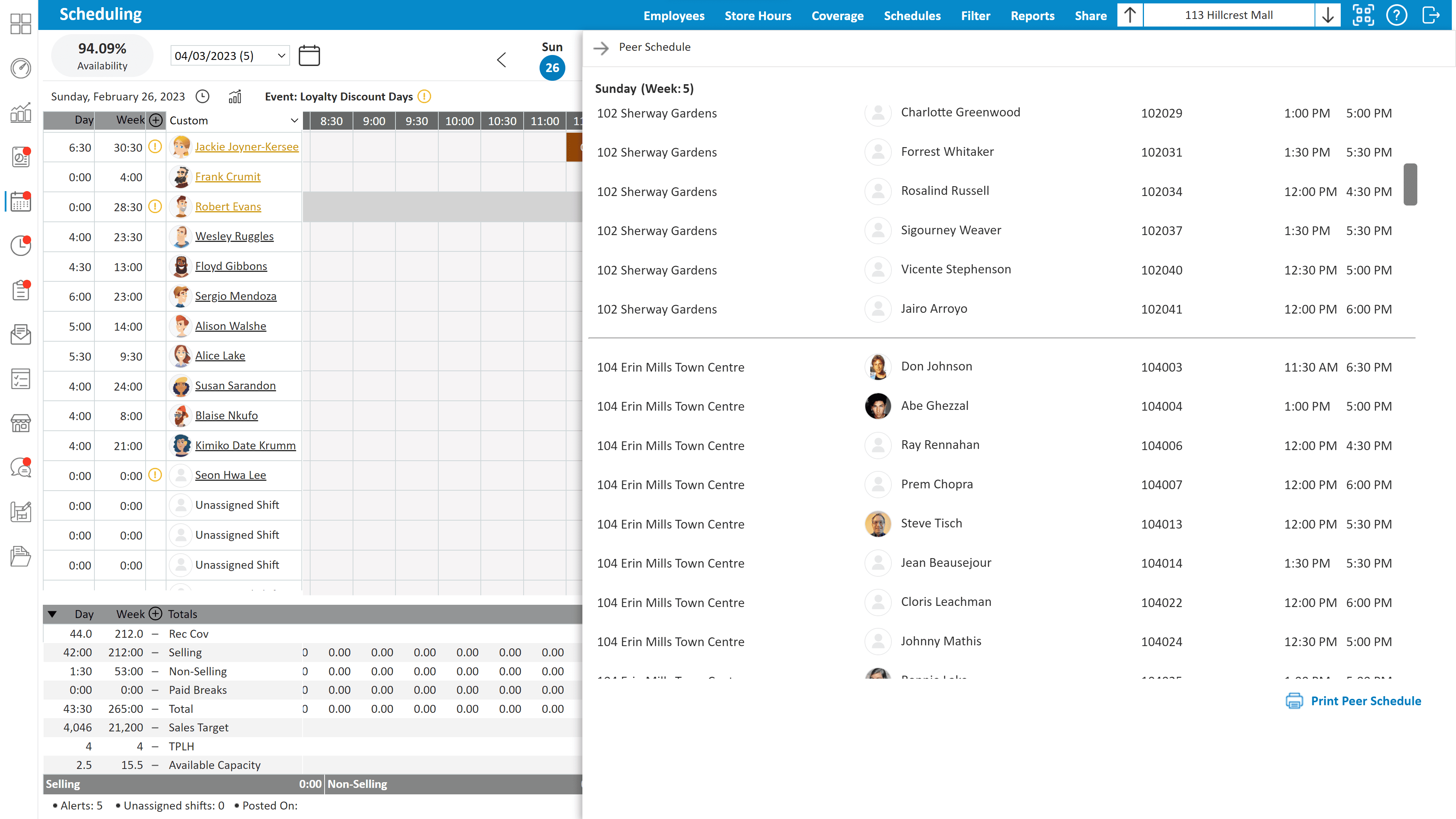
Common Scheduling Challenges in Retail
Scheduling is one of the most difficult balancing acts in retail.
Managers must account for employee availability, labor budgets, customer traffic patterns, peak shopping periods, time-off requests, and unexpected absences. In many organizations, schedules are still built manually using spreadsheets or disconnected systems, making the process time-consuming and difficult to manage.
The result is often inconsistent staffing.
Some stores find themselves overstaffed during slower periods, increasing labor costs without improving results. Others struggle with understaffing during busy periods, leaving employees overwhelmed and customers waiting longer for assistance.
Frequent schedule changes can create additional frustration. Employees who receive schedules at the last minute or experience constant shift adjustments often feel they have little control over their work-life balance.
Over time, these challenges can negatively impact engagement, morale, retention, and store performance.
What Better Retail Scheduling Looks Like
Improving retail staff engagement requires a more thoughtful approach to workforce planning.
Retailers that excel in employee engagement often focus on creating schedules that balance both operational needs and employee expectations.
Some practical ways retailers can improve scheduling include:
Publishing schedules further in advance
Creating more predictable shift patterns where possible
Giving employees greater visibility into upcoming schedules
Monitoring workload distribution to reduce burnout
Ensuring stores have adequate coverage during peak periods
When employees feel their time is respected and staffing decisions are made fairly, engagement naturally improves.
The Role of Technology in Retail Scheduling
As retail operations become more complex, workforce scheduling becomes increasingly difficult to manage manually.
Modern workforce management platforms help retailers create smarter schedules by combining labor planning, employee availability, store traffic forecasts, sales data, and staffing requirements in a single system.
Instead of relying on guesswork, managers can build schedules based on actual business demand while maintaining visibility into labor costs and workforce coverage.
Technology also improves the employee experience by providing easier access to schedules, shift updates, time-off requests, and schedule changes. Employees gain greater transparency, while managers spend less time handling administrative tasks.
Perhaps most importantly, modern scheduling tools help create consistency across locations. Retail leaders can ensure stores are staffed appropriately, labor budgets are managed effectively, and employees have the support they need to succeed.
When scheduling becomes proactive rather than reactive, retailers create a better experience for both employees and customers.
Ultimately, engaged employees are more likely to stay with organizations that respect their time, support their well-being, and provide the staffing levels needed to do their jobs effectively. Scheduling plays a bigger role in achieving that outcome than many retailers realize.
Recognition
Employees want to know their work matters.
Recognition is one of the most effective ways to strengthen engagement, yet it is often overlooked in busy retail environments. When employees consistently contribute to store success but rarely receive acknowledgment, motivation can begin to decline.
Recognition does not always need to come through formal reward programs. In many cases, regular coaching, meaningful feedback, and simple acknowledgment from managers can have an even greater impact.
When employees feel appreciated for their efforts, they are more likely to stay engaged, remain committed to their team, and continue performing at a high level.
Common Recognition Challenges in Retail
Recognition is easy to talk about but difficult to execute consistently across retail organizations.
Store managers are often focused on customer service, staffing issues, inventory concerns, and operational priorities. As a result, employee recognition can unintentionally become an afterthought.
The challenge becomes even greater for retailers operating across multiple locations. District managers and retail leaders may have limited visibility into the contributions employees make every day, making it difficult to recognize great performance consistently.
This often creates a recognition gap.
Employees hear about mistakes when something goes wrong but rarely receive feedback when they do something well. Over time, this can lead to disengagement, lower morale, and a feeling that individual contributions go unnoticed.

What Better Recognition Looks Like
The most effective retail organizations treat recognition as an ongoing part of leadership rather than a once-a-year initiative.
Recognition works best when it is timely, specific, and connected to meaningful contributions.
Some practical ways retailers can improve recognition include:
Celebrating employees who consistently deliver exceptional customer experiences
Acknowledging strong task execution and operational performance
Recognizing employees who support teammates during busy periods
Highlighting sales achievements and performance milestones
Sharing success stories across stores and regions
Incorporating recognition into regular coaching conversations
Celebrating progress, not just top performers
Recognition does not always need to involve rewards or incentives. In many cases, a simple conversation from a manager can have a lasting impact when employees feel their efforts are genuinely valued.
The Role of Technology in Employee Recognition
One of the biggest barriers to recognition in retail is visibility.
Managers cannot recognize what they cannot see.
When performance information is scattered across spreadsheets, emails, task lists, and separate reporting systems, identifying and celebrating employee contributions becomes far more difficult.
Modern retail workforce management platforms help create greater visibility into store execution, employee performance, and operational results.
Managers can more easily identify employees who consistently complete tasks, contribute to store goals, support operational initiatives, or help improve customer experiences. This creates opportunities for more meaningful and data-driven recognition.
Technology also helps recognition scale across multiple locations. Retail leaders can highlight achievements, share success stories, and celebrate wins across entire regions or store networks rather than limiting recognition to individual stores.
Most importantly, technology helps shift recognition from occasional events to ongoing conversations. When managers have access to performance insights and real-time visibility into store activity, recognition becomes a natural part of daily leadership.
Recognition Drives More Than Engagement
Recognition does more than improve morale.
Employees who feel valued are more likely to remain with the organization, contribute discretionary effort, support their teammates, and provide better customer experiences.
For retail leaders, recognition should not be viewed as a standalone engagement initiative. It should be viewed as a leadership practice that reinforces the behaviors, performance standards, and customer experiences the organization wants to encourage.
When employees know their contributions matter, they become more connected to their work, their team, and the success of the business.
Development
Retail employees are more likely to stay engaged when they can see a future with the company.
Training, coaching, and career development opportunities help employees build confidence while creating a stronger connection to the organization. Employees who believe their employer is invested in their growth are more likely to remain motivated and committed over time.
Development also benefits the business. Employees who receive ongoing training are often better equipped to handle customer interactions, execute operational tasks, and take on greater responsibilities as they advance in their careers.
For many retailers, employee development is not just a retention strategy. It is a long-term investment in future leaders.
Common Development Challenges in Retail
Most retailers understand the value of employee development, but delivering it consistently is often the challenge.
Store managers are balancing customer needs, staffing requirements, operational priorities, and performance goals. Training can quickly become something that happens during onboarding and then receives little attention afterward.
This creates a common problem across retail organizations.
Employees are expected to learn new products, promotions, operational procedures, and customer service expectations, yet they are rarely given structured opportunities to continue developing their skills.
For multi-location retailers, the challenge becomes even greater. Training quality often varies from store to store, creating inconsistent employee experiences and uneven performance across the business.
Without clear development opportunities, employees may begin to feel stuck in their roles. Over time, this can contribute to lower engagement, reduced motivation, and higher turnover.
What Better Employee Development Looks Like
The most successful retailers view development as an ongoing process rather than a one-time event.
Employee growth should be embedded into everyday operations through regular coaching, skill development, and performance conversations.
Some practical ways retailers can improve employee development include:
Providing structured onboarding programs
Offering continuous product and customer service training
Creating clear career progression pathways
Conducting regular coaching conversations
Identifying high-potential employees early
Giving employees opportunities to develop leadership skills
Connecting development goals to performance reviews and career planning
Development becomes especially powerful when employees understand how their current role can lead to future opportunities within the organization.
When people can see a path forward, they are more likely to stay engaged and invested in their success.

The Role of Technology in Employee Development
One of the biggest obstacles to employee development in retail is consistency.
When training materials, coaching notes, performance reviews, and development plans exist in different systems, it becomes difficult for managers to support employee growth effectively.
Modern retail workforce management platforms help bring these processes together by giving managers greater visibility into employee performance, development opportunities, and coaching needs.
Managers can identify skill gaps, track progress, provide ongoing feedback, and create more personalized development experiences for employees.
Technology also makes training more accessible. Instead of relying solely on classroom sessions or printed materials, retailers can deliver learning opportunities directly within the tools employees already use throughout their workday.
This helps reinforce learning, improve knowledge retention, and ensure employees have access to the information they need when they need it.
For large retail organizations, technology also helps standardize development efforts across locations, creating a more consistent employee experience regardless of store size or region.
Development Creates Future Retail Leaders
Many of today's store managers, district managers, and retail leaders started their careers on the sales floor.
Organizations that invest in employee development create stronger leadership pipelines while reducing the need to recruit externally for every leadership position.
More importantly, development demonstrates that the company is invested in its people.
Employees who feel supported in their growth are more likely to stay engaged, contribute at a higher level, and build long-term careers within the organization.
For retailers looking to improve retention, strengthen performance, and build future leadership talent, employee development is one of the most valuable investments they can make.
Take control of your store performance
Book a demo with StoreForce today and run your retail operations better tomorrow.
Book A Demo
Performance Visibility
People are more engaged when they understand what success looks like.
Employees want clear goals, measurable expectations, and visibility into how their efforts contribute to store performance. Without that clarity, it becomes difficult for employees to understand the impact of their work or identify areas for improvement.
Performance visibility creates accountability while also providing opportunities for coaching and recognition. It allows managers to celebrate wins, support development, and help employees stay focused on meaningful outcomes.
When employees can clearly see how their contributions influence store success, they are more likely to feel connected to their work, their team, and the organization's goals.
Common Performance Visibility Challenges in Retail
Many retail employees work hard every day without fully understanding how their efforts contribute to broader business objectives.
Store teams are often told to increase sales, improve customer service, reduce labor costs, or execute promotions, but they rarely have visibility into the metrics that measure success. As a result, employees can feel disconnected from store performance and uncertain about where they should focus their efforts.
Managers face challenges as well.
Performance data is frequently spread across multiple reports, spreadsheets, and systems, making it difficult to connect individual actions to business outcomes. Coaching conversations often become reactive rather than proactive because managers lack timely visibility into performance trends.
Without clear performance visibility, employees may struggle to understand what is expected of them, while managers miss opportunities to recognize achievements and provide meaningful guidance.
What Better Performance Visibility Looks Like
The most engaged retail teams understand both what they are working toward and how their performance is measured.
Retail leaders should focus on creating transparency around goals, expectations, and results.
Some practical ways retailers can improve performance visibility include:
Sharing store goals and key priorities regularly
Giving employees visibility into sales performance and operational targets
Tracking progress against team objectives
Conducting regular coaching and performance discussions
Connecting individual contributions to store outcomes
Recognizing employees who help achieve key goals
Using performance data to support development rather than simply evaluate results
When employees can see how their efforts contribute to store success, they are more likely to take ownership of their work and remain engaged in achieving business objectives.
The Role of Technology in Performance Visibility
One of the biggest barriers to performance visibility is the lack of a single source of truth.
Many retailers rely on separate systems for scheduling, sales reporting, task management, labor tracking, and operational execution. This makes it difficult for managers and employees to see the full picture of store performance.
Modern retail workforce management platforms help bring these insights together by connecting labor, scheduling, store execution, and performance metrics in one place.
Managers gain real-time visibility into how stores are performing, where challenges exist, and which employees may need additional support or coaching. Employees gain greater clarity into expectations, priorities, and how their contributions impact store results.
Technology also helps create more meaningful coaching conversations. Instead of relying on assumptions or anecdotal observations, managers can use performance data to guide discussions, identify opportunities for improvement, and recognize positive contributions.
For large retail organizations, this visibility becomes even more valuable because it creates consistency across locations and helps ensure every store is aligned around the same goals and standards.
Visibility Creates Accountability and Engagement
Performance visibility is not about monitoring employees more closely.
It is about helping employees understand how success is defined and how their work contributes to achieving it.
When people have clear goals, regular feedback, and visibility into results, they are more likely to feel ownership over their performance. They understand where they are succeeding, where they can improve, and how their efforts contribute to the success of the store.
For retailers, this creates a powerful cycle. Greater visibility leads to better coaching, stronger recognition, improved accountability, and higher engagement.
Employees perform best when they know what success looks like. Giving them that visibility is one of the most effective ways to build a more engaged, productive, and high-performing retail workforce.
Engagement Is the Result of Better Retail Operations
Retail staff engagement is rarely driven by a single initiative. It is the result of hundreds of everyday interactions that shape how employees experience their work.
Clear communication, fair scheduling, consistent recognition, ongoing development, and visibility into performance all contribute to a workplace where employees feel supported and motivated to succeed.
For retailers looking to improve engagement, the focus should not only be on creating new programs. It should be on creating better day-to-day experiences for frontline teams. When employees have the tools, support, and clarity they need to perform at their best, engagement naturally follows.

See How StoreForce Can Work for Your Stores
See how StoreForce brings employee scheduling, labor optimization, task management, and store execution together in one retail workforce management platform. Book a demo today to see what StoreForce can do for your teams.
Speak To A Retail Expert


