Labor Management System for Retail: Why You Need One
Learn how labor management software helps retailers control labor costs, schedule staff, improve productivity, and increase store profitability.

A labor management system (LMS) helps retailers control one of their largest expenses: store labor. For many retail businesses, payroll is second only to inventory in total cost. When labor is poorly planned, stores either overspend on staff or lose sales because there are not enough employees on the floor.
This is where labor management systems make a difference. They give retailers the tools to forecast labor demand, build better schedules, track labor usage, and measure how staffing decisions affect store performance.
In this article, we will break down what a labor management system is, how it differs from workforce management software, and why it matters for retail profitability.
What Is a Labor Management System (LMS)
A labor management system (LMS) helps to plan, track, and control how labor hours are used. It connects labor budgets, schedules, and real time performance so companies can make better staffing decisions.
In retail, labor is one of the largest operating costs. An LMS gives managers a clear view of how labor hours are being used across stores and shifts. Instead of guessing how many staff are needed, managers can plan schedules based on data like traffic, sales trends, and task requirements.
Most labor management systems also track whether labor plans are being followed during the day. If a store is overstaffed, understaffed, or falling behind on tasks, managers can see it quickly and adjust.
At its core, a labor management system helps to answer three important questions:
How many hours should we schedule?
Where should those hours be used?
Are we using labor effectively?
Without a system to manage labor, many rely on spreadsheets, manual scheduling, or guesswork. That often leads to overspending on labor or poor experiences caused by understaffed stores.
An LMS helps keep labor aligned with demand so companies can run efficiently and profitably.
Take control of your store performance
Book a demo with StoreForce today and run your retail operations better tomorrow.
Book A Demo
Key Features of Labor Management Software
A strong labor management system helps plan labor, track execution, and improve performance. While platforms vary, most include several core features.
Labor Forecasting
Labor forecasting uses historical data like sales, transactions, or foot traffic to predict how many staff hours a store will need. This helps managers plan schedules that match expected demand.
For example, a store may need more staff during weekends or promotional events. Forecasting helps make sure those shifts are staffed correctly.
Labor Budgeting
Labor budgeting sets targets for how many hours a store should use based on revenue goals or corporate guidelines.
Managers can see if they are staying within budget while still supporting sales and store operations.
Scheduling
Scheduling tools help managers assign the right employees to the right shifts. Many systems automatically build schedules based on forecasts, labor budgets, and employee availability.
This reduces time spent on manual scheduling and helps prevent overstaffing.
Real Time Labor Tracking
Retail conditions change quickly. Real time labor tracking allows managers to monitor how many hours have been used during the day and compare that to the plan.
If sales are slower than expected, managers may reduce shifts. If stores are busy, they may call in extra help.
Performance Reporting
Labor management systems track how labor hours relate to sales and productivity. Retailers can see metrics such as:
Labor cost percentage
Productivity by store or department
These insights help identify stores that are overstaffed, understaffed, or performing well.
Labor Management Systems Vs Workforce Management Systems
Labor management systems and workforce management systems are often confused because they both deal with employee scheduling. However, they serve slightly different purposes.
Labor Management Systems
Labor management systems focus on how labor hours are used and whether those hours are producing results.
They focus on questions like:
Are stores scheduling the right number of hours?
Are labor hours aligned with sales demand?
Are teams productive during their shifts?
LMS tools are heavily focused on labor planning, budgeting, and productivity.
Workforce Management Systems
Workforce management systems focus more on employee administration and scheduling logistics.
They often include:
Time and attendance tracking
Employee availability
Payroll integration
Compliance with labor laws
Many workforce management platforms handle HR and scheduling tasks but provide limited insight into how labor hours impact store performance.
Where They Overlap
Modern retail platforms often combine elements of both systems. Retailers benefit most from tools that connect scheduling with labor performance so managers can see how staffing decisions affect sales and productivity.
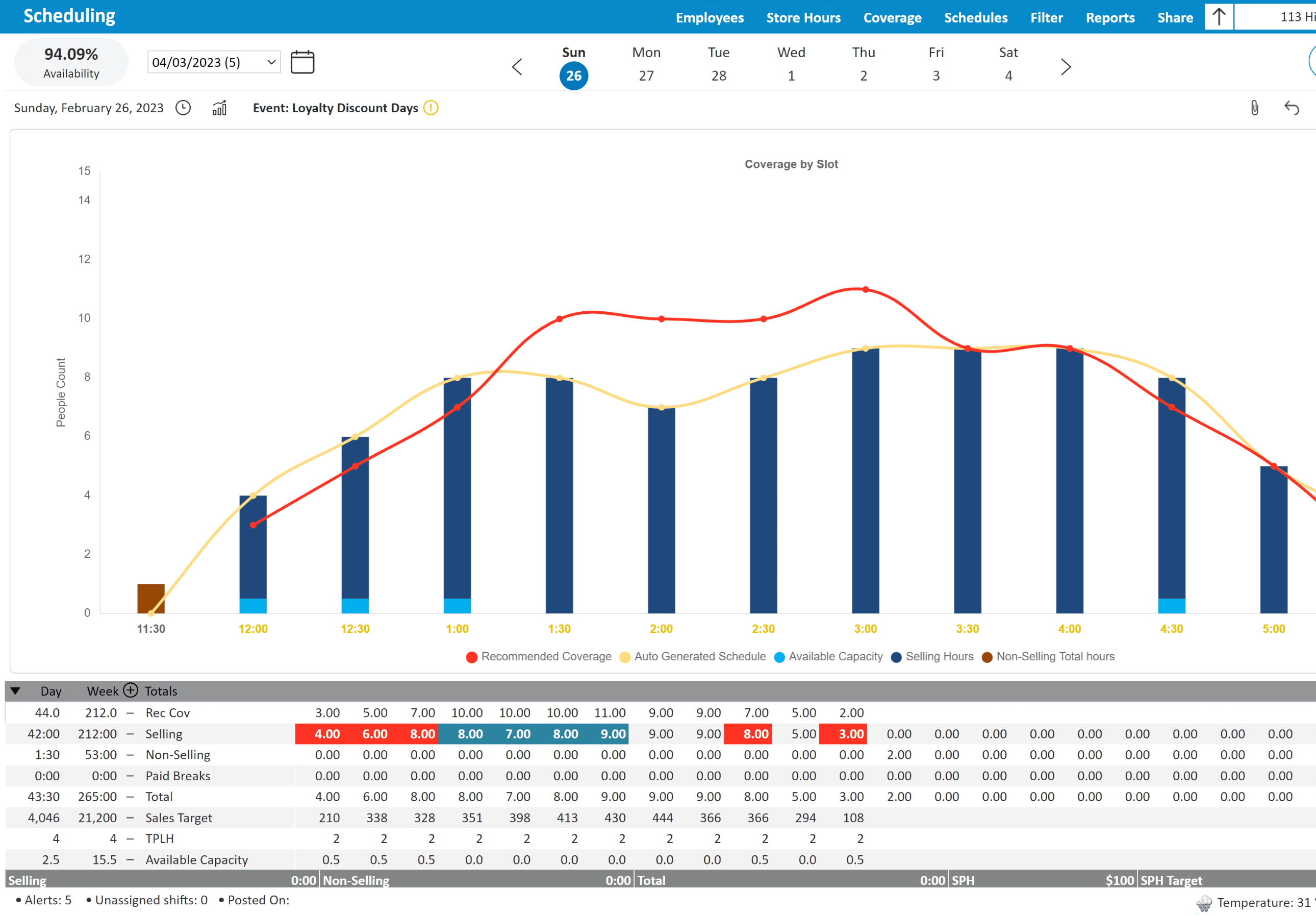
Why Retailers Need Labor Management Systems
Retail is a labor intensive business. Payroll is often the second largest expense after inventory.
Without proper labor planning, retailers face several common problems.
Overstaffing
Too many employees scheduled at quiet times increases labor costs without increasing sales.
Understaffing
Too few employees during busy periods can hurt customer service and lead to lost sales.
Inconsistent Store Execution
When staffing levels change from store to store, task completion and customer experience can vary widely.
Limited Visibility for Managers
Corporate teams often struggle to see how labor is being used across multiple locations.
A labor management system solves these problems by giving leaders and store managers a shared view of labor planning and store execution.
Managers know how many hours they should schedule. Corporate teams can see which stores are following the plan. And stores can adjust quickly when demand changes.
How Labor Affects Retail Profitability (The ROI of Labor Management Systems)
Labor has a direct impact on retail profitability. Small changes in how labor hours are scheduled can make a large difference in store performance.
For most retailers, labor is one of the largest controllable expenses. Unlike rent or utilities, labor hours can be adjusted week to week or even hour to hour. That makes labor planning one of the most important parts of running a profitable store.
When labor is poorly managed, stores often experience two problems at the same time. They overspend on payroll during slow periods and miss sales during busy periods. Both hurt profitability.
A well-managed labor plan helps retailers keep labor spending aligned with demand while still supporting strong customer service.
Control Labor Costs
Labor management systems help retailers plan schedules around realistic labor budgets. Managers can see how many hours they are allowed to schedule and how those hours should be distributed across the week.
Instead of guessing how many employees should be on the floor, schedules are built around expected demand. This prevents common issues like scheduling too many people during quiet weekday mornings or running short staffed during busy weekends.
Over time, this keeps labor cost percentages more consistent across stores.
Increase Sales
The right staffing levels directly affect sales. When stores are understaffed, customers often wait longer for help, fitting rooms are not cleared quickly, and checkout lines grow.
These issues create friction in the shopping experience and lead to lost sales.
Proper labor planning helps retailers place more staff on the floor during peak traffic periods. This allows employees to assist customers, replenish product, and keep stores running smoothly when demand is highest.
More customer interactions usually translate to stronger sales results.
Improve Productivity
Productivity improves when stores schedule labor with a clear plan for how that time should be used.
Employees spend less time waiting for direction and more time completing tasks that support the store. This can include activities like stocking merchandise, setting promotions, organizing displays, or assisting customers.
Labor management systems often track productivity metrics such as sales per labor hour or units sold per employee shift. These metrics help retailers understand how efficiently labor hours are being used.
Reduce Manager Workload
Many store managers still build schedules manually using spreadsheets or paper schedules. This can take several hours every week.
Labor management systems automate much of this work by using forecasts and labor targets to guide scheduling decisions. Managers can quickly build schedules that already align with store demand.
Reporting is also easier. Instead of compiling reports manually, managers can view real time labor performance and quickly identify issues that need attention.
Improve Consistency Across Stores
For multi location retailers, labor planning often varies widely from store to store. Some managers may schedule efficiently while others struggle to balance payroll and staffing needs.
A labor management system helps standardize how labor is planned across the entire organization. Corporate teams can set labor targets, monitor performance, and identify stores that need support.
This leads to more consistent store operations and a more predictable labor budget.
The Financial Impact
Even small improvements in labor productivity can create large financial gains for retailers.
For example, improving sales per labor hour by just a few dollars across dozens or hundreds of stores can translate into millions in additional revenue or cost savings over time.
Because labor is such a large expense, better visibility and planning often produces one of the fastest returns on investment in retail operations.
This is why many retailers invest in labor management systems as a core part of their store operations strategy.

Best Labor Management Systems for Retail
Several platforms offer labor management tools for retailers. The right system often depends on store size, number of locations, and how complex store operations are.
Rather than focusing only on product names, retailers should look at what the best labor management systems help stores actually do. Strong systems give managers better visibility into labor planning, scheduling, and performance so they can make smarter staffing decisions.
The best labor management systems help retailers:
Forecast labor demand accurately
Use sales history, traffic patterns, and seasonal trends to predict how many staff hours a store will need.Build smarter schedules
Help managers create schedules that align with labor budgets, forecasts, and employee availability.Track labor in real time
Show how labor hours are being used throughout the day so managers can adjust staffing if needed.Measure labor productivity
Track metrics like sales per labor hour and labor cost percentage to show how labor impacts performance.Create consistency across stores
Give corporate teams visibility into labor planning across all locations, so stores follow the same labor standards.
Retailers evaluating labor management systems should focus on platforms that connect labor planning with store performance. This gives managers the insight they need to control labor costs while still supporting strong sales and customer service.
StoreForce Overview
StoreForce is a retail operations platform built to help store teams plan labor, execute daily tasks, and track performance in one place.
Instead of using separate systems for scheduling, task management, and reporting, StoreForce connects everything together.
Store managers can:
Build schedules based on sales forecasts and labor budgets
Track labor usage during the day
Assign and complete store tasks
Monitor store performance in real time
Corporate teams gain visibility across all locations. They can see which stores are meeting labor targets, which stores need support, and how labor affects sales performance.
This helps retailers run stores more consistently while keeping labor costs under control.
For multi-location retailers, having labor planning, task execution, and performance tracking connected in one system helps stores stay aligned and operate more efficiently.
If you want to see how StoreForce helps retailers manage labor and improve store performance, booking a demo is the best place to start.

See How StoreForce Can Work for Your Stores
See how StoreForce brings employee scheduling, labor optimization, task management, and store execution together in one retail workforce management platform. Book a demo today to see what StoreForce can do for your teams.
Speak To A Retail Expert


